Saturday, September 23, 2006

Saturday 26th August

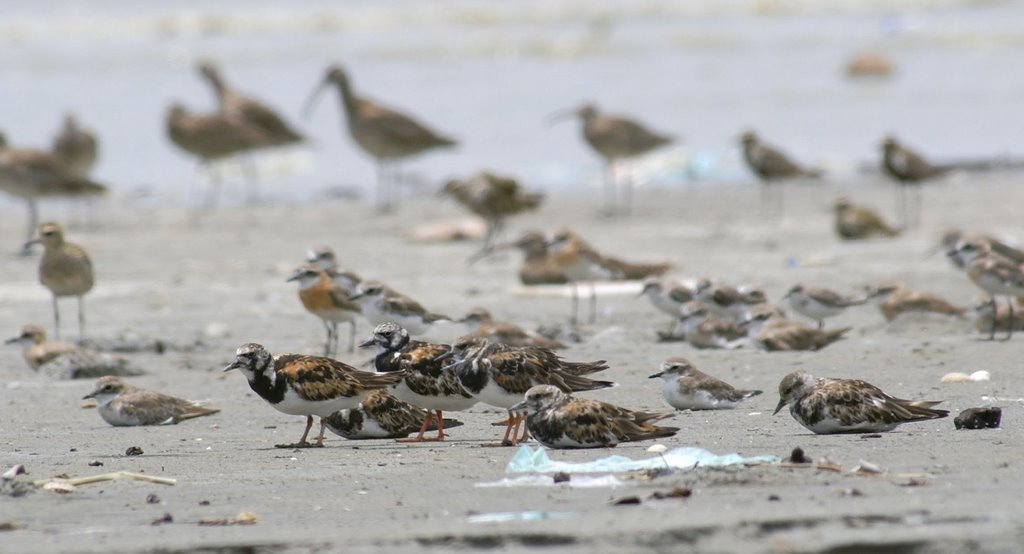
I managed to do a rough count today, which came to:

Bar-tailed Godwit 10
Whimbrel 100
Greenshank 5
Common Redshank 20
Terek Sandpiper 8
Curlew Sandpiper 25
Common Sandpiper 3
Pacific Golden Plover 45
Greater Sand Plover 5
Lesser Sand Plover 150
Little Ringed Plover 2
Red-necked Stint 40
Great Knot 55
Red Knot 2
Ruddy Turnstone 11 (my record count)
Little Tern 60

This was after spending 3 or so hours in my makeshift 'hide'. I modified the design of Thursday's effort by adding a wooden box I found on the tideline, punching out a couple of slats and making it into a kind of miniature blind just big enough for me to stick my head and camera in. This gave me more freedom to move my head and hands without the movement being detected by the birds. I found that I frequently need to wipe the sweat from my face, and move my arms to stop pins and needles from getting too painful. I stuck a plastic crate in the box, into which I put my camera bag, which acted as a platform to rest the camera on.



My hide, Mark II

It's an amazing feeling, being on the same plane as the birds, and in some cases actually looking up to meet their eye level. I realize that for most of the world, the act of lying motionless on the mud in the midday tropical sun is a good definition of insanity, but all I can say is, for me it's an awesome privilege!

I took a load of pictures today. I caught the tide just right, and it came to within a few feet of me at its highest, which meant at one point I had Red-necked Stints so close I could almost hear them breathing!
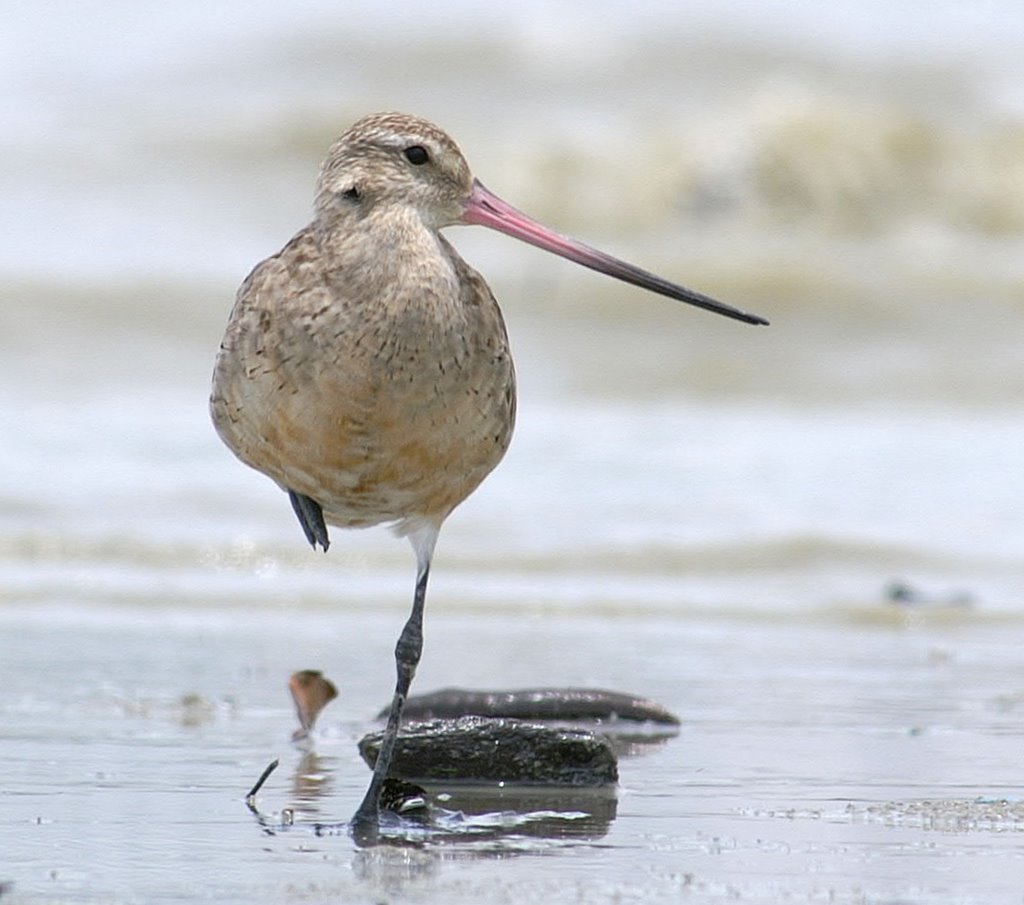


Here's an adult Bar-tailed Godwit, still with traces of the chestnut breeding plumage on the belly. The bill seems really long, so this may be a female.
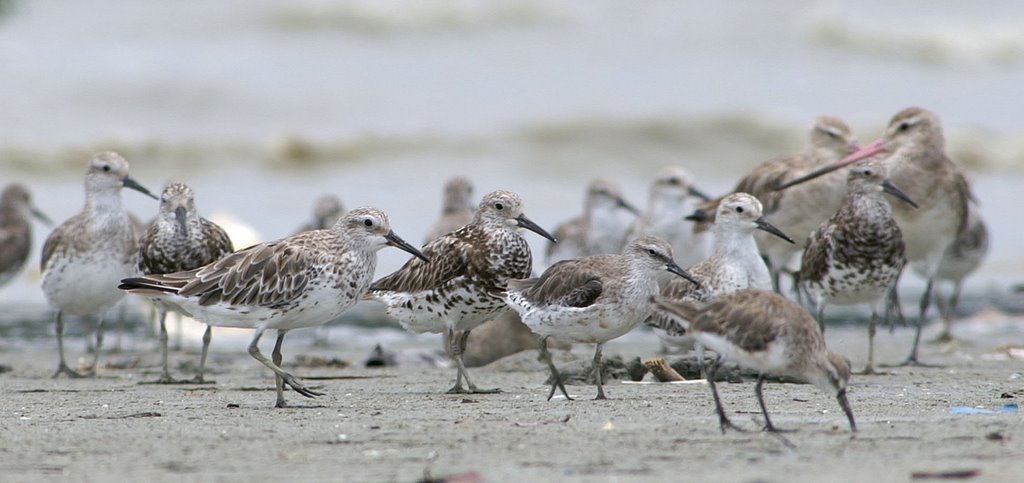


To be honest, I didn't spot the Red Knot in this picture (just right of centre)till I looked at the picture on the computer. Red Knots migrate through my native UK in the thousands, while Great Knot is an extreme rarity. Here though, it's the Red Knot that is more unusual, though not stunningly rare. The other birds in this picture are: Bar-tailed Godwit (a couple extreme right), Curlew Sandpiper (the out of focus bird in the foreground)and Great Knots. The three birds with black breastbands are still in breeding plumage, the others are also adults but have moulted into non-breeding dress.
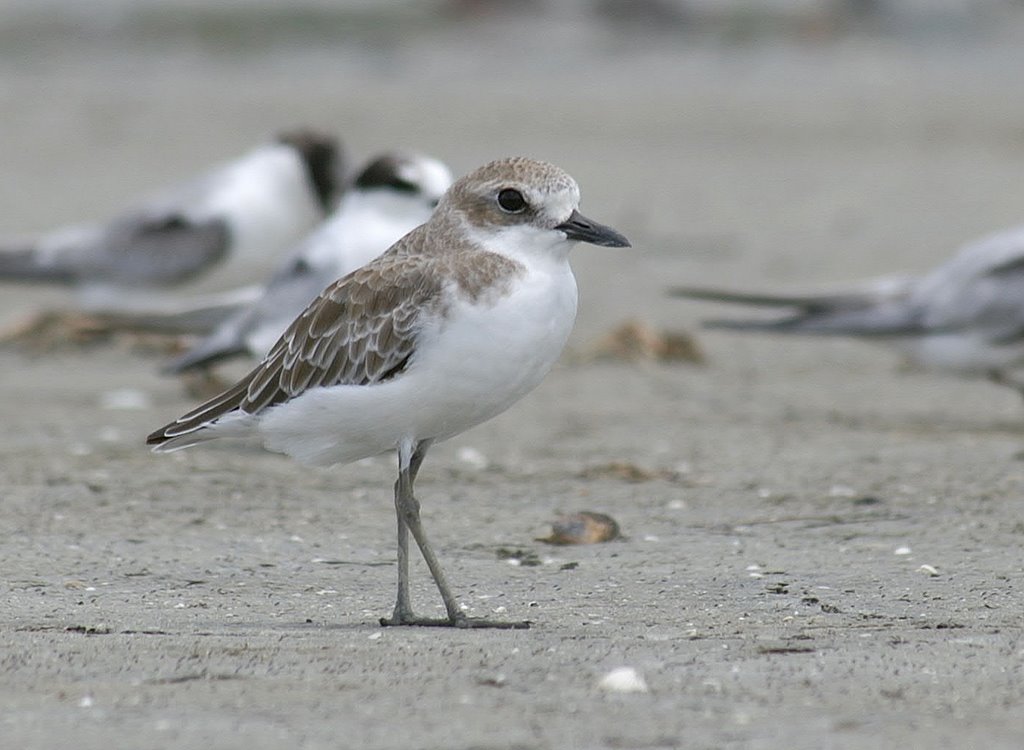


This is an adult Greater Sand Plover. I've become quite fascinated by the subtle differences that separate this species from the sometimes very similar Lesser. For me one of the key differences is the bill shape - rather sharp-tipped, with a bulbous distal half. The legs are longer and generally yellower, but there is some variation. For example, this bird has rather grey legs (like most Lesser) and some Lesser have olive-green legs (like most Greater!). Overall though, Greater looks rather an ungainly beast, with a big head, while Lesser seems better proportioned.
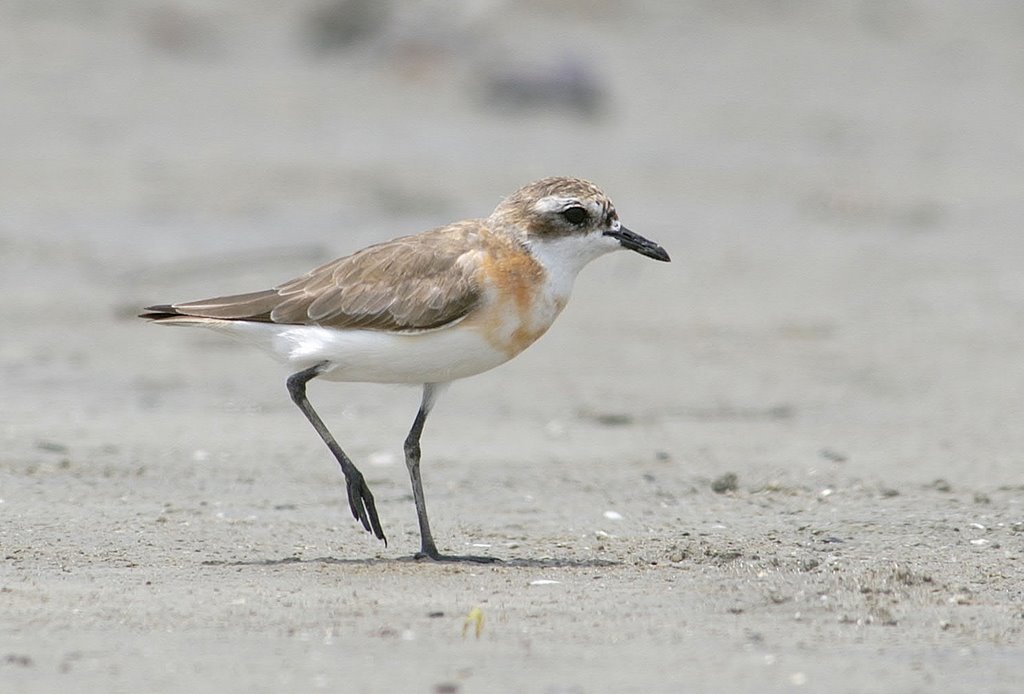


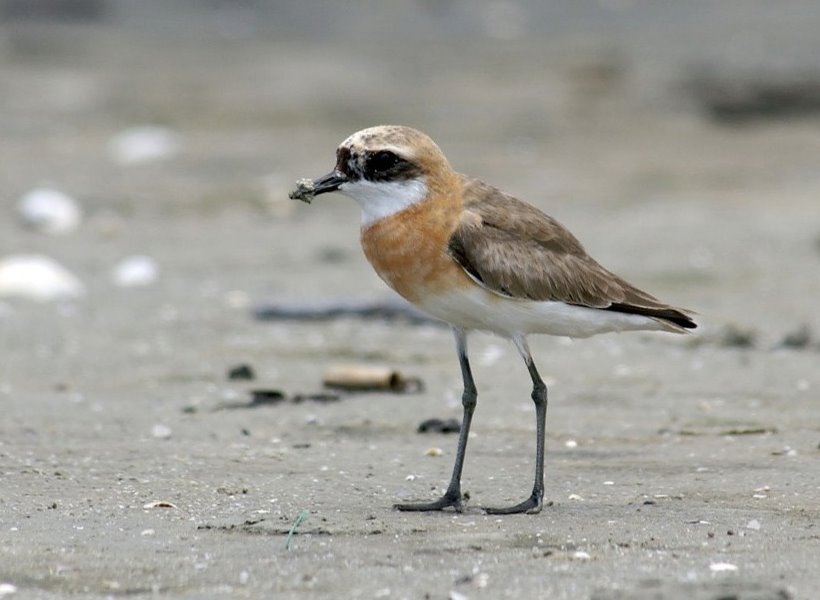
By contrast, here's a really long-billed Lesser Sand Plover (probably a female, still in breeding dress). However, the bill is blunt-tipped, is bulbous only for the distal third, and is much slimmer, especially at the base, than Greater. The legs are shorter than Greater, and are grey, typically for a Lesser.
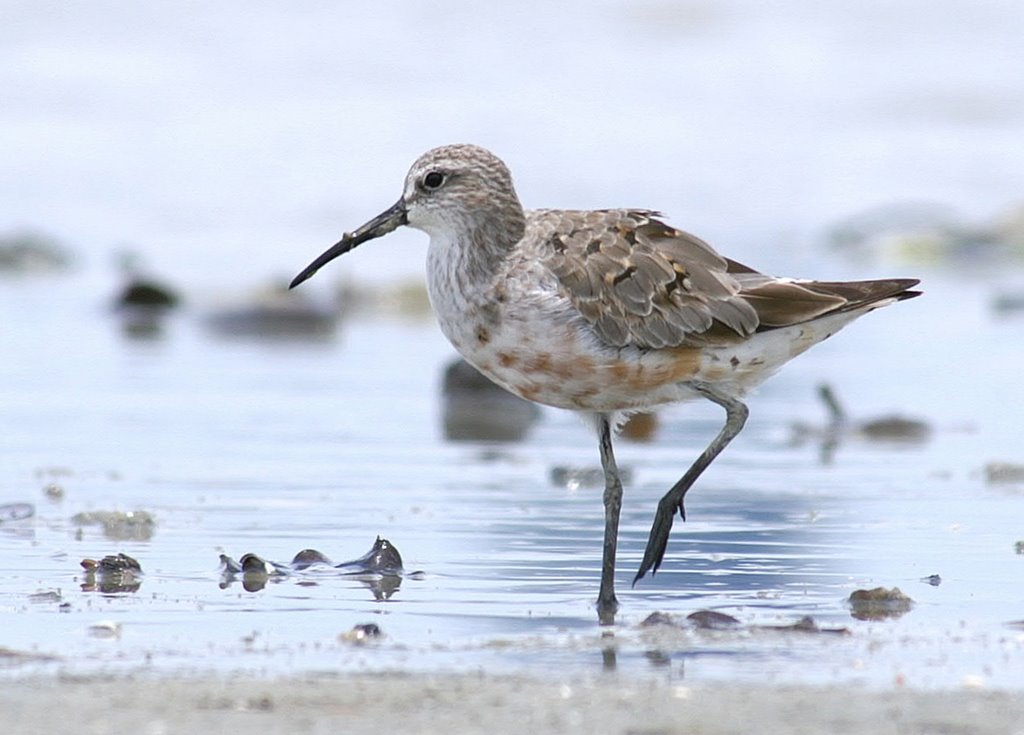


From plovers to sandpipers. Plovers tend to feed by sight and pick prey from the surface of the mud, while sandpipers locate prey using the soft, sensitive tip of the bill when probing in the mud. Plovers tend to have big eyes and short thick bills. They feed using a stop-start action; stopping to look and listen, then walking or running forward to catch prey. Sandpipers, on the other hand, have relatively smaller eyes and longer, thinner bills. They generally feed by probing more or less constantly into the mud. This is an adult Curlew Sandpiper, with a few chestnut belly and checkered upperpart breeding feathers. The rest of the pluamge consists of fresh much drabber coloured non-breeding feathers.
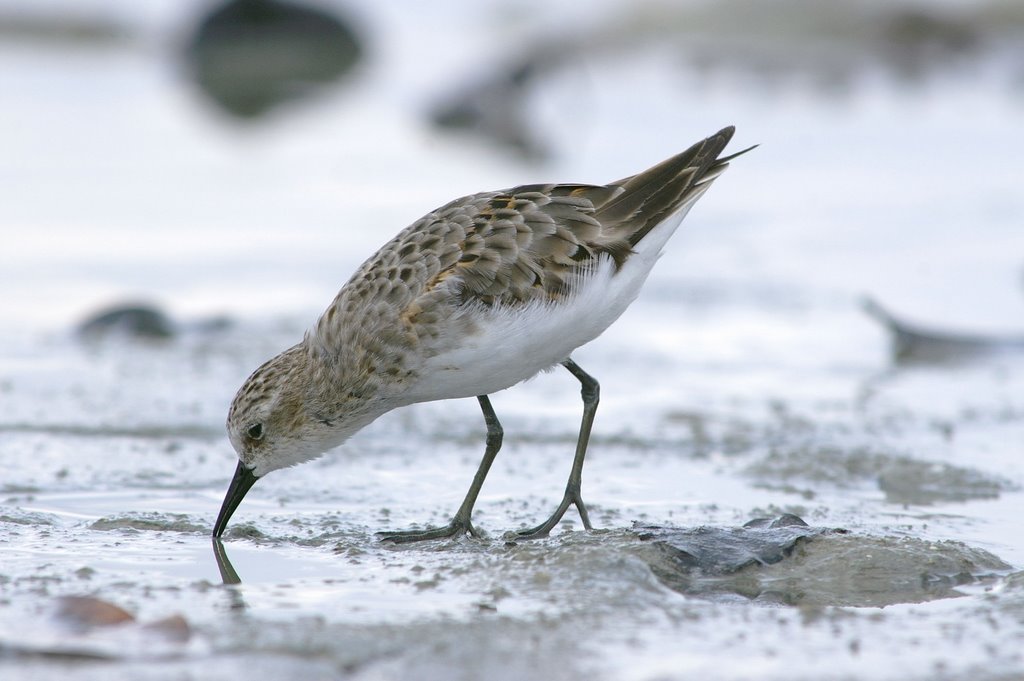


This photo is uncropped, taken using a 400mm lens, so it gives an idea of how close this tiny bird was. It's a Red-necked Stint - another member of the sandpiper family, and an adult. The dark-centred feathers on the 'back' and crown are old breeding feathers. So are the very abraded tertials (the long pointy dark brown feathers that cover the wingtips). Feather edges wear away with age, especially paler areas which lack pigmentation. The more uniform grey feathers are fresh non-breeding feathers. Some have a thin fringe of white at the tips, which will quickly wear away.
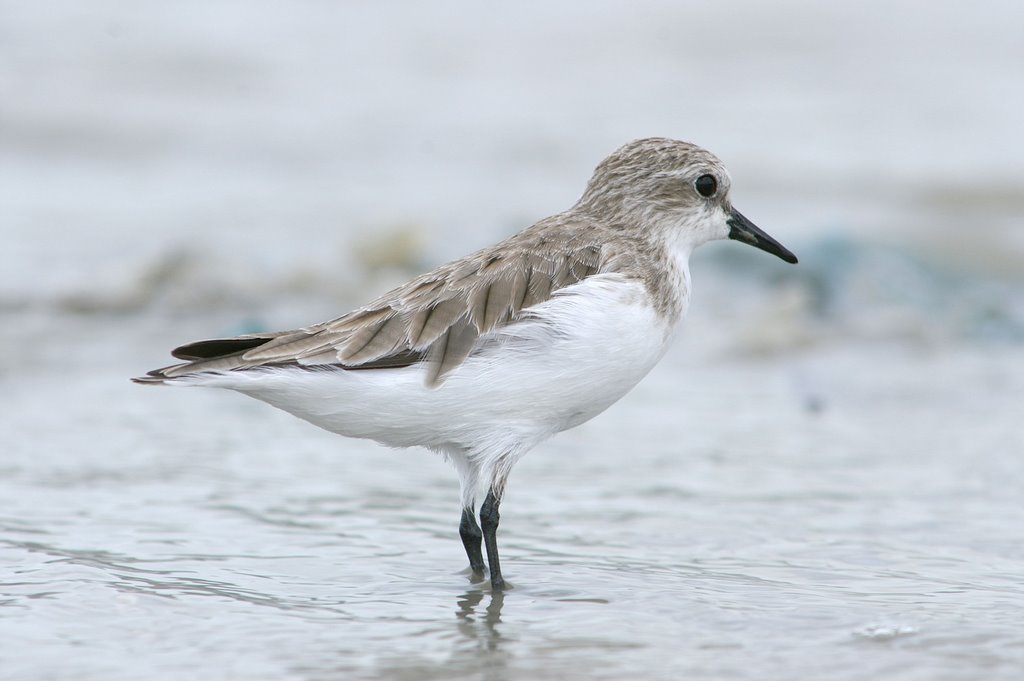


Here's the same species, but looking very different in complete non-breeding plumage from the previous individual. Maybe this is one reason why some people find waders difficult and confusing. Learning about the moult cycle and using good quality field guides that show different plumages accurately is a great help. So are good quality optics, taking notes and having loads of patience!
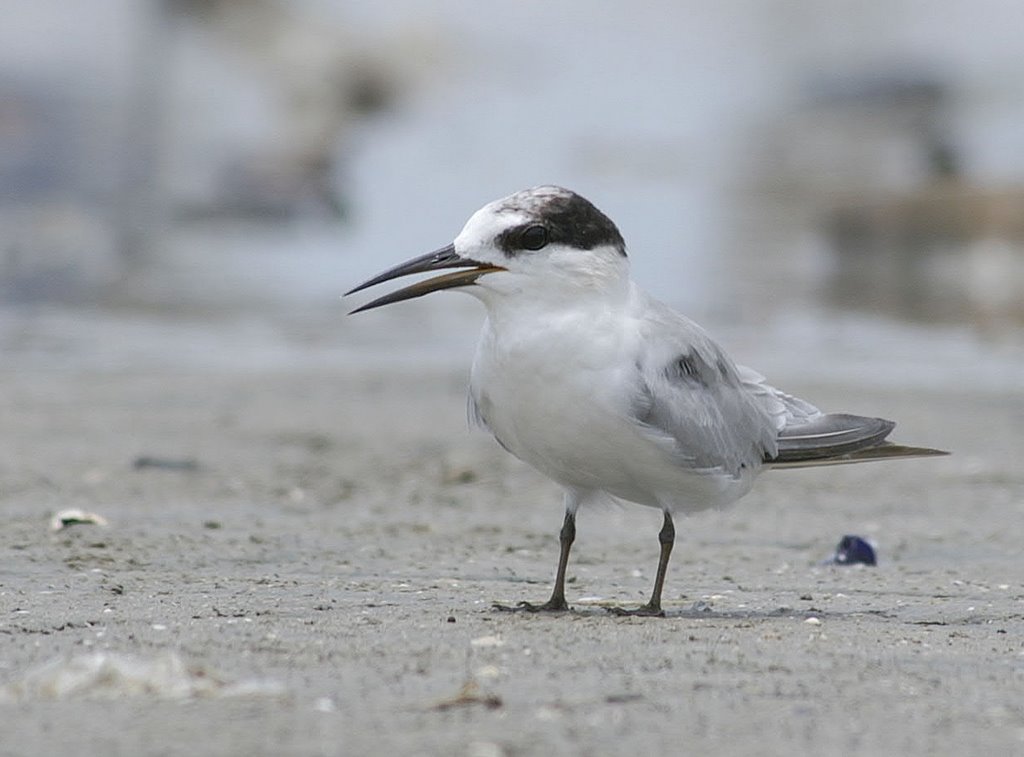


A Little Tern, looking very different from breeding birds that have bright yellow, black-tipped bills.


A Whimbrel, with a Bar-tailed Godwit in the background. The wing coverts and tertials of this birds are extremely worn - right down to the quill in some cases. All the white parts of the feathers have worn away completely, leaving the bird looking a dull brown overall.

Thursday 24th August

I went to the site en route to a lunch appointment without checking the tide, and found that I had arrived at about the perfect time, as the tide was on the rise. I phoned my friends and received their gracious permission to postpone the appointment and come later, which meant several hours later!!

I found that the mud at this site is quite firm, enabling me to walk out some way. So I found a couple of wooden pallets from the tideline debris, dragged them out onto the mud, lay down on my front and covered myself with a piece of gunny sacking that I carry in the car for just such an occasion.

Lying under the midday sun on the mud in this humidity was somewhat similar to sitting in a sauna with all my clothes on, but this was more than made up for by the fact that the birds quickly accepted this new piece of litter in their territory, and soon I was being treated to amazingly close views by some of the feeding plovers and stints.

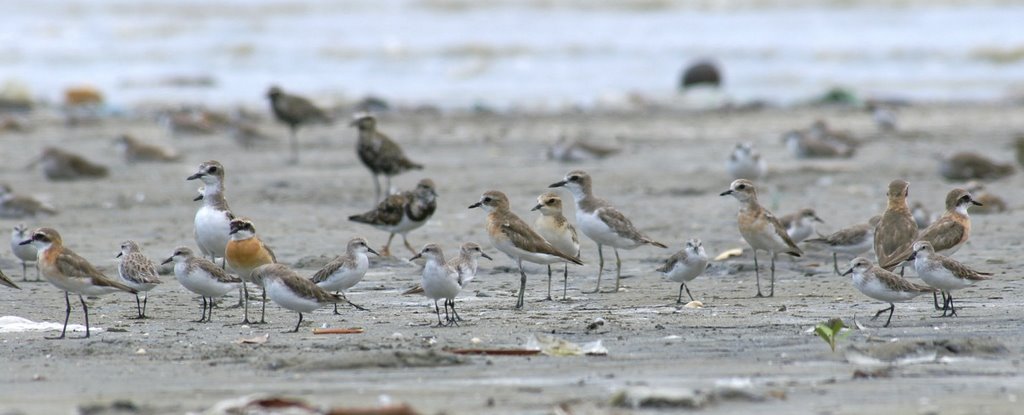
Some distance away, the main flock consisted of many birds still in the remains of their breeding plumage - gorgeous orange-bibbed Lesser Sand Plovers, smart black, white and chestnut Ruddy Turnstones, and one or two Pacific Golden Plovers still with their black underparts.


The two Greater Sand Plovers (in non-breeding plumage) stand head and shoulders above the Lessers in this flock.


The duller Ruddy Turnstones on the right are probably females.


The all-black forehead of the breeding plumage Lesser Sand Plovers is diagnostic of the race 'schaeferi', which is the longest-billed of all the races of Lesser. It apparently breeds from Southern Tibet to Mongolia and is probably the commonest race that occurs here in the northern winter.


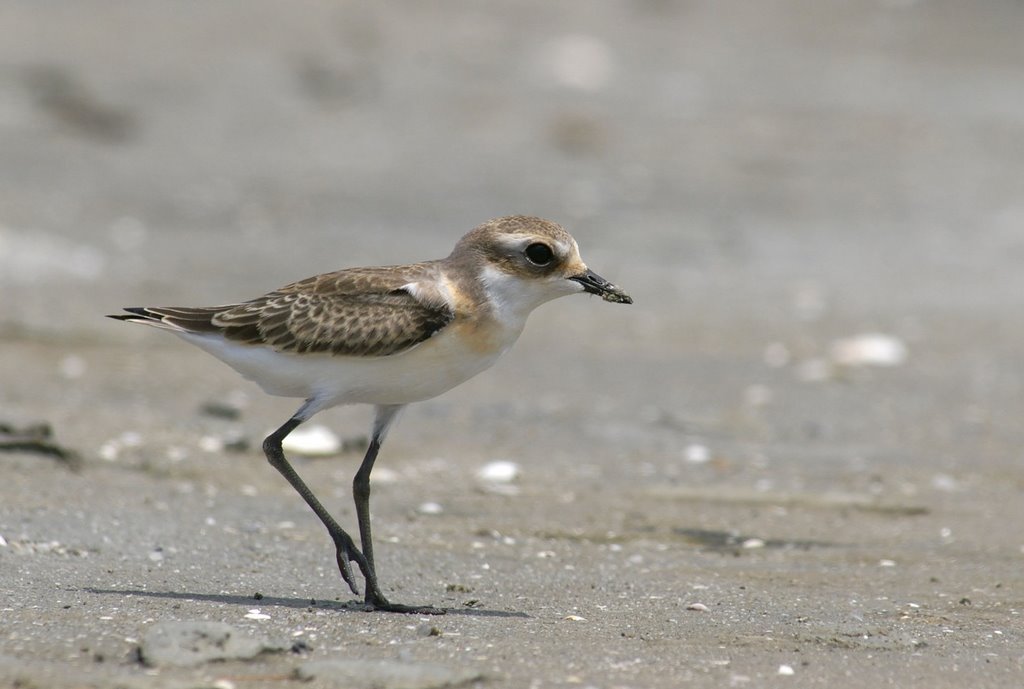
One of the most confiding birds was a juvenile Lesser Sand Plover, which set up a feeding territory just in front of me, enabling me to get wonderful views.

The Waders are Coming!

Waders, or shorebirds, have always been my favourite group of birds.I never tire of watching them. There's always so much to see and so much to learn.

So as soon as migration gets underway I tend to abandon the forest birds and head for the mudflats.

This year I've decided to try to watch one site on the island regularly, to get an idea of what passes through and when.

A friend and I came across this site early this year during the northward-bound migration season, and found that it held a good number and variety of waders, as well as herons, egrets and terns.

It's nothing much to look at from a human viewpoint; some quite badly polluted mudflats just off the north-east coast of the island, just a stone's throw from the city, McDonald's, Starbucks and high-rise blocks of condominiums. Formerly the area held a good stand of mangroves and a Black-crowned Night Heron colony, but now all that's been cleared to make way for a new housing project. For the time being, the construction site, a flat area of red earth and seasonal pools, forms an undisturbed oasis where waders can roost at high tide. By the next northward migration season, all of this area may be gone, but the next month or two at least, it's a place for the birds.

Wednesday, April 19, 2006

Large-tailed Nightjars


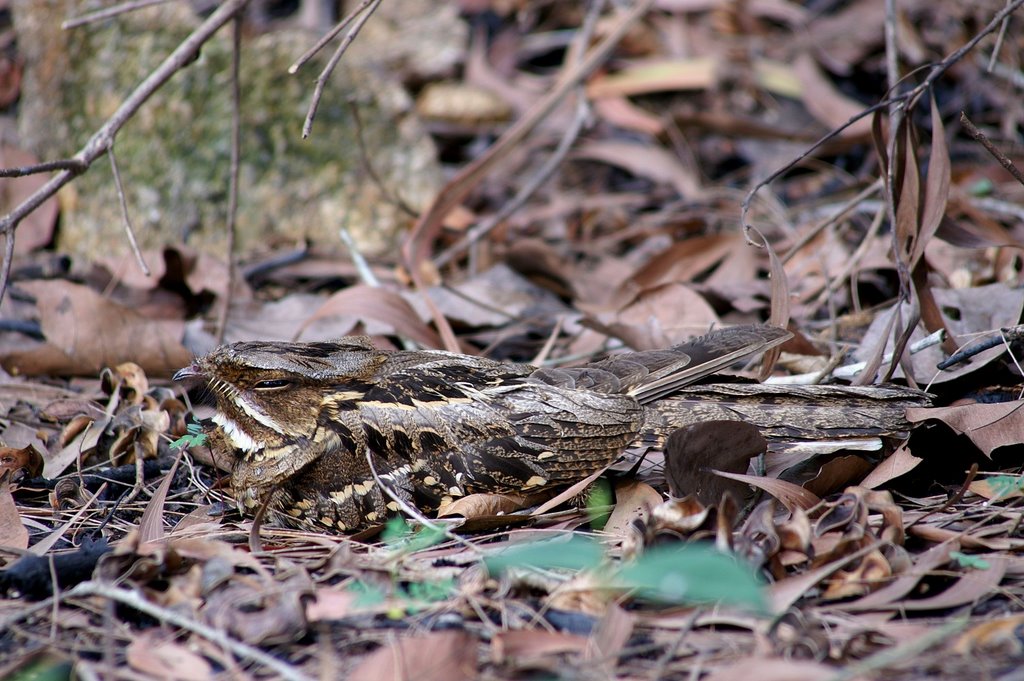
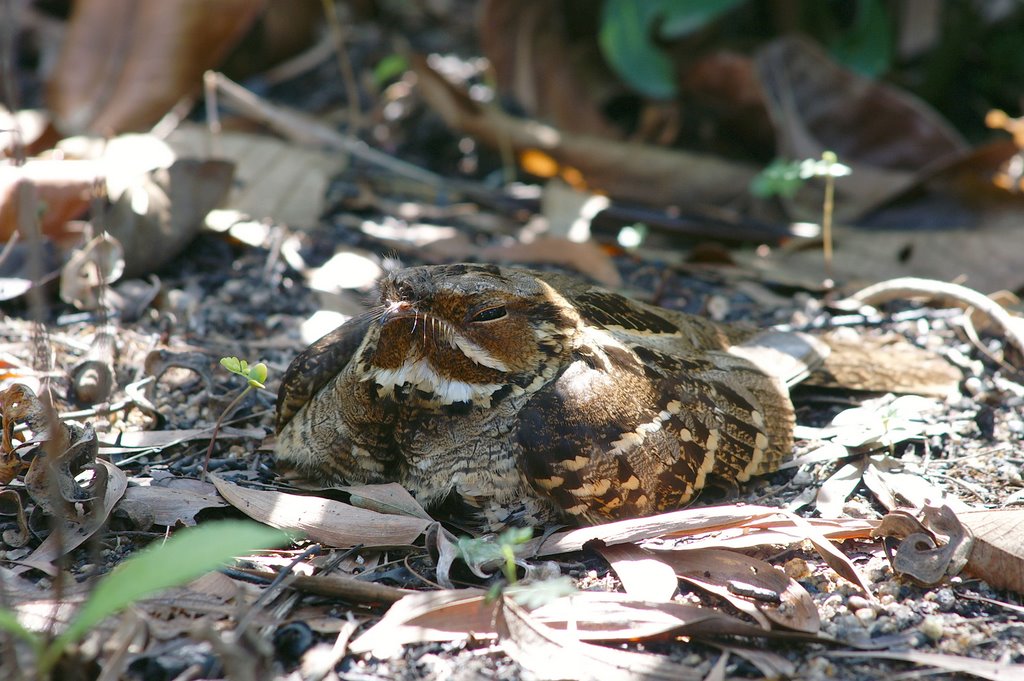
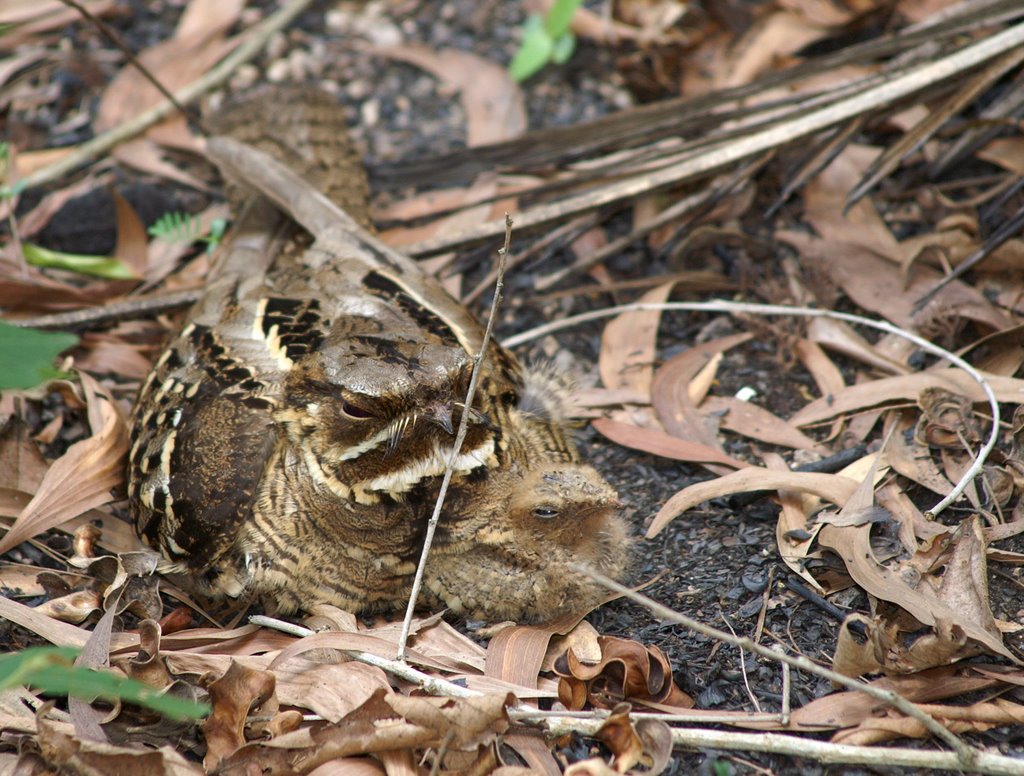
There's a beach near our home which is popular with local people. It also has a small lake and some scrub around it. Last year I found a Large-tailed Nightjar using the area as a daytime roost, and this year, I have found that they are nesting there. Even when you know that the bird is there, it is amazingly hard to spot, as their cryptic plumage blends in perfectly with their surroundings.


My first visit was on March 23, when I discovered the male sitting on two eggs. By the end of the month I found parts of an eggshell where the nest had been, and the adult bird was sitting in a different place. I assumed it was sitting on the young, but did not see them.


On April 4 I went back again, and this time found the female sitting. Through the morning she moved several times, presumably to move away from the direct sunlight. The male was also in the area, flying around in daylight, and occasionally calling. I wondered whether he was hunting for food to feed the chicks. I finally spotted one of the chicks - still very young with the first signs of adult feathers still 'in pin' on the top of the head.


Wednesday, March 08, 2006

First post

Someone once asked me what my favourite biblical passage featuring birds was, and, after some reflection, I chose Job chapter 28.

In this chapter Job talks about humankind's insatiable curiosity in regard to the planet we live on. "Man puts an end to darkness and searches every recess" in his quest to uncover the treasures that lie deep beneath the earth's surface. "That path no bird knows, nor has the falcon's eye seen it."

I love the beauty and grandeur of nature, and few things give me as much pleasure as interacting in some way with this awesomely crafted environment in which we live. Like the men mining for silver, gold and precious gems in Job 28, I love to spend time searching for the gems of nature - from the magnificient vista of a dawn sky to the exquisite beauty-in-miniature of dewdrops on a grass stem.

But Job mentions another quest that we are all involved in in this same chapter; the quest for wisdom. Without wisdom we are all left ultimately clutching at straws. Even the beauty of Creation leaves us empty unless it leads us to seek meaning. Job asks, "Where can wisdom be found? And where is the place of understanding?" For me, that quest has become the overarching one. It is a quest that has required me to 'dig deep', just like those goldminers, and it has led me to the greatest of all treasures.

So I hope these thoughts and pictures will encourage you too to "dig deep". Oh, and by the way, Job found the answer to his questions; you'll have to read to the end of chapter 28 to find out what it is!