Monday, November 13, 2006

Sydney - Brisbane 25-26th October

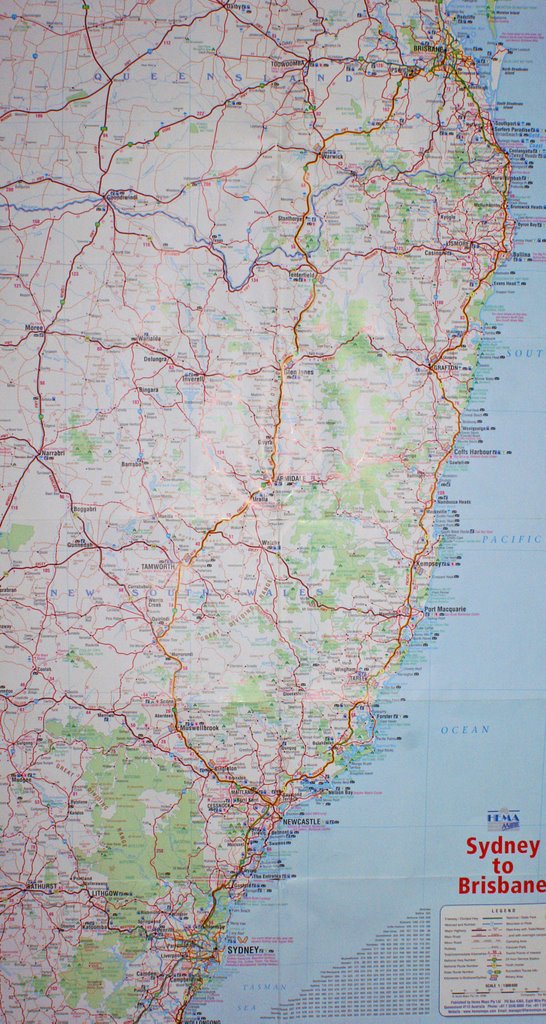
We'd been advised not to attempt the 1,000km journey from Sydney to Brisbane in a hurry, and were recommended a 1-2 day stop at Moonee Beach, just north of Coff's Harbour, which is about halfway.

We followed the Pacific Highway up the coast.

The Pacific Highway sounds like a grand name, but at times the road is little more than a trunk road, with only one lane in both directions. Add to that the fact that it must have more roadworks per kilometre than just about any other road in the world, and we soon saw the wisdom of not trying to rush things. But the fact that it meanders through towns makes it more interesting than a motorway, and we had a pleasant enough journey, stopping every 2 hours or so to let the kids stretch their legs and get fortified with coffee.

We got caught in Sydney work traffic for the first hour, but eventually made our first stop just north of Newcastle at Karuah. There was a playground for the kids, next to a picturesque river.
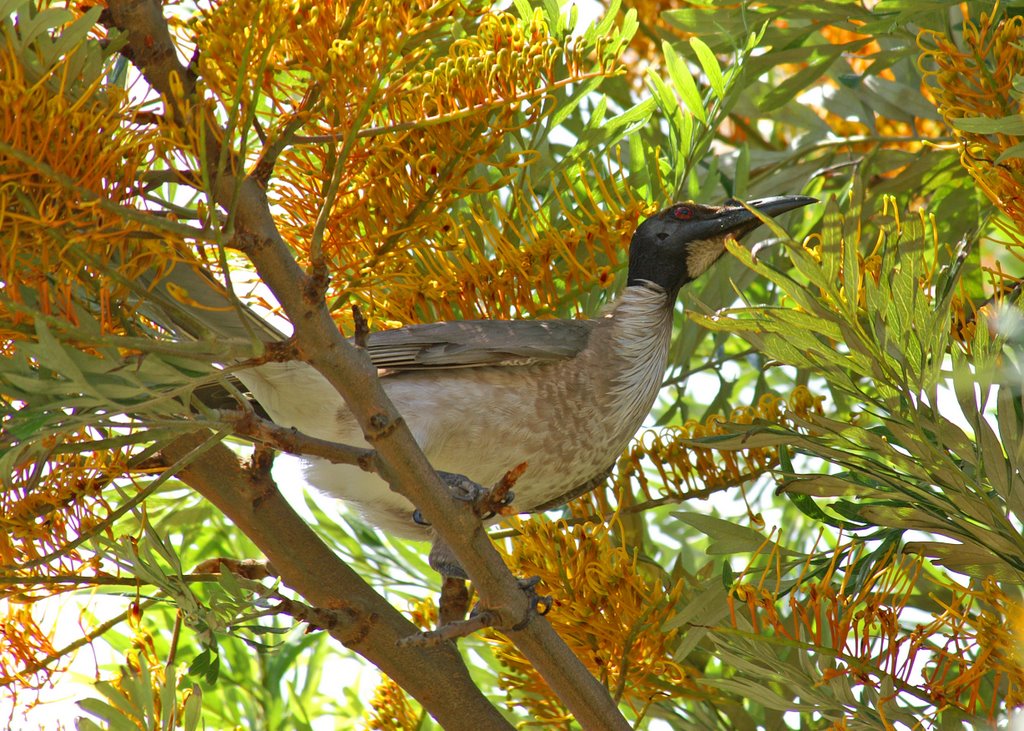


These beautiful flowering trees near the playground attracted a few birds, including this Noisy Friarbird...
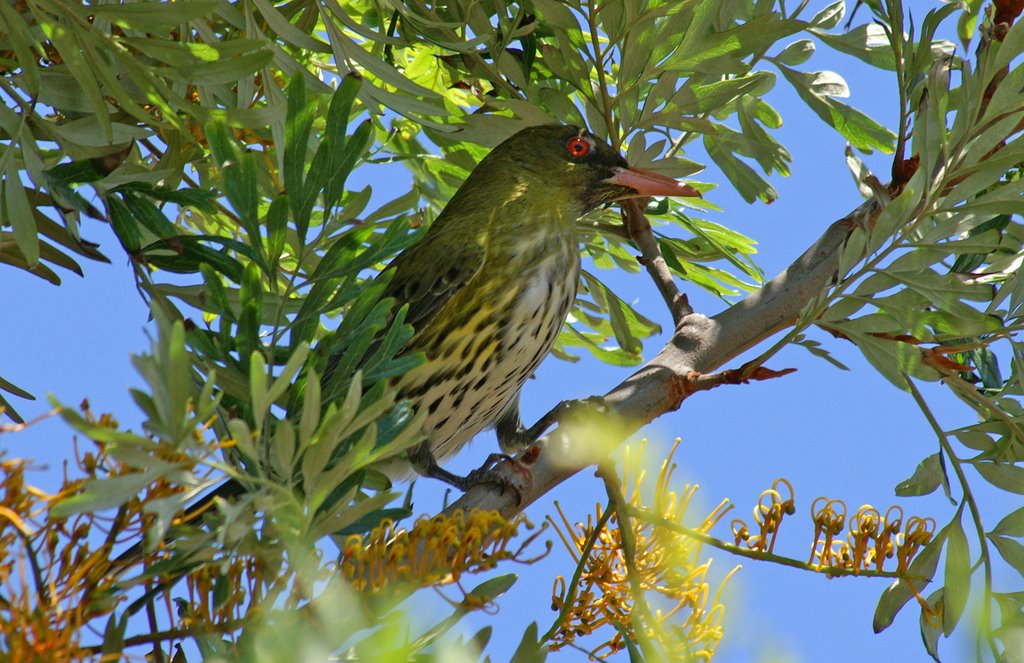


...and this rather fine male Olive-backed Oriole.


A couple of fairly young Masked Lapwings foraged by the roadside ...
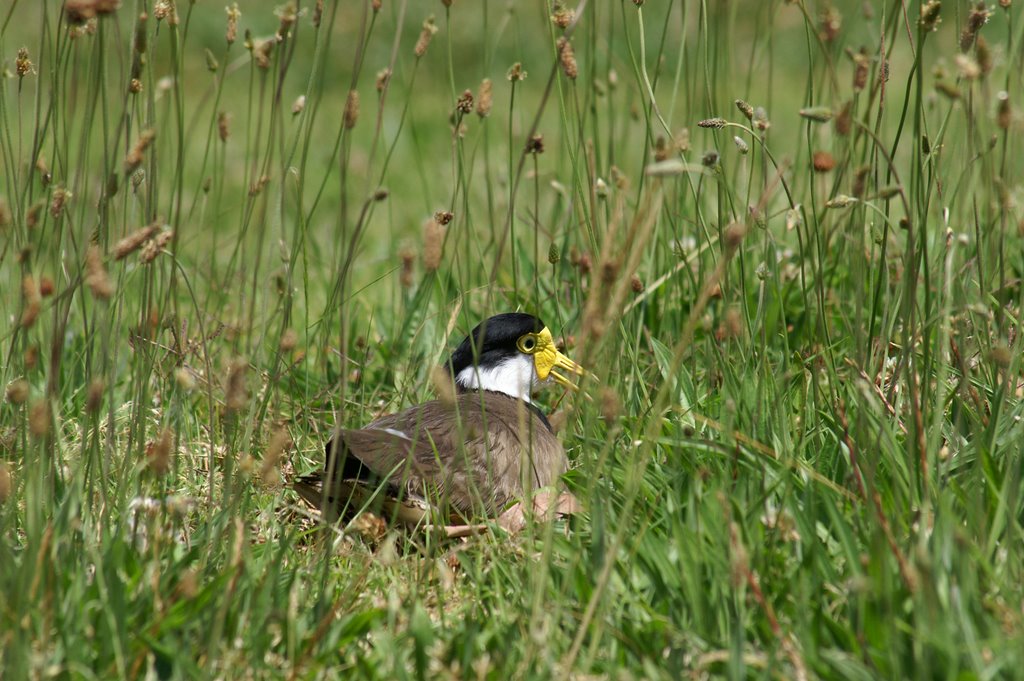


... while the parents guarded a second clutch on a nearby school playing field. It was good to see that the grass had been left uncut around the nest.

We arrived at Moonee Beach - about 11km north of Coff's Harbour - and got ourselves checked into a comfortable cabin at Moonee Beach Holiday Park just before dark.

Dawn was early - before 5am - and the temperature was quite chilly. Nevertheless, as I walked out to enjoy the first rays of the sun, I met an elderly gent - certainly well over 60 - RETURNING from the sea with his surfboard tucked under one arm! His comment was "Not much surf, but it's nice to get wet." No wonder these fellows seem to win every sporting event they go in for! He reminded me of someone out of an Asterix comic book - the Antipodean version!
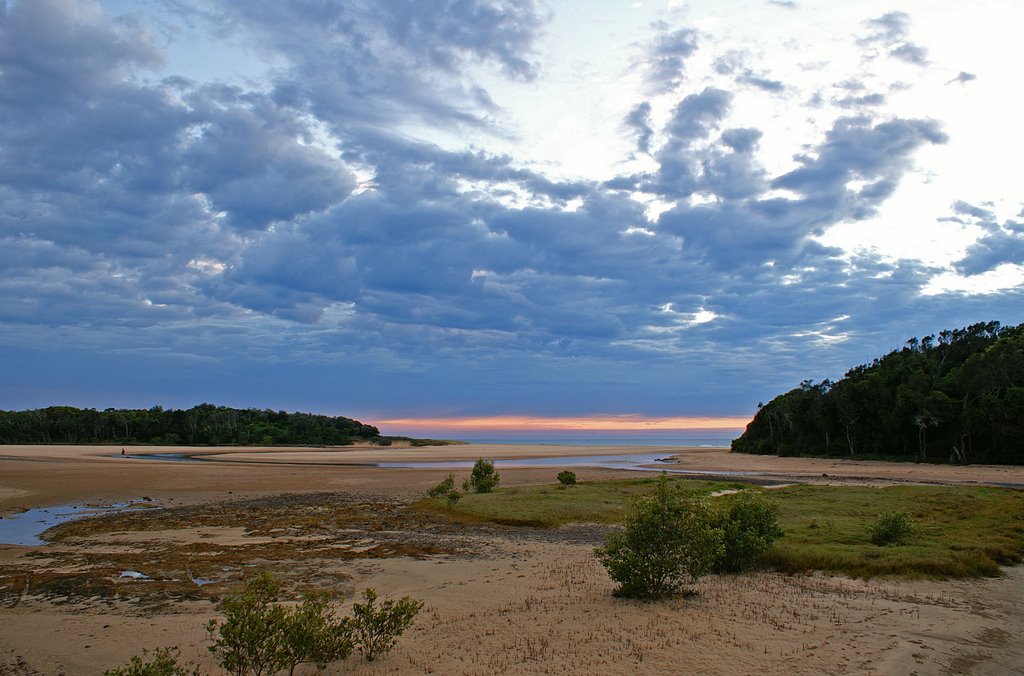


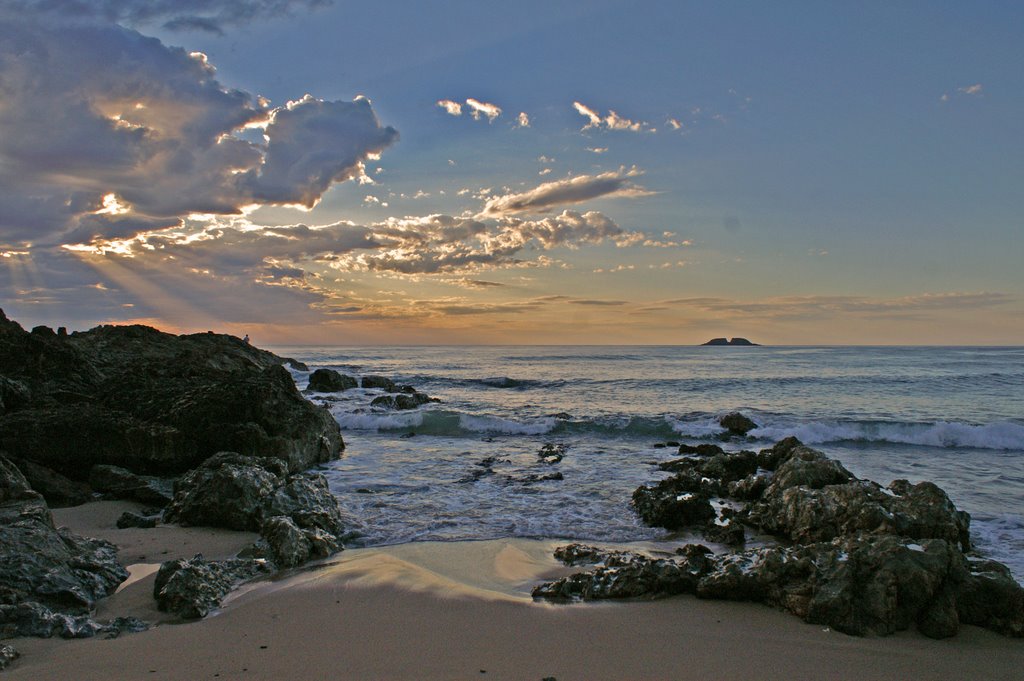
Moonee Beach at dawn (low tide).

At low tide there was quite an expanse of sand in the river estuary, but apart from some small flocks of Silver Gulls and Crested Terns and the odd egret and pelican, it was quite birdless.


I disturbed this Great Egret fishing for his breakfast. Sorry mate!


I walked up onto the headland, where I had been told the views along the coast are spectacular,and I wasn't disappointed. There were plenty of others up before me - fishermen and surfers, but it was a tranquil place nevertheless.
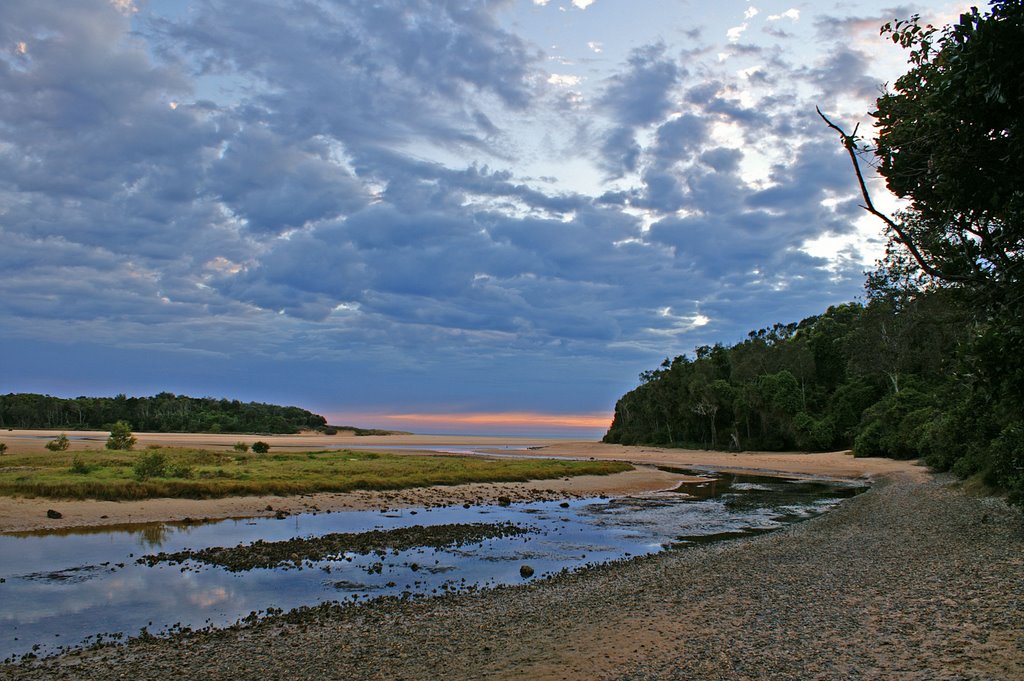


Two rivers meet


A fisherman catches the first rays of sun.
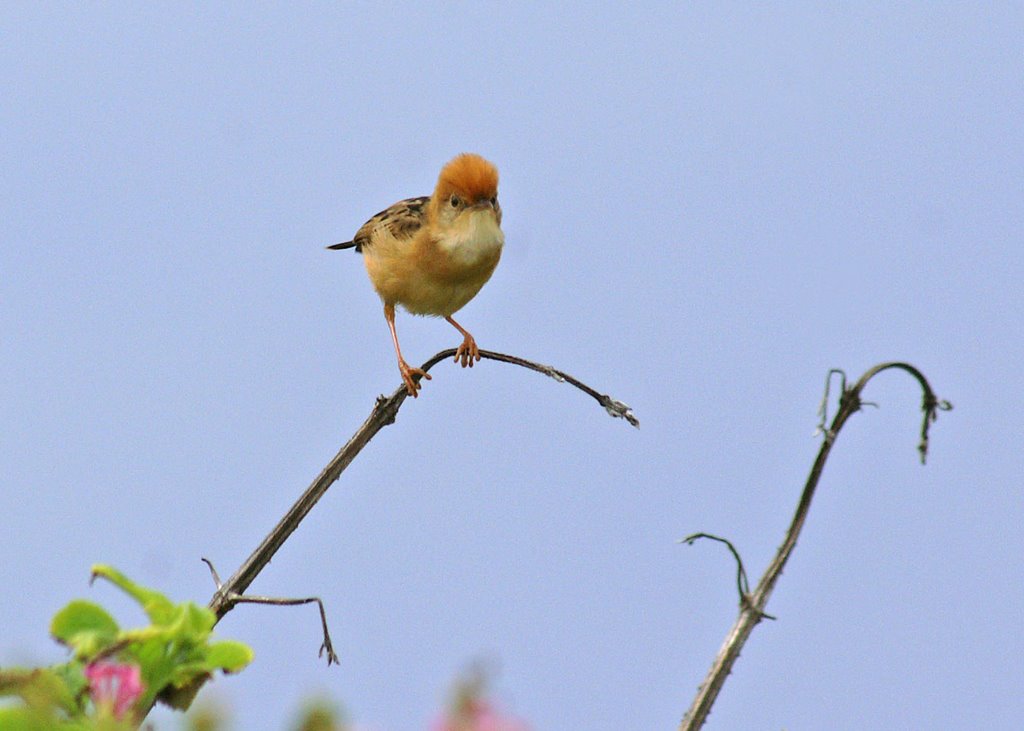


One of the first birds awake on the headland was a male Golden-headed Cisticola, singing away from the top of a lantana bush.
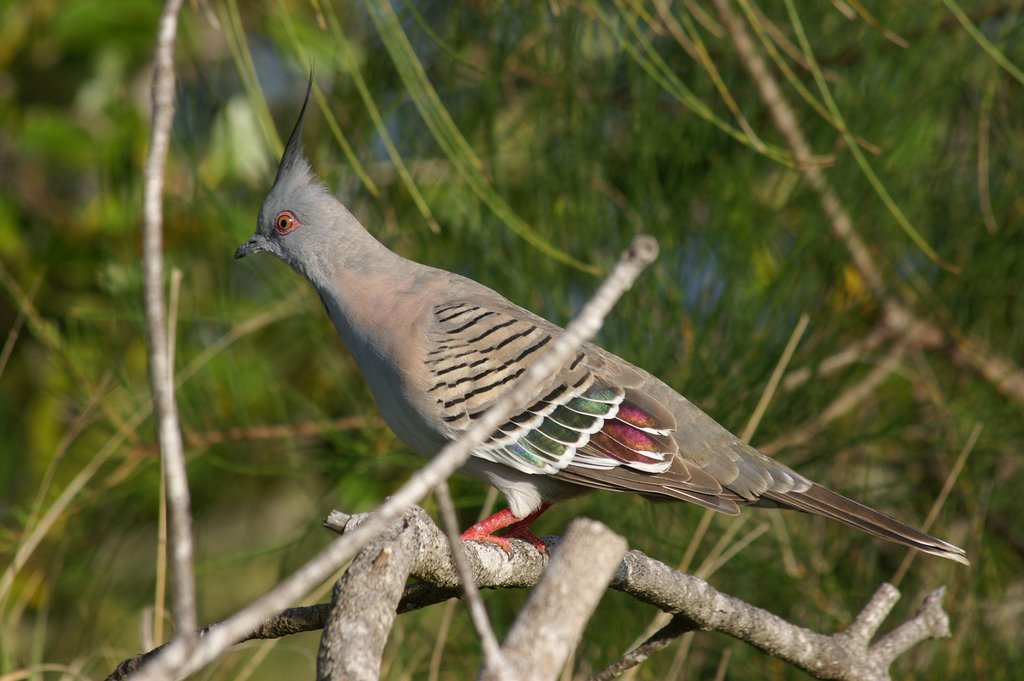


Crested Pigeons are common open country birds, but are rather attractive all the same. This is one of a group of four that were sunbathing in the early morning light.
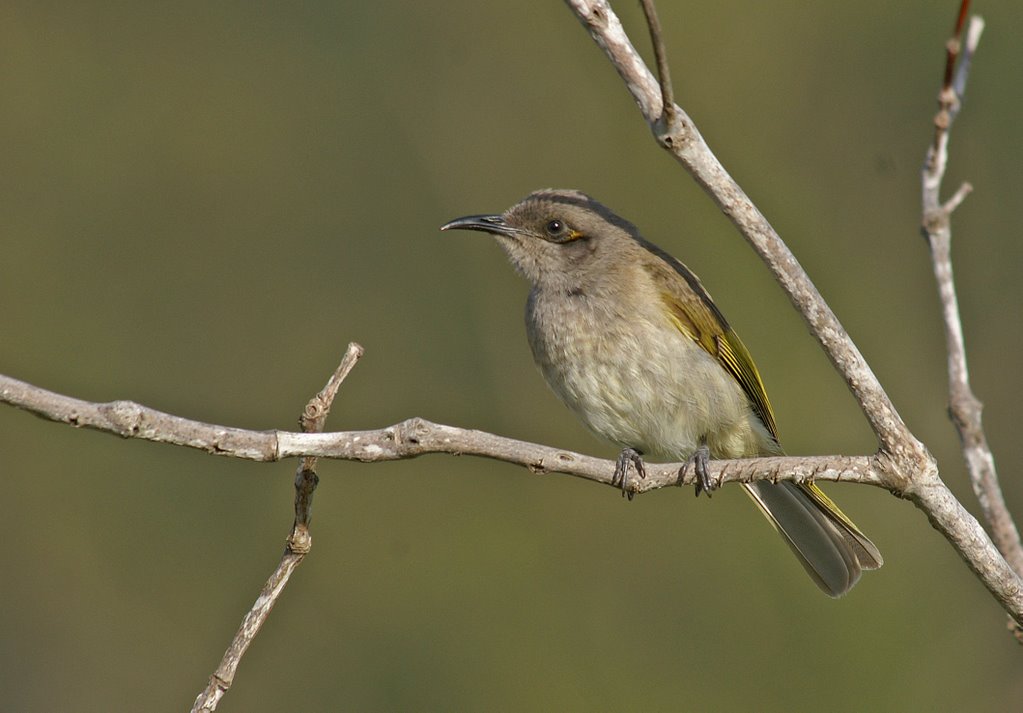


Brown Honeyeaters are one of the commoner honeyeaters. They have a loud attractive song, which reminded me very much of that of a Cetti's Warbler.

On the way back to the cabin to wake the family up I came across a couple of common species attending nests.
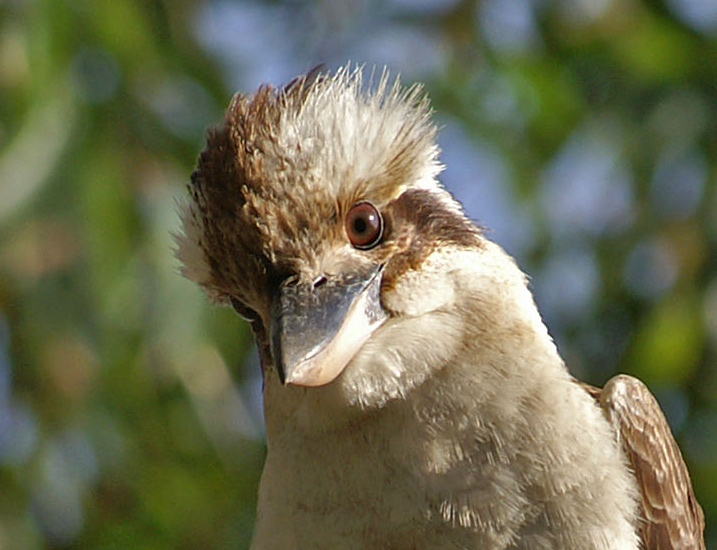


This Laughing Kookaburra had a nest in a termite's nest in a tree. It scared the wits out of me by sitting very quietly on a branch at about head height until I walked almost under it before it moved and revealed its presence!


It was constantly hassled by a pair of Noisy Miners which no doubt had a nest nearby. Kookaburras are partial to nestlings and eggs as well as many other things!
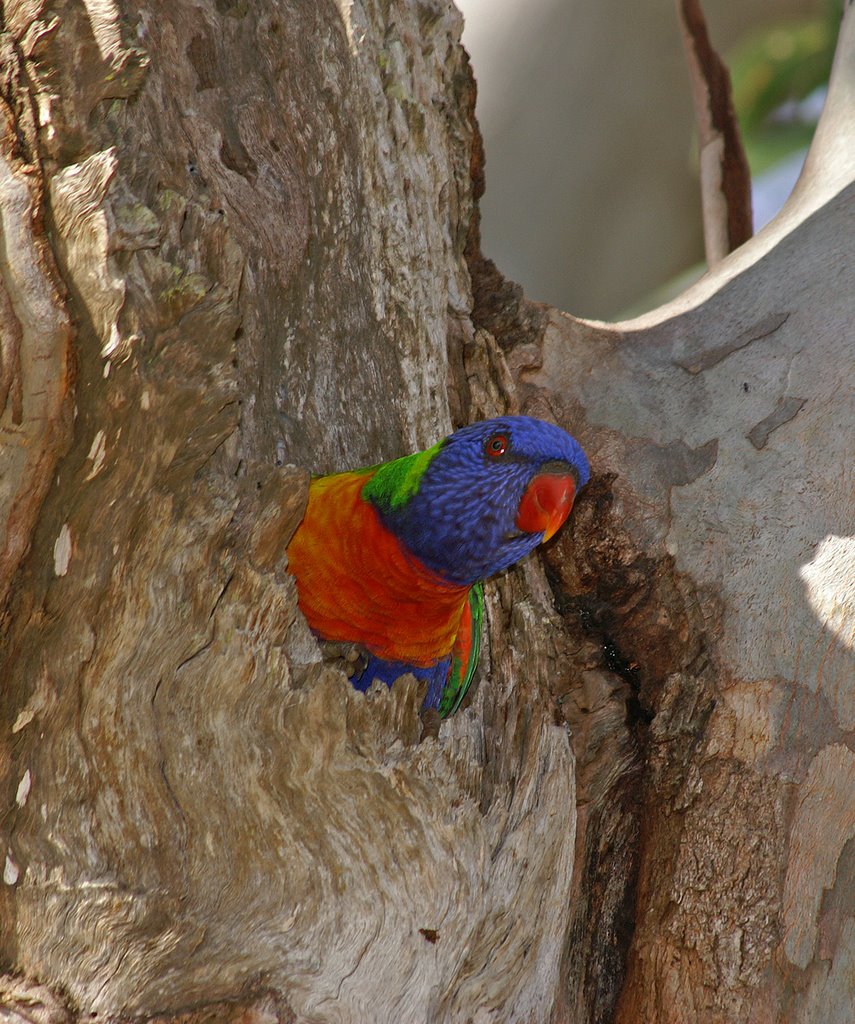


The other local residents were a pair of Rainbow Lorikeets nesting in a hole in a tree. It's hard to imagine how these birds could be more colourful!


The rest of the day was spent at the beach with the family - building sandcastles and collecting stones!

I went out after dark to see if I could see any nocturnal birds or mammals but no such luck. Experimented a bit with long exposures of the moon over the river!

Saturday, November 11, 2006

Barren Grounds Nature Reserve, Sunday 22nd October

After our look at Port Botany, Tun Pin took me on a quest to see one of his favourite birds - Eastern Bristlebird. This is definitely a birder's bird, as it is not only brown and rather featureless but also an inhabitant of thick undergrowth and a skulker by nature. There are thought to be only about 2,000 birds left in existence, in two isolated areas in New South Wales and Queensland. They live on heathlands and in nearby woodlands, and depend upon heath fires occurring at just the right time and frequency. If there are too few heath fires, the habitat becomes too overgrown for the bristlebirds; if there are too many, the heath plants do not become mature enough for them to build their nests. Tun Pin told me that they require about 5-year old growth for their nests. If fires occur at the wrong time - when the birds are nesting - the eggs and young will be destroyed - although the adults can retreat into nearby woodlands. Add to this the fact that the birds are poor fliers, and that they are extremely sensitive to disturbance, and it's little wonder that they are rare!

Tun Pin's experience with the birds was an invaluable asset, as he correctly predicted that our best chance of seeing them would be just before dusk, provided there was no rain and not too much wind. In the meantime we wandered around the nearby woodlands, and discovered just why Barren Grounds is so named! There were very few birds indeed!


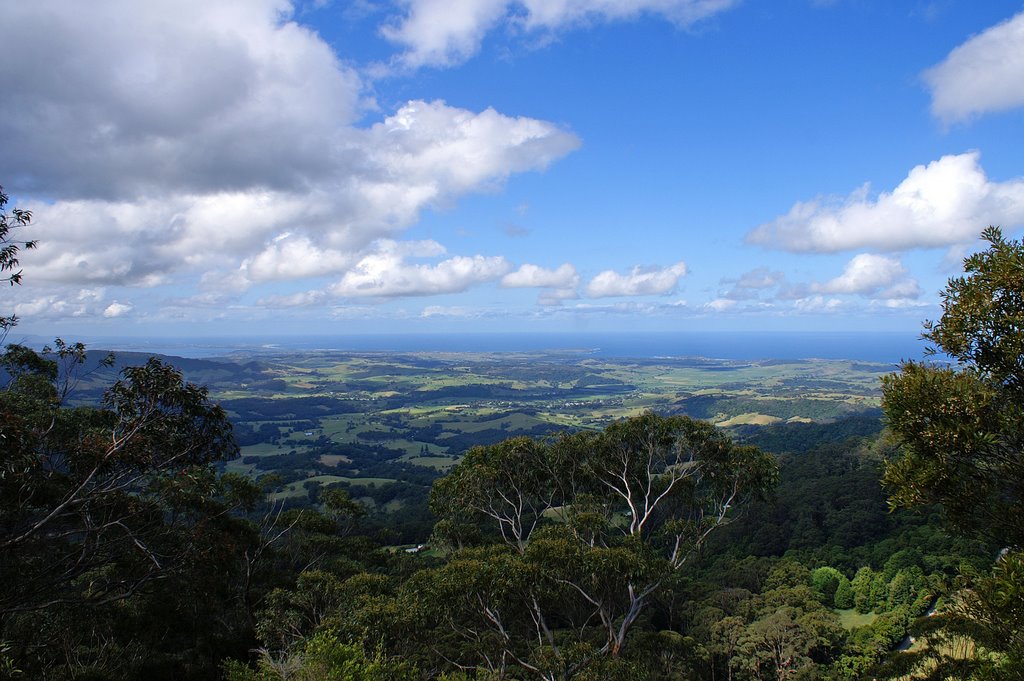
A walk to a look-out over the Illawarra escarpment produced spectacular views


Another shot of the spectacular view, with me in the way!


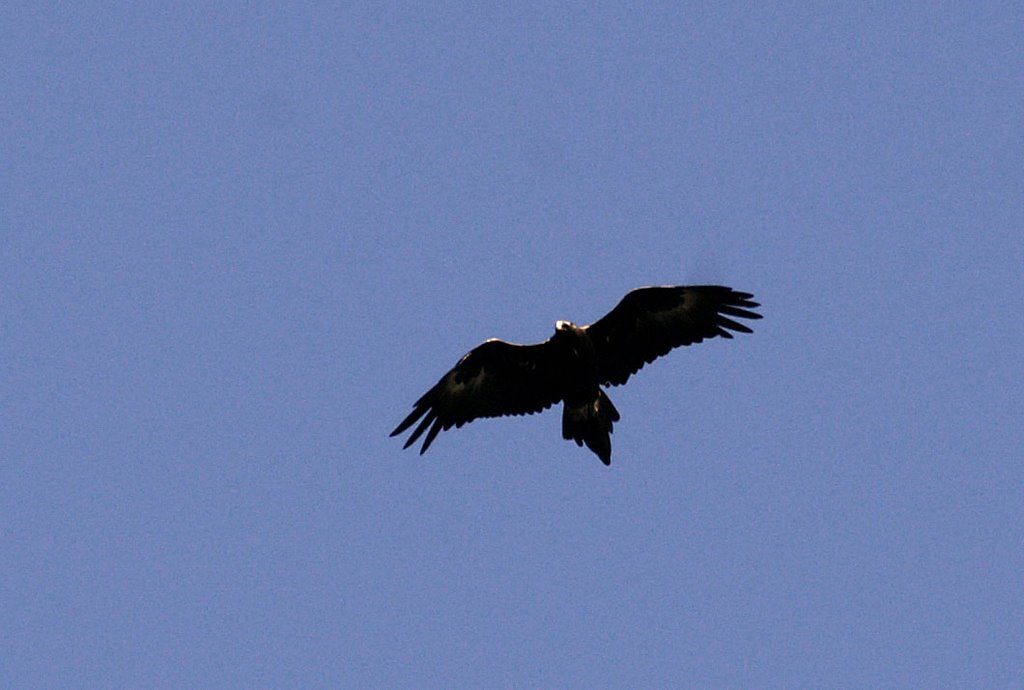
a Wedge-tailed Eagle soaring overhead

The heath areas gave us a fleeting glimpse of a Collared Sparrowhawk and some distant Yellow-tailed Black Cockatoos. Then we settled in for a long wait - standing quietly by the path over the heath. Apparently, as the sun moves off the heath the bristlebirds will sometimes come out onto the path to feed, and to bathe if there are any puddles (no such luck!).

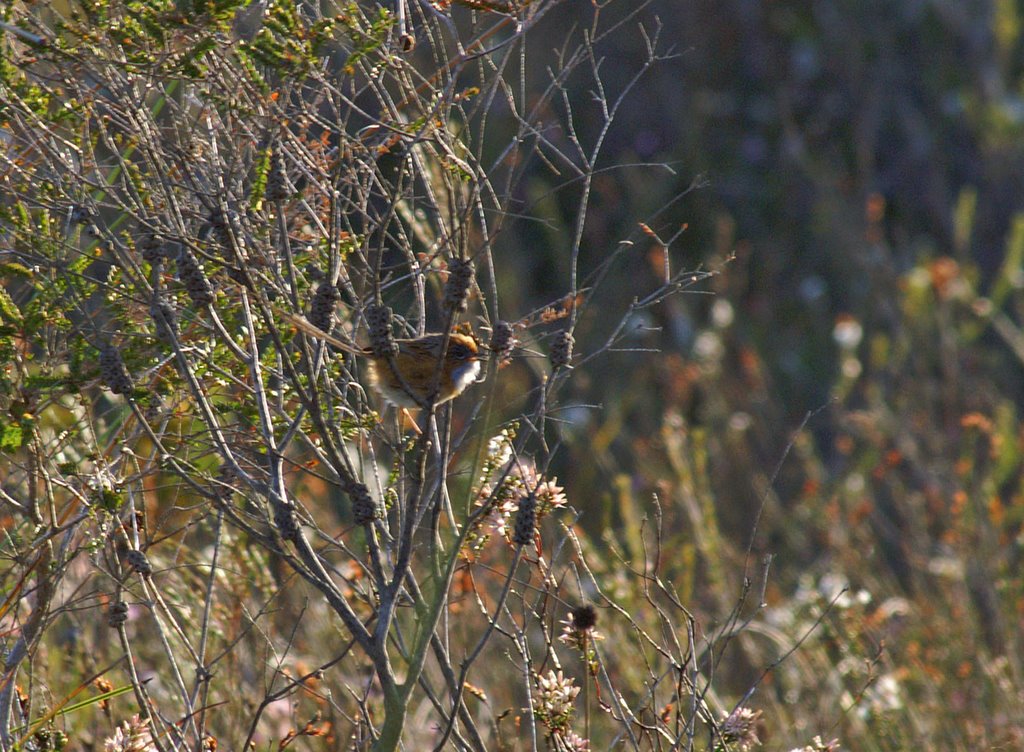
Our wait was enlivened by a several close Grey Fantails and once, a male Southern Emu Wren, which was a lifer for me and one that I had really wanted to see. Unfortunately, it gave frustratingly brief views.


A Grey Fantail singing.


A Southern Emu Wren appears briefly in the light of the setting sun.

The bristlebirds would call sporadically from either side of the path, and we caught a few brief glimpses of them as they appeared to react to each other.


Once a bird emerged onto the path having seized what looked like a caterpillar or grub, but in general, they were pretty quiet.

Even though there was no wind, it got surprisingly cold as the sun set, and I realised that I was hopelessly underdressed for the occasion. Fortunately, Tun Pin had brought along a spare jacket in anticipation of my lack of foresight!


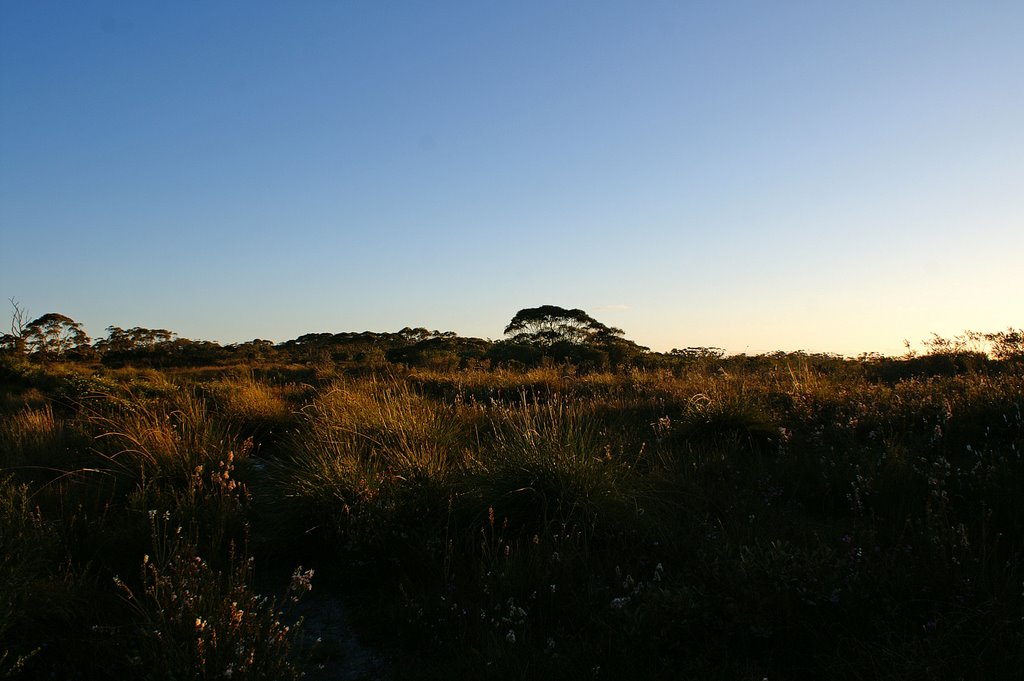
Dusk over the Barren Grounds.

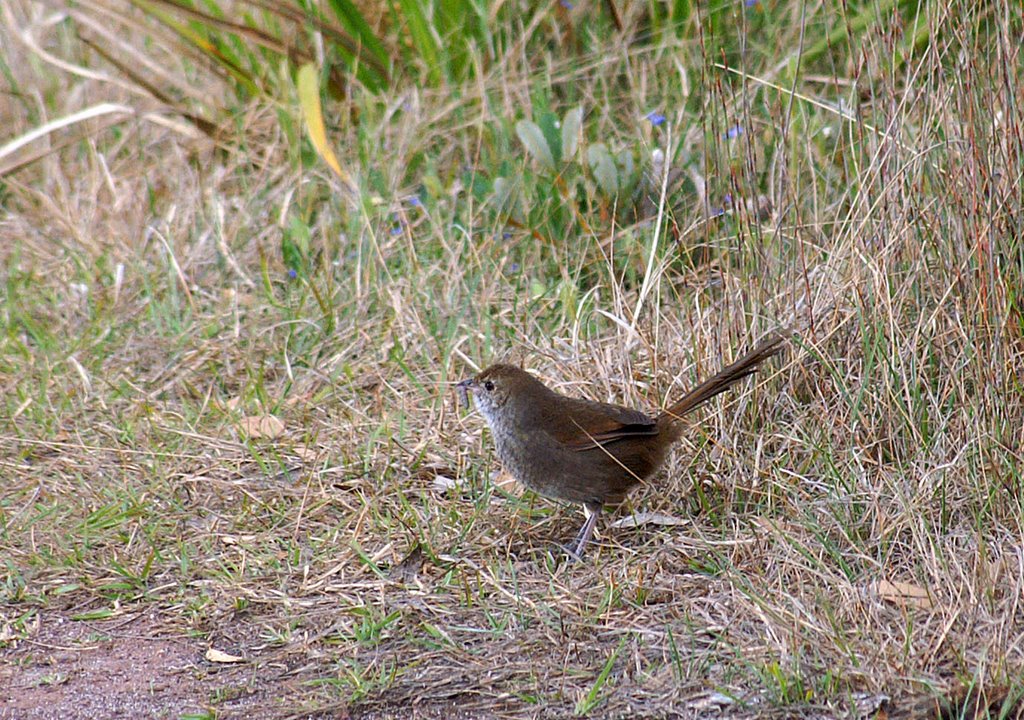
The light was fading and the temperature dropping to the point where I think if either of us had suggested calling it a day, the other would have happily agreed! But neither of us did, and so, way past the time when I would normally have given it up as a lost cause, suddenly a Bristlebird came out of the undergrowth right in front of us. It was another fleeting view, but just enough time to get the camera onto the bird and take one acceptable snap. It was a good feeling!


An Eastern Bristlebird showing off its bristles!

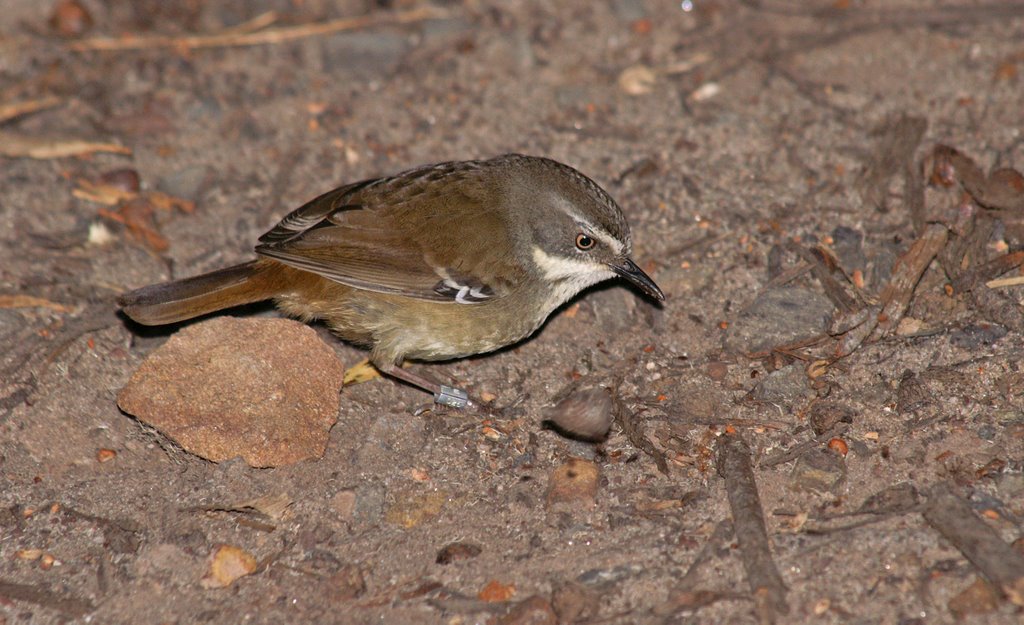
Back at the car we found some White-browed Scrubwrens hopping around in the open in near darkness, and they seemed much more approachable than birds seen earlier in the day. Two of the three birds were ringed (one of which was being fed by another so was presumably a juvenile).


A White-browed Scrubwren - inmate number 025 judging by his leg-iron!

A last visit to the loo also produced brief views of a Potoroo, which is a cat-sized marsupial that looks like a gigantic ball-shaped rat and hops like a kangaroo (the other name for it is 'rat kangaroo'). It bounded down the path in front of me and disappeared into a hole. I waited a little while for it to emerge again, but the cold beat me and we were soon on our drive back to Sydney after a memorable day's birding.

Thursday, November 09, 2006

Centennial Park and Port Botany, Sunday 22nd October

Today I was taken out for a real treat by Tun Pin Ong, a keen Malaysian birder temporarily residing in Sydney. It was so good to be able to go out with someone who knew the ropes, and I really benefitted from his local knowledge.

First stop was Centennial Park where Tawny Frogmouths are resident. Tawny Frogmouths are not uncommon in Sydney, but their cryptic camouflage makes them easy to overlook, as I had done on all my previous trips. On arrival at the lake I saw my first new bird of the trip - Hardhead, a diving duck which is common enough in the right habitat - I just hadn't visited any right habitat until now! They are reminiscent of Ferruginous Duck, which we see in the UK as an occasional visitor.


A male Hardhead.


Among the melee of Hardheads, Coots, Black Swans and pelicans that were coming to be fed we also spotted a lone female Musk Duck, which looks like a cross between a scoter and a Ruddy Duck! We were intrigued to count how many tail feathers she had. Most bird species have 12, but she seemed to have about 20!

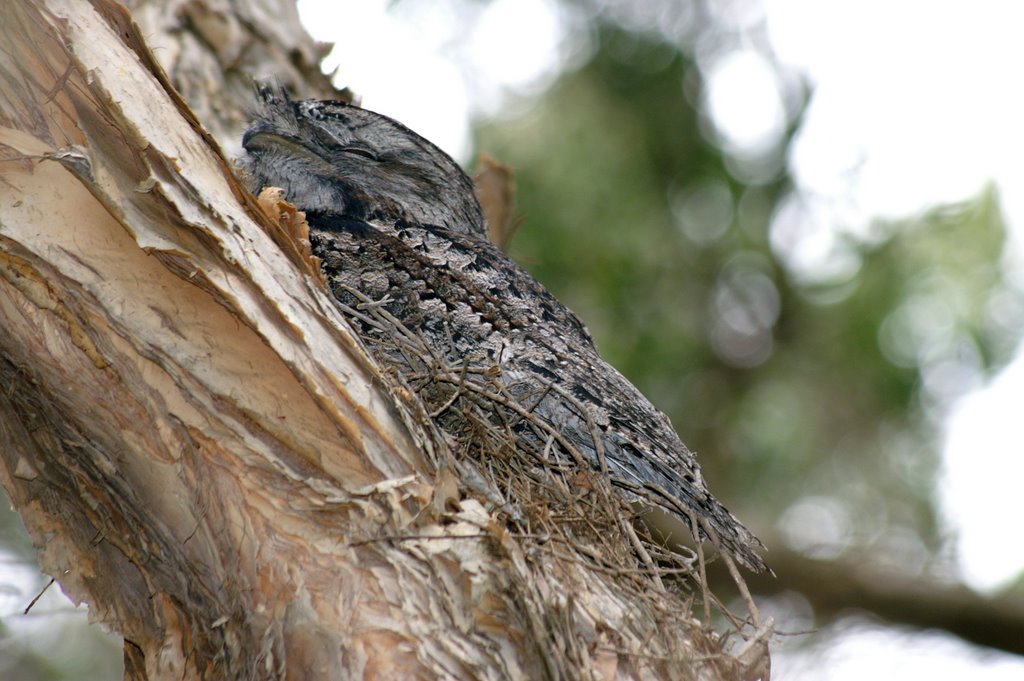
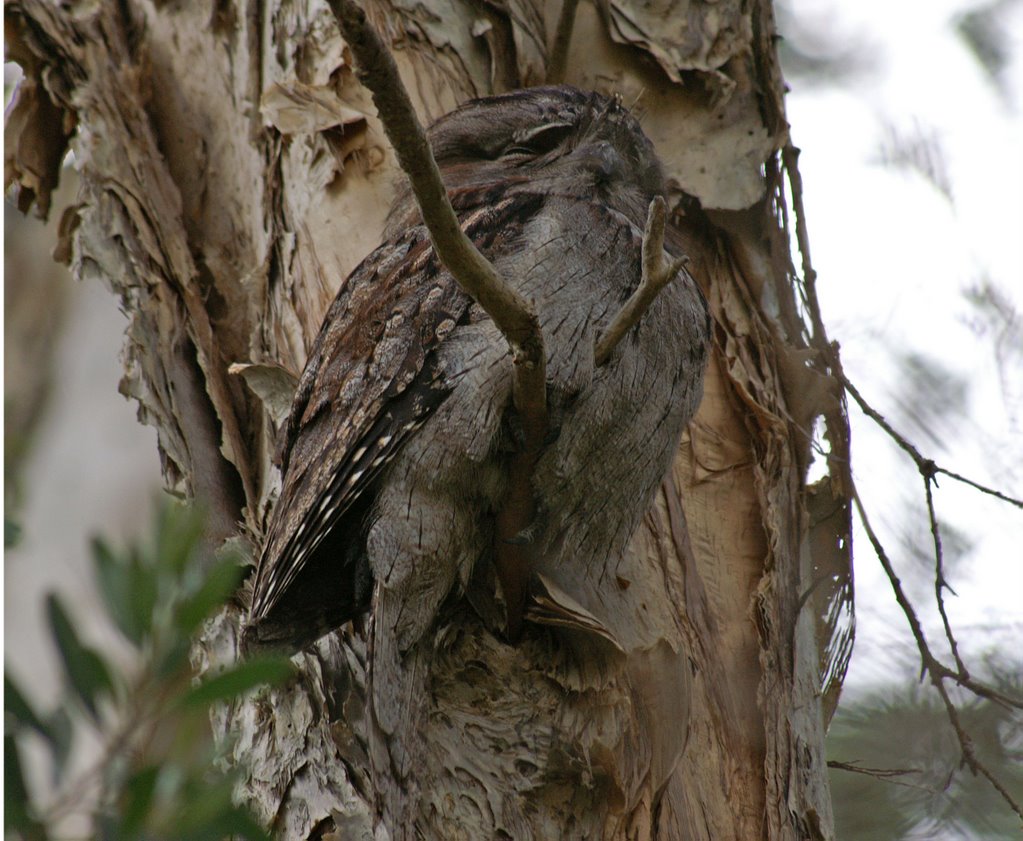
Tun Pin told me that the best chance we had of finding the frogmouths was to hope a local would point them out. This is exactly what transpired. A friendly man, of Mediterranean origin I would guess, made his way over to us and went out of his way to point out not only the frogmouths - the female sitting on her nest with one large fledgling and a male roosting in a tree nearby - but also a possum hiding in its daytime bed. The man had no binoculars but was obviously equipped with hawk-like eyes!


The female frogmouth on her nest.


The male succeeding in looking inconspicuous in a nearby tree.


Leaving Centennial Park behind, we headed for Tun Pin's 'local patch' - a sandspit at the mouth of the Penrhyn River. Having seen some of his pictures from here online, I was really looking forward to visiting the place 'in the flesh'.

One of the brilliant things about birding is that you get to visit some really unlikely places! So it was that we veered past the airport, down a dirt track near a container port, and ended up at a dead-end where, on a launch-ramp into the river, the local fire crew were testing out their fire-hoses! I wondered how many other tourists had ever set foot on this particular spot. Just beyond the fire engine was a small sandspit with a small roost of gulls, terns and waders, with the blue waters of the bay beyond them. We hadn't brought a telescope with us, and I was wondering how we were going to get anywhere near close enough to identify them, but I needn't have worried - Tun Pin had a cunning plan - just walk right up to them!

Huh! To get a decent picture of a wader in Malaysia I have to spend 3 hours in a cramped hide in 100% humidity and 34 degrees sweltering heat; here, in nice cool wind and bright yet not hot sunshine, you can just walk up to the birds, and take as many pics as you like in perfect light. Something's not right somewhere!


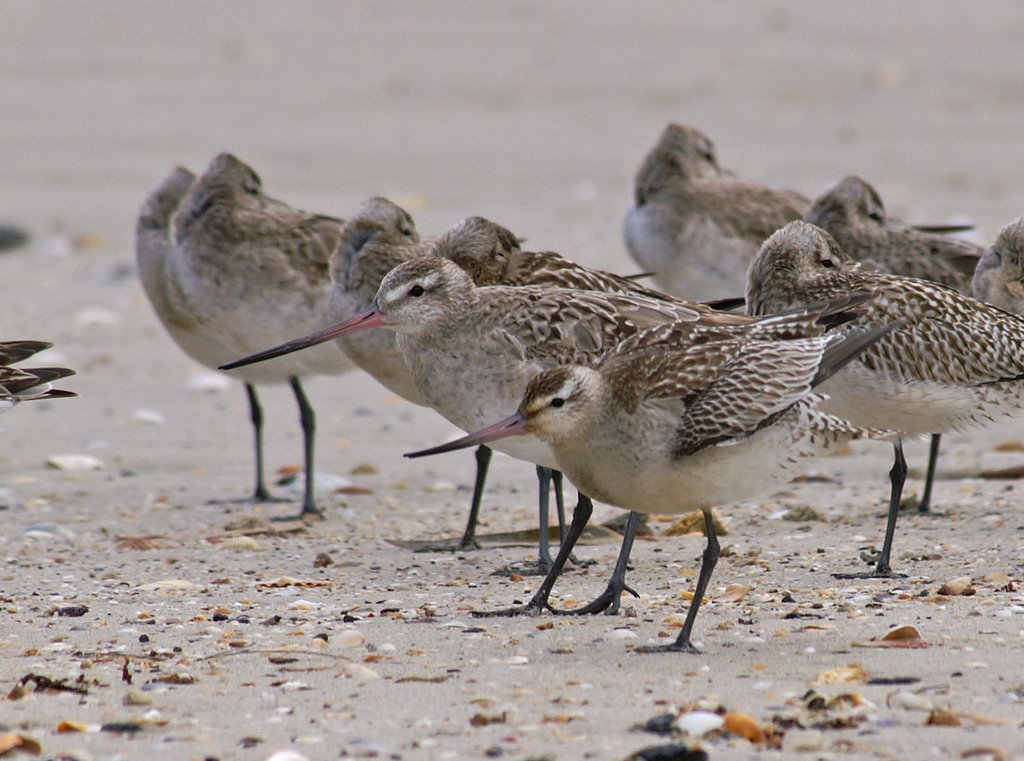
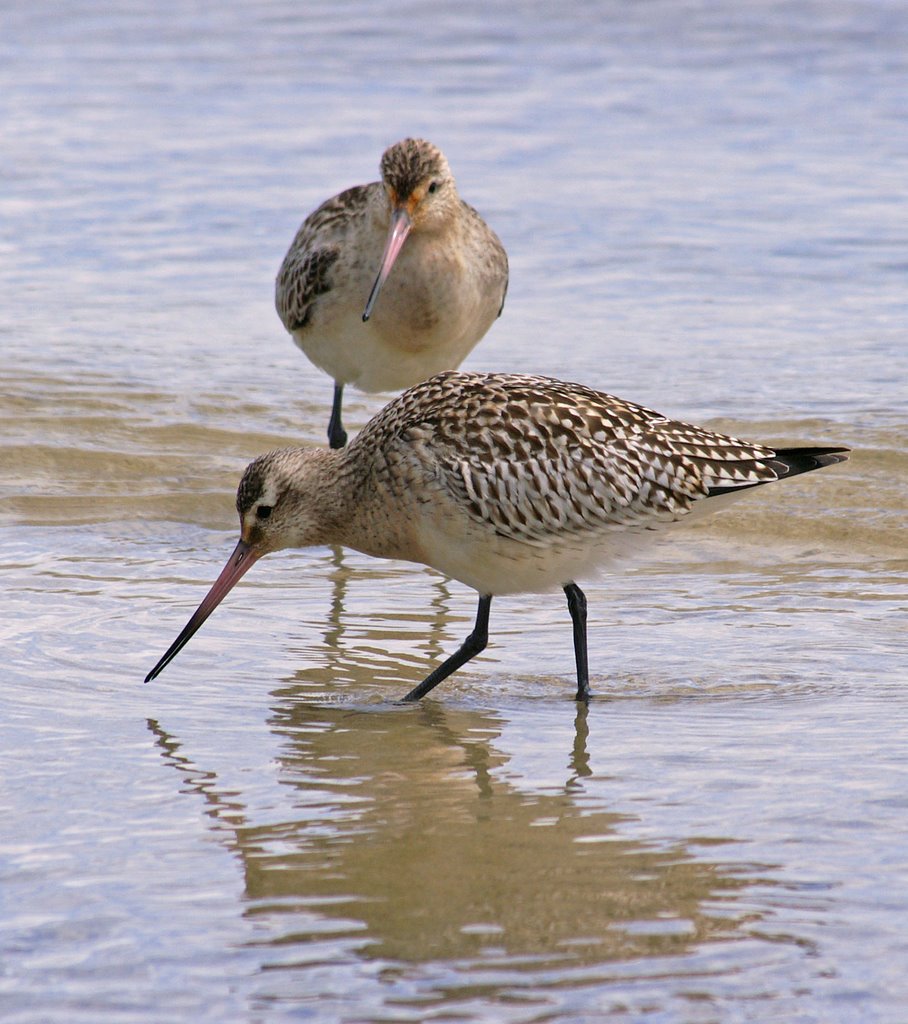
Here's a nice illustration of the difference in size and bill length between male (front) and female (behind) Bar-tailed Godwits. I think the male bird is a juvenile, with the bright notched and edged scapulars and coverts, while the female is an adult, as can be seen from her plainer grey-brown non-breeding feathers, with the odd old black and white breeding plumage scapular still hanging on.

One of the fascinating things for me about seeing these Bar-tails is that they are a different race from the ones I have been seeing in Malaysia. These are the race baueri, and they have the distinction of making the longest known non-stop migratory flight of any bird - around 11,000km - from Alaska to the east coast of Australia and New Zealand. Before making the trip, the birds feed up, adding up to 50% of their body weight in fat. Once they take off, it may be a week or more before they touch land again! To read more about this incredible feat, click here

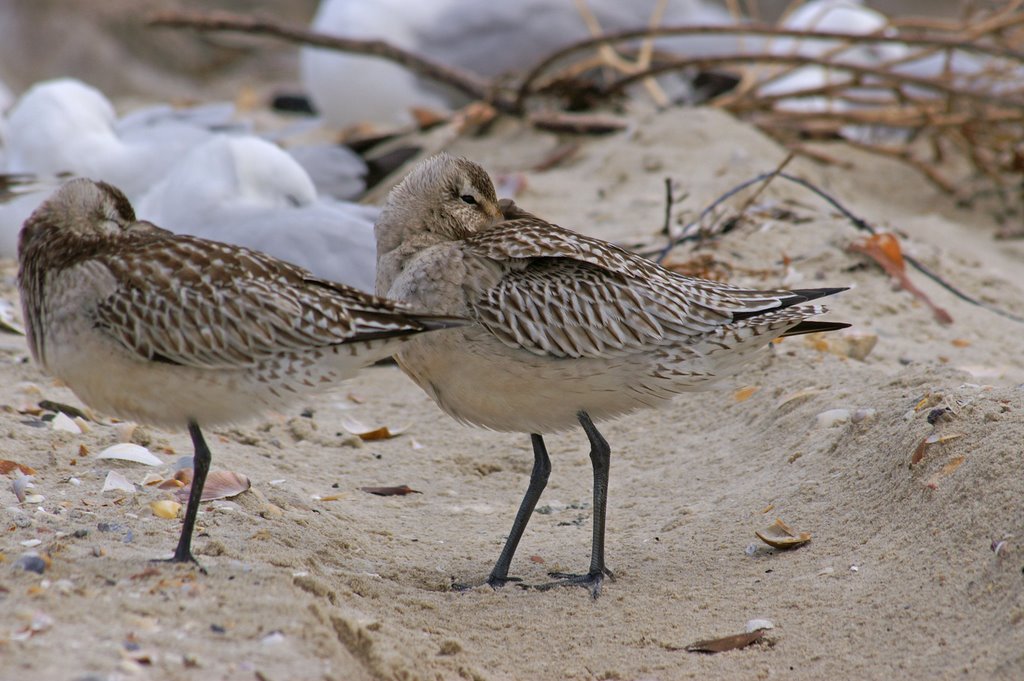
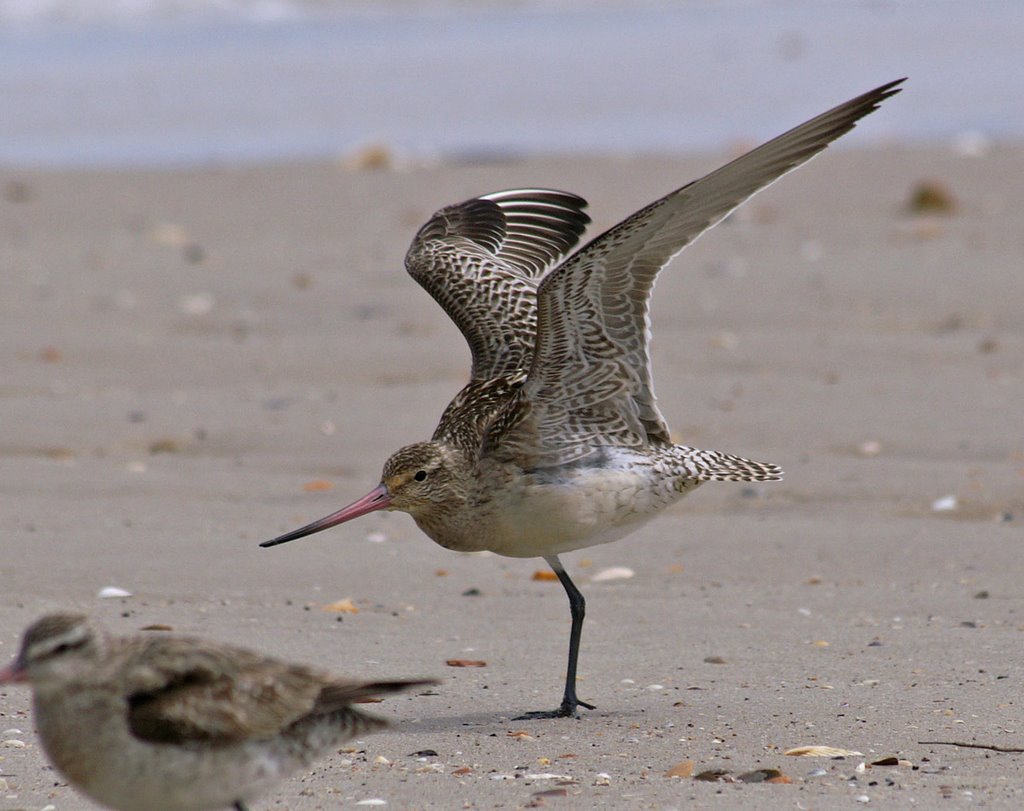
Baueri race Bar-tails are distinct from the race that passes through Malaysia in that they have a brown rather than white back, and more heavily barred uppertail, rump, underwing and axillaries. They are also bigger.


After a non-stop flight of up to 11,000km, I reckon these birds deserve a rest!


I tried to get a shot of the rump and back, but this was the nearest I got!


In addition to the above differences, I thought that the juveniles looked buffier, almost tawny, compared to the menzbieri race which we see in Malaysia, on their way to the wintering grounds in North-west Austrlia. In addition, the juveniles seemed to have a distinctive orangey-buff colouration to the supercilium in front of the eye.


A couple of juvenile Bar-tails.

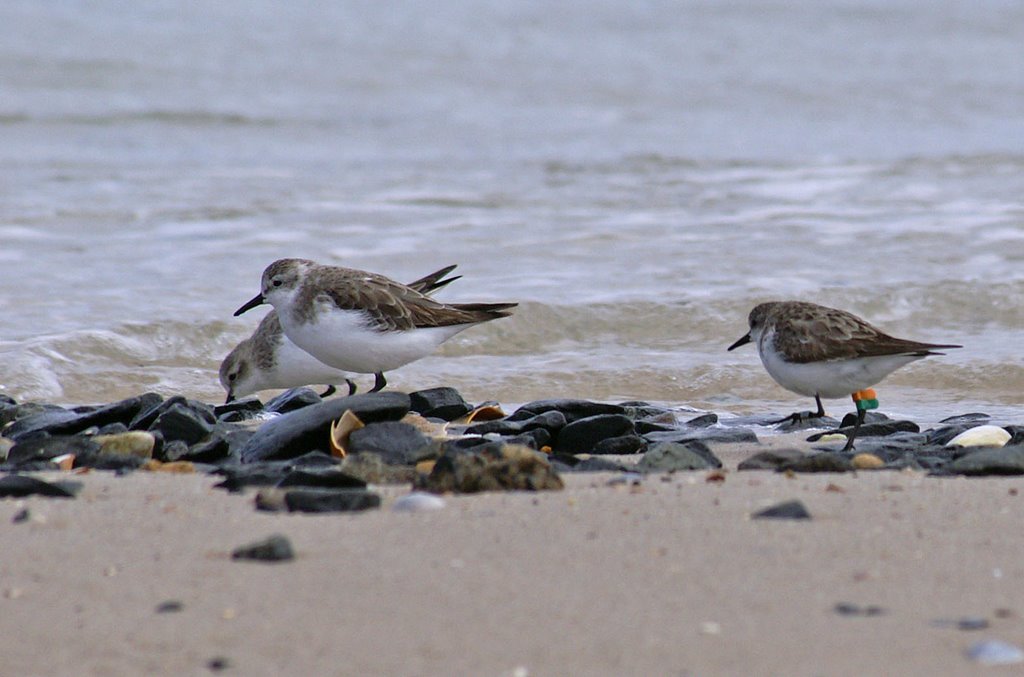
Apart from the Bar-tailed Godwits the only other waders visible on the spit were a few Red-necked Stints and a couple of Curlew Sandpipers. One of the stints was wearing leg-flags - orange above green on the right tibia, which indicates that the bird was probably ringed at that very spot, since my leg flag chart, kindly supplied by the Australasian Wader Studies Group, says 'Orange/Green - NSW, Australia, Stockton, Penrhyn Inlet'.


The leg-flagged stint to the right of an uncharacteristically large individual with an odd white half-collar.

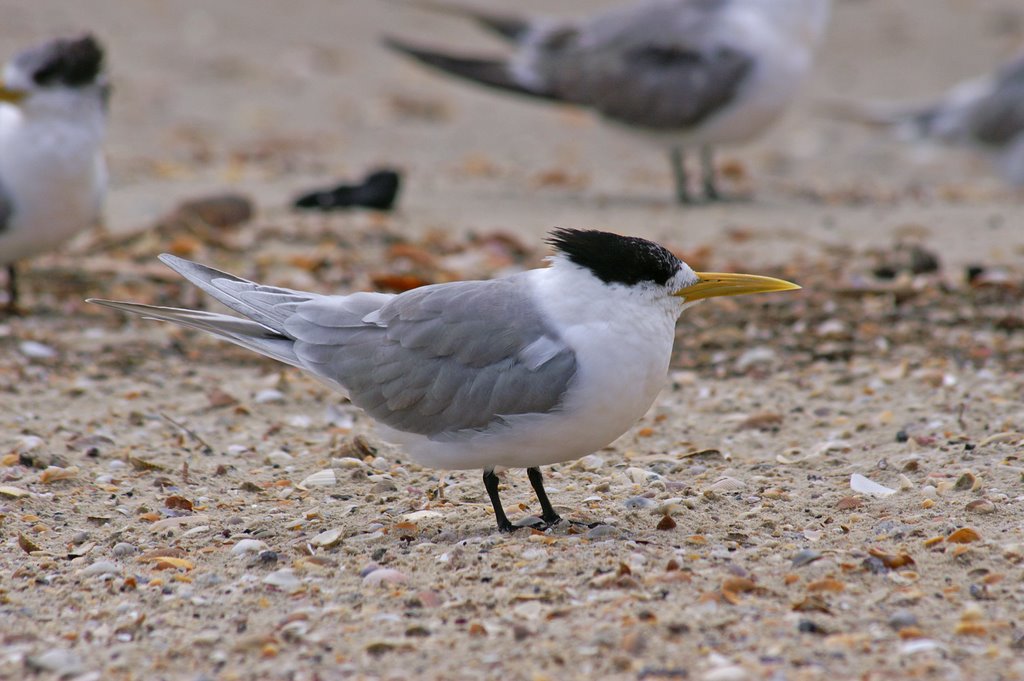
The gull and tern roost was predominantly Silver Gulls and Crested Terns.


Crested Terns are offshore visitors to Malaysia, so it's really great to be able to view them up close and personal!

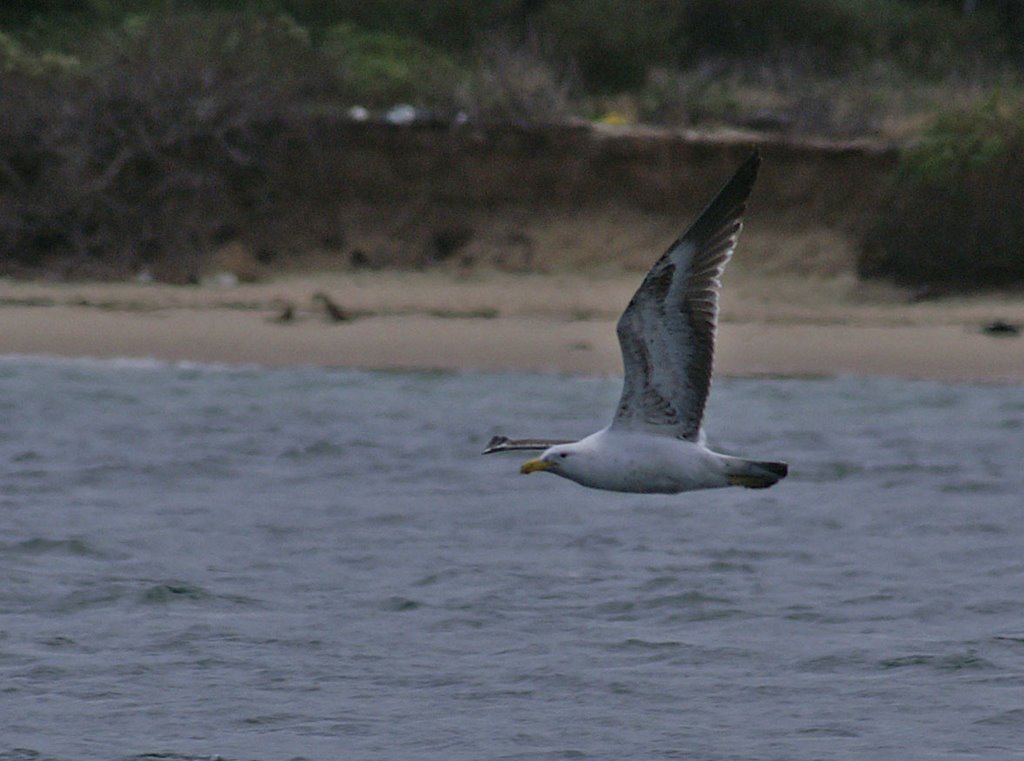
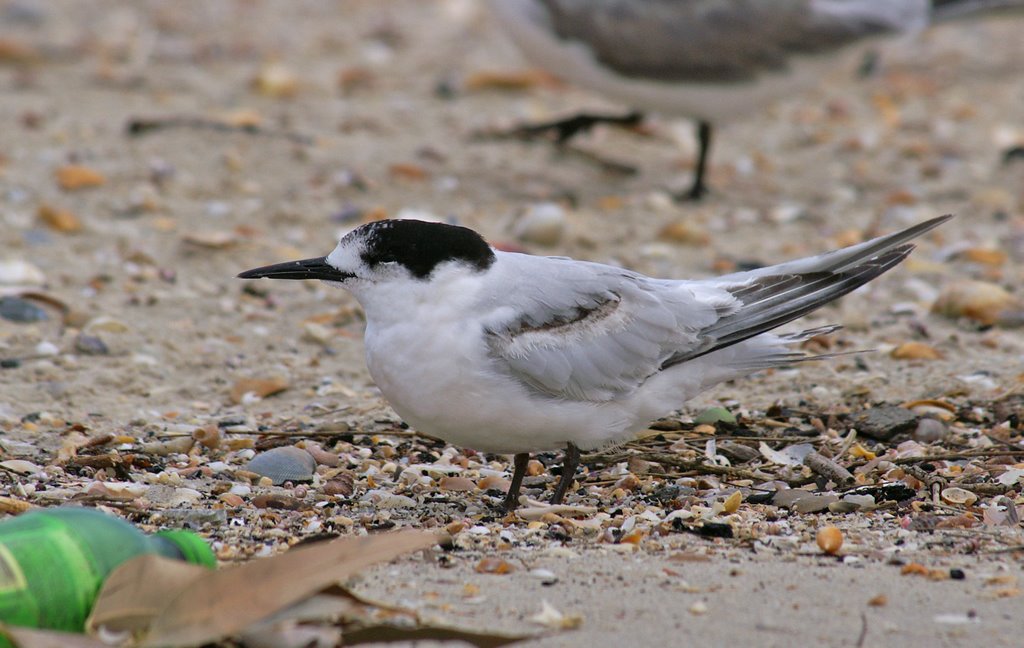
However, there was one gull and one tern that were different - a Kelp Gull - which looks halfway between a Lesser and Greater Black-backed Gull that I'm familiar with from UK, and a White-fronted Tern. The latter was my third 'lifer' of the day, and one that I was particularly pleased to see. They are uncommon winter visitors from New Zealand and are usually gone by early October, so I guess I was a little fortunate!


Kelp Gull - clearly a subadult. I'm not sure where this species has a 3 or 4 year maturity period. At any rate, I reckon it's one full moult away from adult-type plumage - so either 2nd or 3rd winter.


This White-fronted Tern looks like a 1st winter bird, with fresh scapulars and median coverts but very worn lesser and greater coverts. This bird had a distinctive rectangular headshape. It can also be identified by the white trailing edge to the inner primaries.

Mason Park, Sydney, Friday 20th October

In the afternoon, I took a short walk from Olympic Park to Mason Park. Mason Park was once slated as a dump-site, but has been preserved as a small wetland oasis which attracts Black-necked Stilts and Masked Lapwings to breed. Red-kneed Dotterels are regular there too, and in the northern winter, it is a haven for Sharp-tailed Sandpipers, 'Sharpies' as they are known to local birders.

New South Wales is in the midst o a 10-year drought, so there was much less water there than on my previous visit 2 years ago. Drought notwithstanding, the skies clouded over and I narrowly escaped a drenching by sheltering under a bridge just as the heavens opened. By the time the rain stopped, the tide had risen considerably and the number of Sharpies on the marsh had increased correspondingly.

I sat quietly and gradually birds walked right up to me.


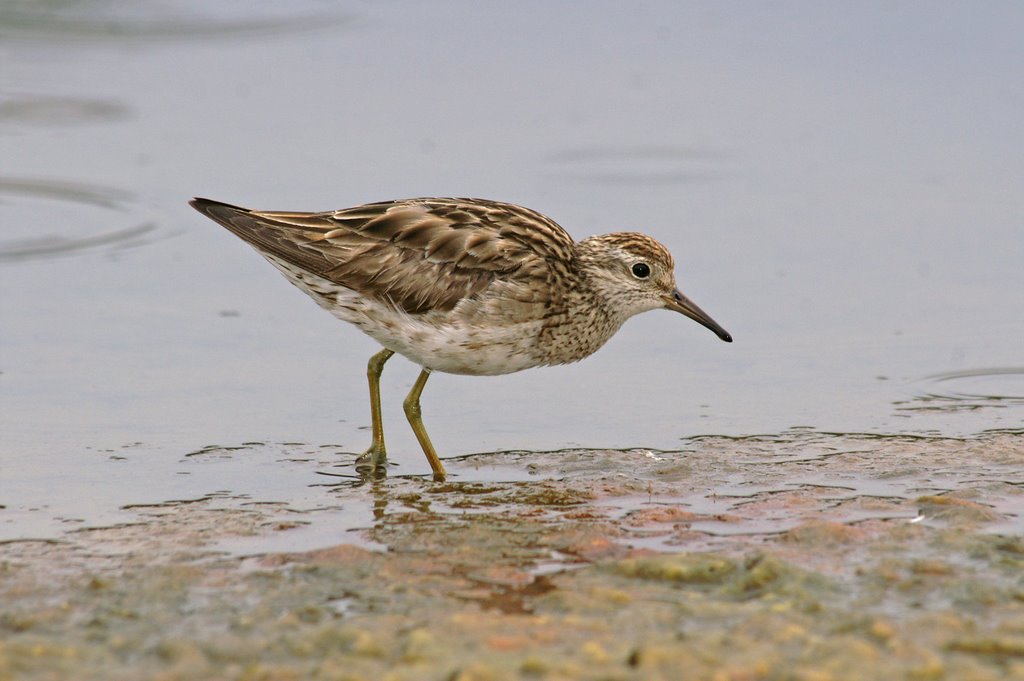
Here's an adult Sharp-tailed Sandpiper. The coverts are extremely worn and some tertials seem to be missing altogether so that the primaries are exposed. Sharpies have a rather pot-bellied shape.


By contrast juvenile Sharp-tails are really bright, smart birds, with beautiful rich colours. The scapulars are noticeably smaller than the adult's.


This colourful male Red-rumped Parrot was a nice bonus. They seem to pop up in various places but aren't really common anywhere.

Wednesday, November 08, 2006

Australia Trip: Friday 20th October

Most of my wife's family live in Sydney, so every couple of years of so, we pay a visit, usually to coincide with a wedding or two! Although it's primarily a family holiday, there are many opportunities to get out to see some of Australia's fascinating wildlife, so I'll showcase a sample of what I got to see over the 19 day visit.

Although we've been to Australia 3 times as a family, we have, until this trip, only spent time in Sydney and the immediate surroundings. This time we had a week or so between family commitments in Sydney, so we took the opportunity (graciously enabled by the loan of a car by my wife's sister and husband) to travel up to Brisbane and spend a few days with some old friends.

Our first free day was today, so we went to a favourite haunt from previous trips - Olympic Park. It's a great place for kids to play, and there is also a superbly managed wetland, complete with a functioning tidal mangrove system, and a complex of brackish lagoons and lakes. There's a mangrove boardwalk and an education centre which offers a variety of hands-on learning experiences for kids and adults.

Many of the city's common birds can be seen well there - birds in general seem much tamer than in Asia.


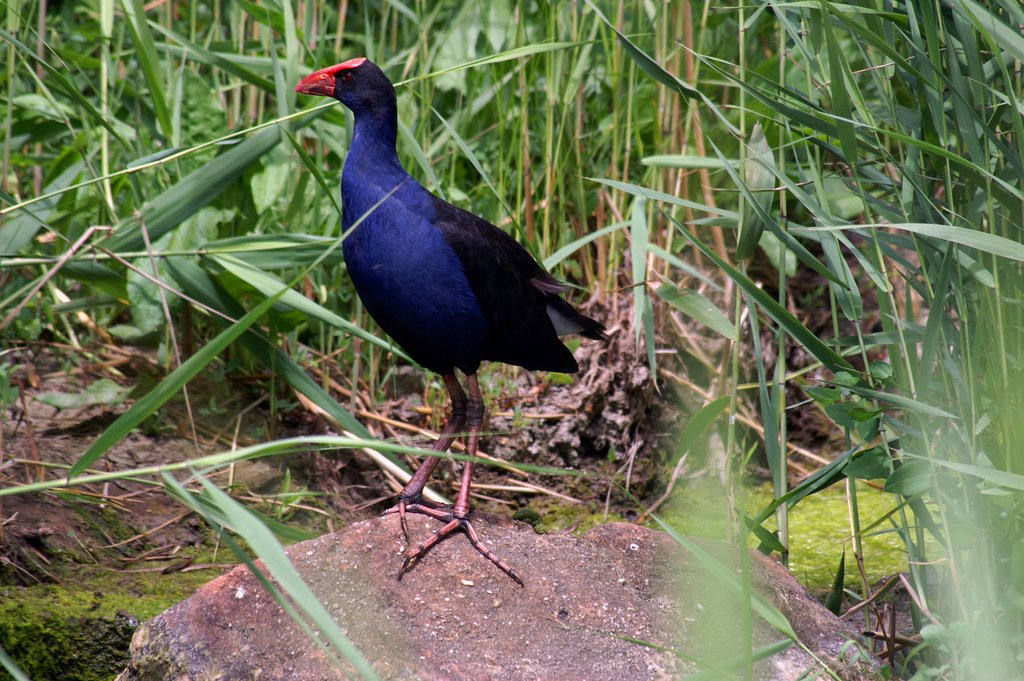
Purple Swamphens are a common sight in almost any marshland. This race - 'melanotus' - is much darker than the birds we see in South-east Asia.


Little Black Cormorant is another common wetland species. They have a beautiful deep ocean-green eye.


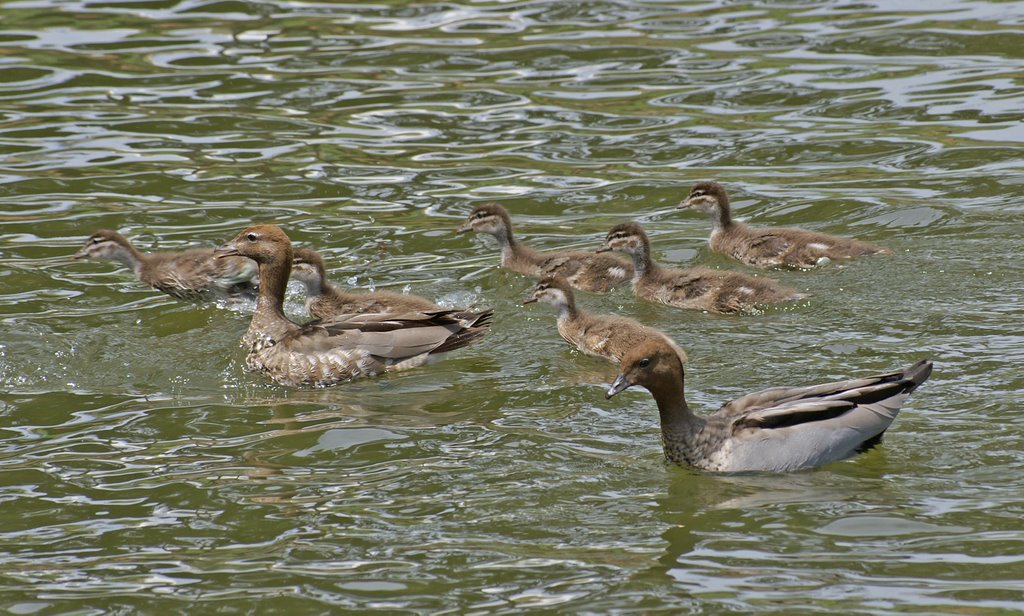
A family of Australian Wood Ducks. The male is on the right.


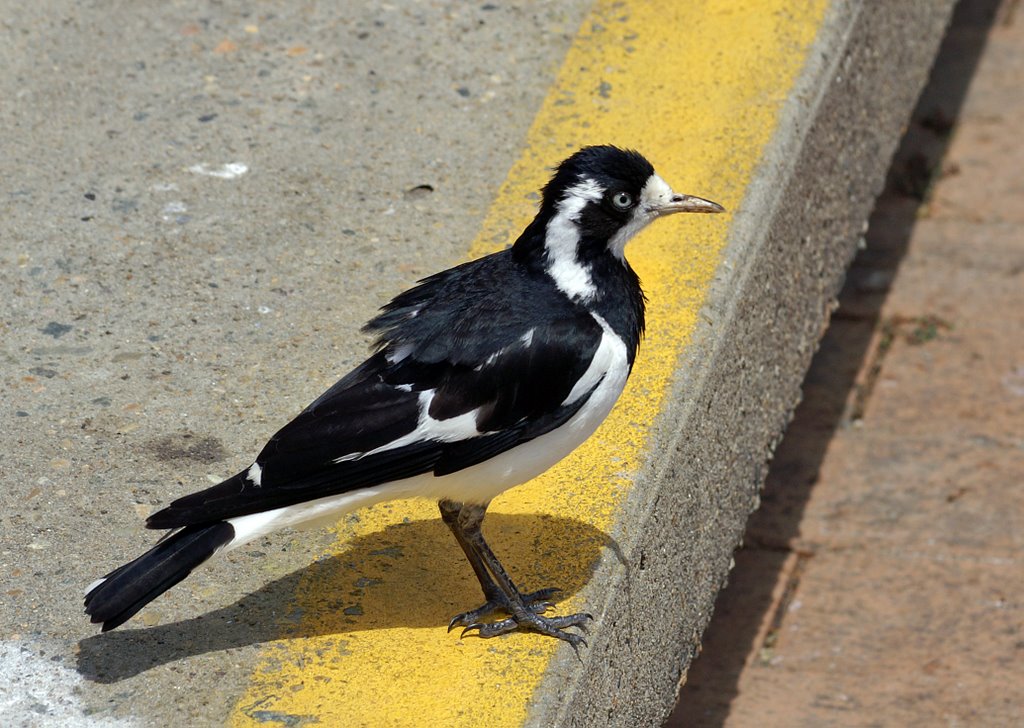
Magpie-Larks are everywhere! They have lots of other local names too. I heard them called 'Mud-lark' and 'Pee-wit'. This one, a female, is interested in the bread our kids were feeding the ducks.


A drake Chestnut Teal. These can look quite dark and dowdy in dull light, but the sun really makes them light up!


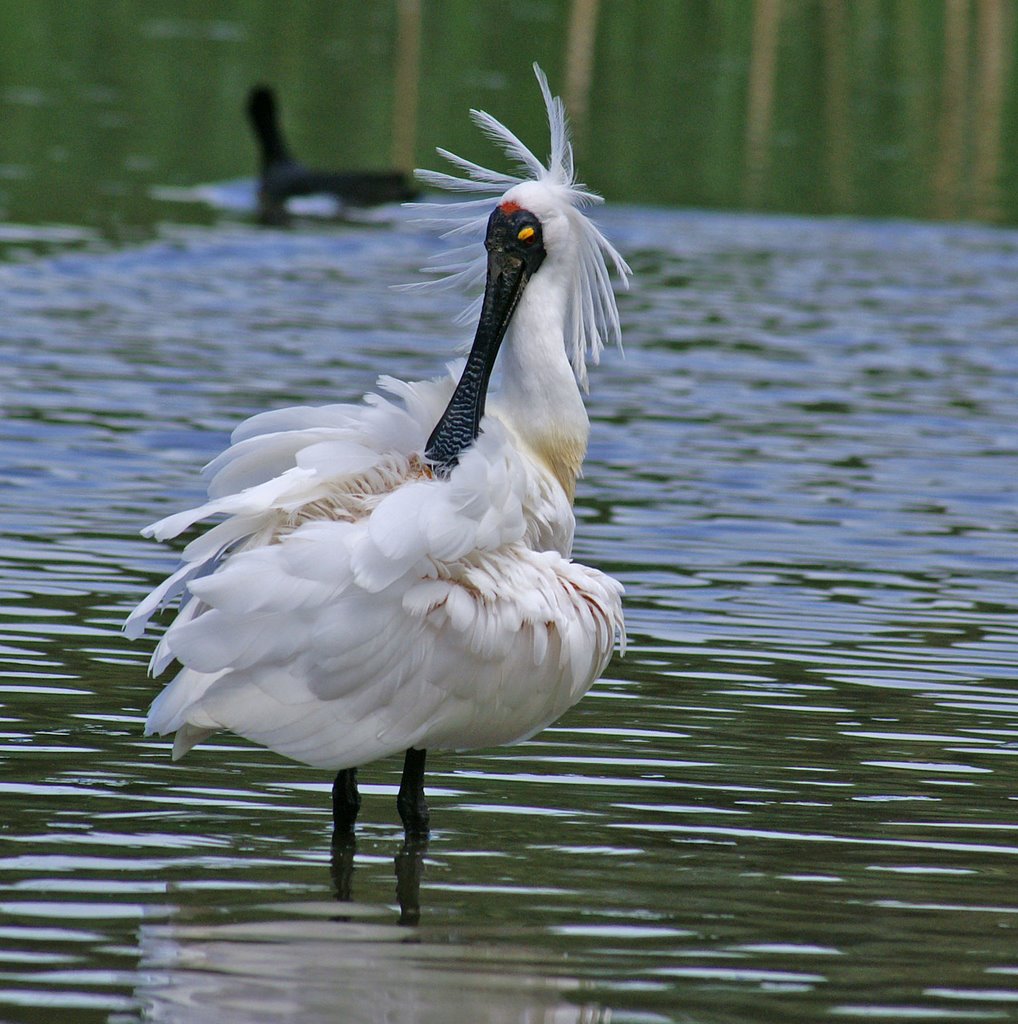
Royal Spoonbills are aptly named in my opinion - magnificently regal birds with one of the coolest hairstyles in bird-dom! This is one of a pair that frequented a quiet backwater in the park and spent much of their time displaying to each other, which meant the head-plumes were put to good use!


Willy Wagtail is another ubiquitous urban garden bird. It's actually a kind of fantail rather than a wagtail, but its habit of swivelling its tail constantly from side to side suits the name.


Fairy-Wrens are an Australasian speciality that I've always looked at in bird books and drooled over! Superb Blue Wren is the commonest of these occurring in the Sydney area, and the males really are superb! The song is amazingly like that of the Wren that occurs in Europe (Winter Wren), so, with that and the characteristic way the tail is often held cocked, its easy to see how the family name arose, even though they aren't closely related.
Wednesday, October 11, 2006

Wednesday 11th October

There was an afternoon high tide today, and I managed to spend a few hours at the site after a busy spell at work.


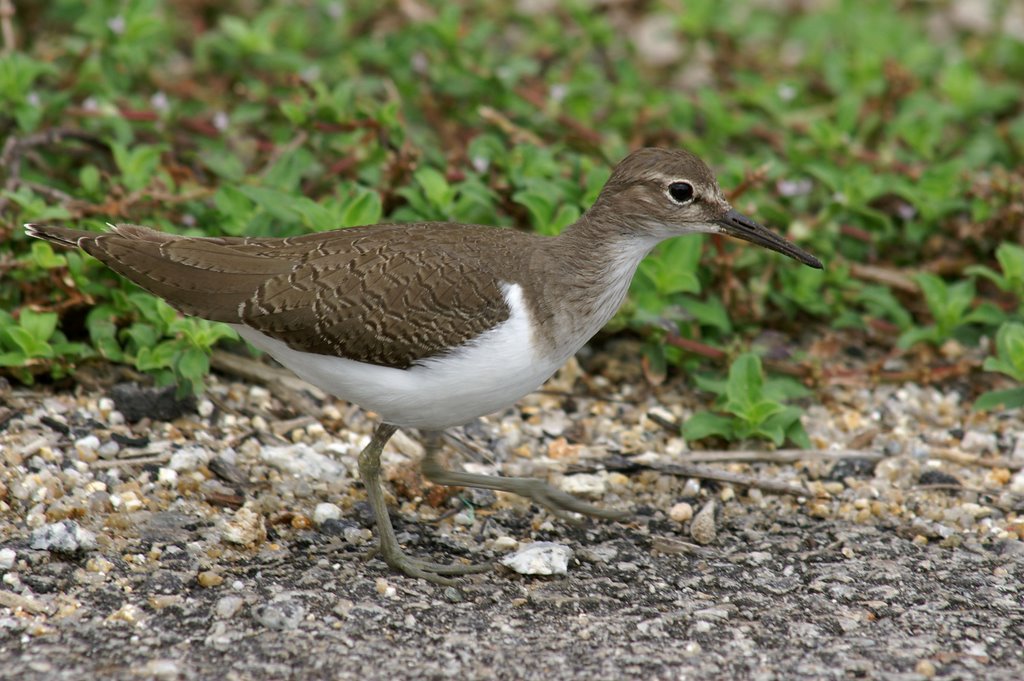
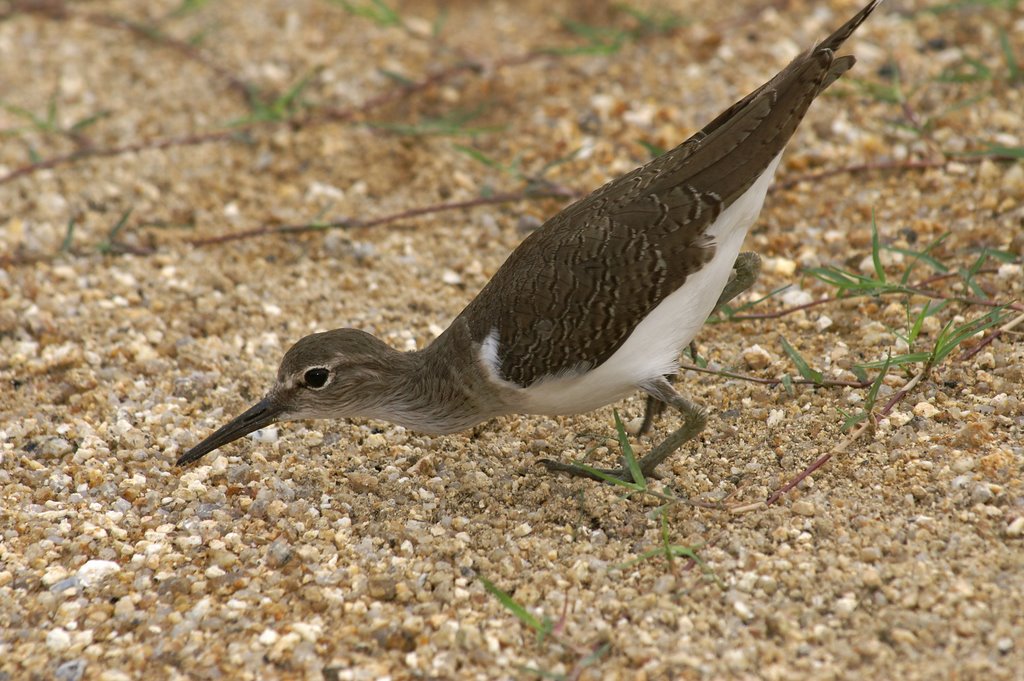
I visited another site that sometimes has Long-toed Stints. No stints, but I was rewarded with point blank views of an adult Common Sandpiper hunting insects. Note the very worn primary tips visible above the tertials.


The end of a bug's life is milliseconds away!