Friday, August 27, 2010

18 August 2010: Sungai Sedim, Kedah

Playing catch-up on my blog postings!

I took a visiting birder, Frank Smith, from New York, out today. His primary target was night birds, so we started pre-dawn at Sungai Sedim, where we had frustratingly brief views if a Gould's Frogmouth and heard Malaysian Eared-nightjar, and finished off the day at Air Itam Dalam, where Great eared-nightjar, Large-tailed Nightjar, Spotted Wood-owl and Barn Owl all performed well.

There were other birds of course, but not many pictures, as I was mainly focusing on finding the birds for Frank.


The much-photographed White-crowned Hornbill family stole the show! Here's the female, with her all-white tail.


And this is the juvenile, with vestigial dark markings on some tail feathers.


No mistaking Dad, with his glistening yellowish-white head and front half of the body.


This is what they were after, now if I can just...reach... a bit further..!


Nope - too far! What are YOU looking at?


This is how it's done, son... forget you're a hornbill and think hummingbird thoughts!


There was also a troop opf Dusky Langurs enjoying the fruit. I call this picture "Contentment", because that's what it is - a picture of contentment!


And this one has to be "Happiness is...!"

Kubah Preview

More pics to come when I've had chance to process them, but for now - here's the highlight of three and a half days at Kubah National Park, just outside Kuching,Sarawak...you really should go!


Click on the little arrows bottom right to enjoy the full screen version!

Friday, August 20, 2010

15th August 2010: Teluk Air Tawar coast and Kg Permatang Nibong

I was back at the roost site in good time for the high tide today, but, to cut a long story short, the waders didn't show up! That was interesting, because it means that yesterday they roosted on the bund simply because they had to - they'd flown there expecting the fishpond to be available, and when it wasn't, they'd been forced to use the bund. However, given the choice, I know they'd prefer a better roost site, and they obviously found one today.

I checked all the other previous roost sites I knew of, and all were empty, which means the birds have another site which I haven't found yet - so back to square one!

I then went to Kampung Permatang Nibong, to check out the place for a mystery duck which has been seen there a couple of times. No luck with that or the openbills, but there were lots of Cinnamon Bitterns flying around - males chasing females in what is presumably part of a courtship ritual.


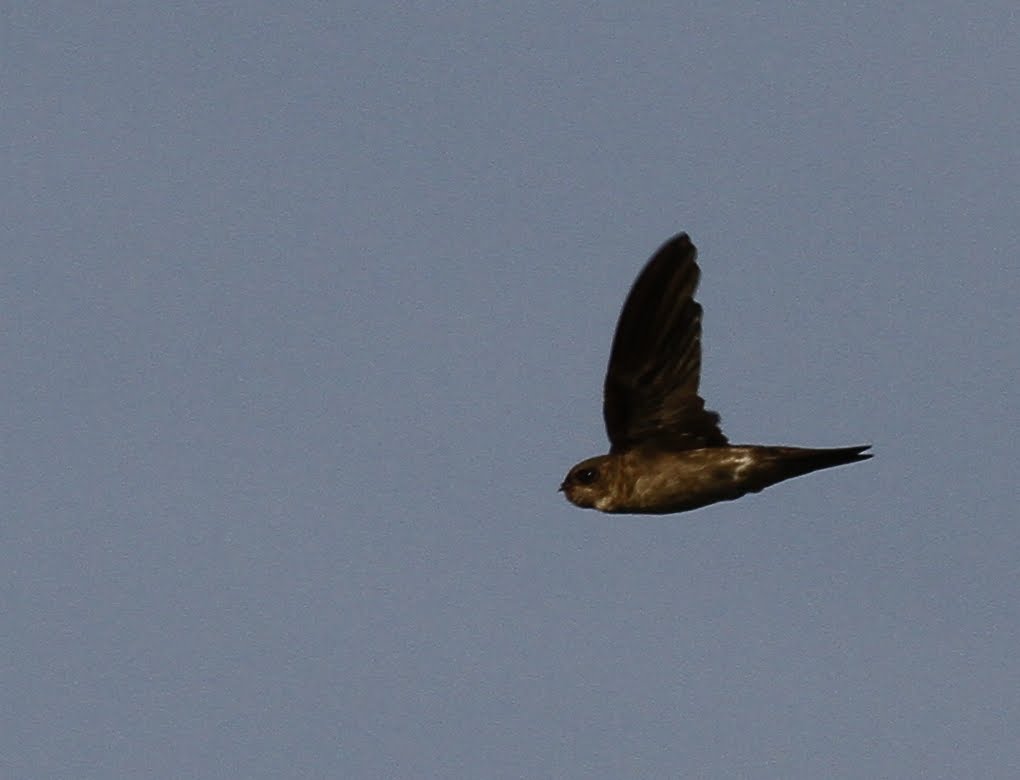
I also tried to get some shots of Germain's Swiftlets...


Thursday, August 19, 2010

14th August 2010: Teluk Air Tawar IBA, mainland Penang

Today I went back to the place where I discovered the wader roost on August 11th, this time armed with an assurance from the guard that he would let me in.

My excitement at the prospect of seeing the fishpond full of waders at close quarters received a severe blow when I arrived,to find a fishpond full of water! The heavy rains of the night before had filled it to a depth of one or two feet - too deep for all but the longest-legged waders! Still, I figured that the birds wouldn't know this, and would at least come in to look for a place to roost, so I set up the hide and began the long wait.

Birds started arriving almost as soon as I'd entered the hide, but not finding anywhere to land, they flew around for over an hour. As they did so they were wasting precious energy which they will need to continue their onward migration, and I couldn't help feeling bad for them. Eventually, they decided to roost on the bund between two fishponds.


Sand Plovers were the first to arrive... these are Lessers.


And here's a Greater (right).


As the tide rose, more and more birds arrived, but couldn't find anywhere to land.


Once a few birds took the big decision to roost on the bund, the rest quickly followed.


Counting and looking for leg-flags was pretty tricky!


Common Redshanks were the most numerous species.


The adults were still in breeding plumage, although the flight feathers looked remarkably unworn and fresh, making me wonder whether they have completed a wing and tail moult before migration, which would make a lot of sense I suppose.


By contrast, the first summer birds (below) have extremely worn flight feathers - these are still their first set of juvenile feathers which they've had since fledging over a year ago! The white secondaries and inner primaries, which lack pigmentation and are therefore weaker, are particularly worn.


This year's juveniles are, of course, still in pristine condition.


A mixed group of adults (dark, streaked below), 1st summers (plain, greyish above) and a juvenile (top right, facing away).


Some late arrivals.


The roost had several distinct species sections. This was the Redshank residence...


The sand plover, sandpiper and stint suburb...


... and the curlew compartment!


There was also just room for a gathering of godwits - a Black-tailed (left) with two Bar-tailed, showing the difference in bill structure nicely.


Aren't Black-tailed Godwits brilliant?!


Asian Dowitchers aren't bad either! There were only two today, and I didn't see them land.


A small flock of Curlew Sandpipers arriving.


This short-billed individual is probably a male.


Eurasian Curlews. Most birds were in heavy wing moult.


A flock of Great Knot flew over but I didn't see them land.


Juvenile Greater and Lesser Sand Plovers side by side. Generally speaking, juv Greaters are much colder brown than juv Lessers, lacking strong peachy colouration.


This young Grey Heron flew in, making the waders uneasy. Eventually it's presence spooked the Common Greenshank at the bottom right of the last picture. I wondered if Grey Herons would ever try to catch waders as prey.