Wednesday, December 06, 2006

Tuesday 31st October Brisbane - Sydney

On the road again! Reluctantly we said our goodbyes to Roger and the family - great to see you guys! We decided to take the inland route south to see a different part of the country. This took us (eventually) through Tamworth - country music capital of Australia so the guide books told us. Here we saw a gigantic statue of the Big Guitar, to add to the Big Prawn, the Big Banana, the Big Apple and the Big Pineapple we had already seen. I thought it was only Malaysia that was into these outsized monstrosities, but apparently not. What an enriching experience!


These Cotton Pygmy-Geese were actually seen on the evening of the 30th at a backwater near Ipswich. Not Ipswich, my home town in the UK, but Ipswich, Queensland! We were struck by how many Suffolkian place names were concentrated in this area - must have been where the Suffolk contingent of Her Majesty's convicts were originally settled. Oh, Cotton Pygmy-Geese are a pretty rare bird in Australia too!


Straw-necked Ibis was a bird that I had seen several times on the trip while driving. Until now we had never stopped to take a proper look, on the assumption that we would see one later on. So this one (actually a small flock) we finally did stop for, so that I could really say I'd seen one!


This was my other 'on-the-raod-tick' - a common bird we had missed in Brisbane - White-naped Honeyeater.


A juvenile Yellow-faced Honeyeater. This species is pretty common up and down the east coast.


Fairly typical scenery and weather from our trip south.

A little north of Tamworth we were looking for a place to spend the night, when we saw a sign advertising a camping area that boasted "Platypuses seen daily!" Since Duck-billed Platypus was at the top of my list of most-wanted Australian wildlife, the decision about where to stop for the night was easily made!

The camp site was by a very scenic river, and the proprietor told us he could only recall one person who had failed to see the platypuses during their stay. He told us that the baby platypuses even swim around in the water alongside bathers! This was great news for us, as we had supposed platypuses to be incredibly shy and difficult to see.

After a quick shower we quickly moved to the riverbank to see what we could see. Water dragons were common, and the frequent cause of false alarms. Eventually we disturbed a creature in the water that my wife saw and confirmed was a platypus, but all I saw was the splash as it dived! Despite staking out the place and waiting quietly till dusk, we didn't so much as get a sniff of another view. Knowing that we would need to leave reasonably early the next morning, I felt a little apprehensive. Was I about to become the second person to visit and leave without having seen a platypus?!
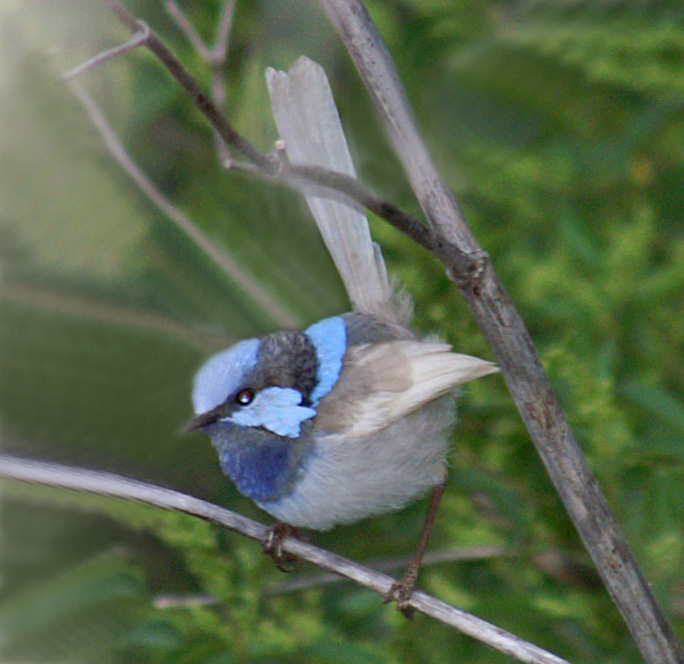


One of the things we saw while waiting for a platypus was this leucistic Superb Blue Wren.
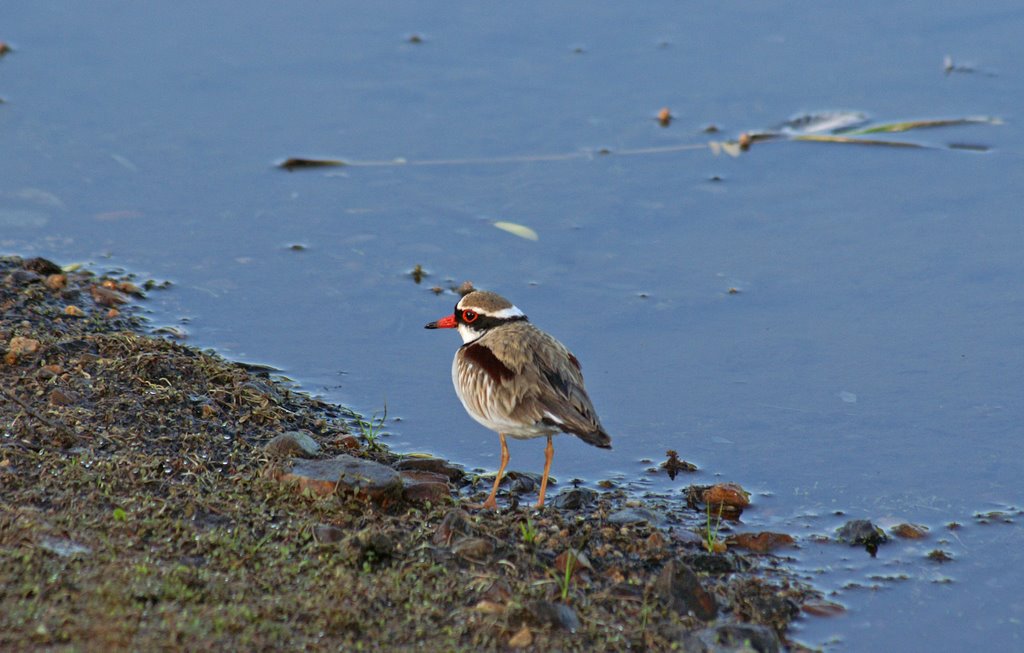


Black-fronted Dotterels (actually in the Charadrius family - like Ringed Plovers) were much in evidence but never really approachable.


The river at dusk, sadly platypus-less!

Friday, December 01, 2006

Monday 30th October

Our last full day in Brisbane. In view of the long drives on the following 2 days, we elected to give Lamington National Park a miss and go to Mount Glorious instead, which has many of the same species but is much closer to the city. I was sorry to have to do this, as Lamington is a place I really want to see, but we would not have been able to do it justice in the short time we had available, so we will have to postpone our visit to another trip.

On the way up we stopped at a small wildlife park, which had a number of native animals and birds in pleasant enclosures, and it was a treat for the kids to get such close views (not to mention a temptation for the photographer!). Outside the centre a (wild) Australian Brush-Turkey was carefully tending its nest-mound. These amazing creatures are relatives of mallee-fowl and megapodes, which build mounds in which to incubate their eggs. The head is bare of feathers so that the bird can accurately gauge the temperature of the mound by sticking its head into the earth. If it is too hot, it will kick away earth from the top of the mound, while, if it is too cool, the bird will add debris to the mound to increase the temperature. The powerful kicking of this male bird sprayed us and the entrance to the visitor's centre with dry earth and sticks!


The Brush-Turkey in action!


Purists look away! We never got a view of a Rose-crowned Fruit-Dove in the wild, but this is what one would have looked like if we had!


This was a rather attractive scene in the large wooded enclosure at the back of the park. Not sure which species this is.

Near the top we stopped at a tea room where they have several bird feeders at the back, and we were treated to a dazzling array of avian visitors during our lunch.


King Parrots were constantly present at the feeder.


King Parrot at zero feet range!


This Crimson Rosella was a little shyer ... shier?... more shy!


A stunning Red-browed Finch - one of a party that came to the feeders.


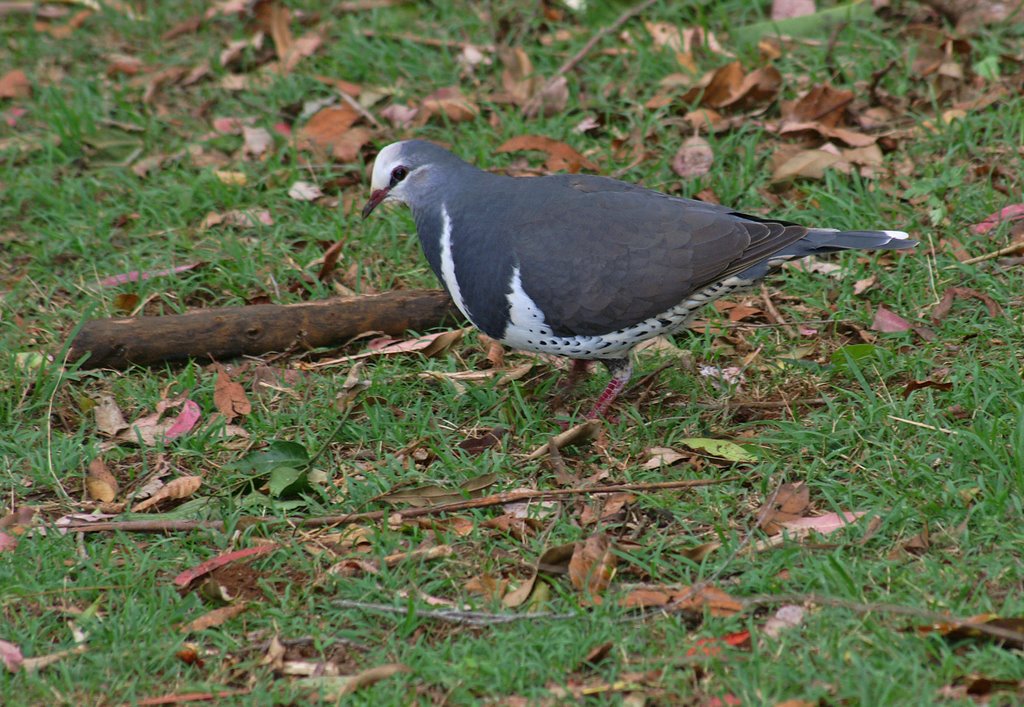
This Wonga Pigeon kept a respectful distance.


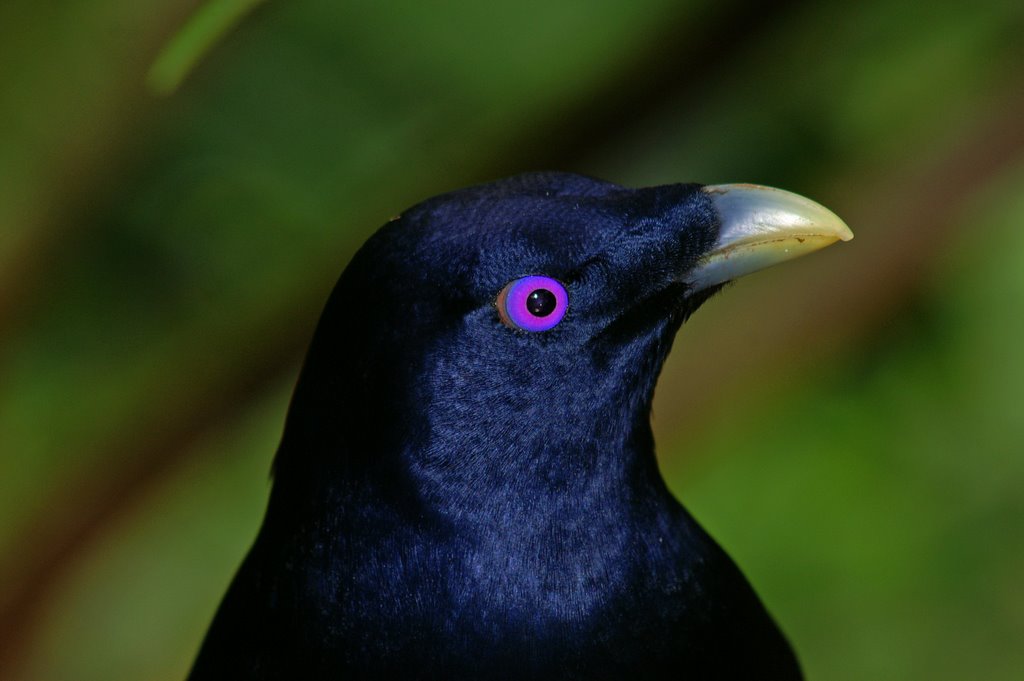
This Satin Bowerbird, on the other hand, came impertinently close!


But we forgave him because of that beautiful mauve eye!


We took a couple of short walks along trails into the forest, and found them quite birdy. In particular, I was chuffed to get several views of Logrunners, which reminded me very much of the wren-babblers in Asia.


An Eastern Yellow Robin - the common forest robin on the east coast.


A Pale-Yellow Robin, which we saw only here. They seem to be totally spherical, from whichever angle you look at them!


The confusingly-named Brown Warbler isn't a warbler at all, but a gerygone. They are usually above head height in the canopy, so this was a rare chance to get a good view.


A definite YEE-HAA! moment when this little fellow was spotted shuffling around in the undergrowth. A male Logrunner.


A face only a mother could love! Another Brush-Turkey to finish off with.

Sunday 29th October

Roger took me on an early morning excursion in search of Little Bitterns to a place I forgot to note the name of!


Another Brown Honeyeater trying to look its best!


Australasian Grebes are common Little Grebe lookalikes.


A Buff-banded Rail found while looking for Little Bitterns.


A young and an adult White-breasted Woodswallow

Bitterns were not in evidence, but there was a good selection of freshwater-loving birds about, and we managed to find a line of fruiting fig-trees, which were buzzing with birds. For Roger the most significant birds were about 4 Yellow-eyed Cuckoo-shrikes, but the bird of the day, and one of my favourites of the whole trip for me was Channel-billed Cuckoo. C-b Cs are just ... ridiculous! The call has to be heard to be believed - a kind of maniacal screaming - and the bird as a whole has the look of a creature that is barely hanging on to sanity! It parasitises crows and currawongs, and consequently gets mobbed wherever its presence is discovered - a factor that may account for its permanently 'on-the-edge-of-reason' appearance!


Perched, Channel-billed Cuckoos are a bit reminiscent of hornbills


In flight, someone has written that they look like flying walking sticks!


Figbirds are the barbets of the Antipodes.


This scary-looking creature is the equally scarily-named Water Dragon, but as far as I know, it's harmless to humans.


A Willy Wagtail busily nest-building.

In the late afternoon we went to look at a wildlife reserve created by the Brisbane Port Authority. Unfortunately the hide that overlooked the wader roost was locked, and the grandiose visitors' centre, which held the key to the hide, closed at about 4pm, so we were limited to looking at the birds through an imposing 8 foot fence. Apart from the shorebirds, the place was notable for large numbers of hares hopping around the grassy areas, looking quite incongruous on the wrong side of the planet!


A mixed flock of ibises, egrets and about 40 Royal Spoonbills.


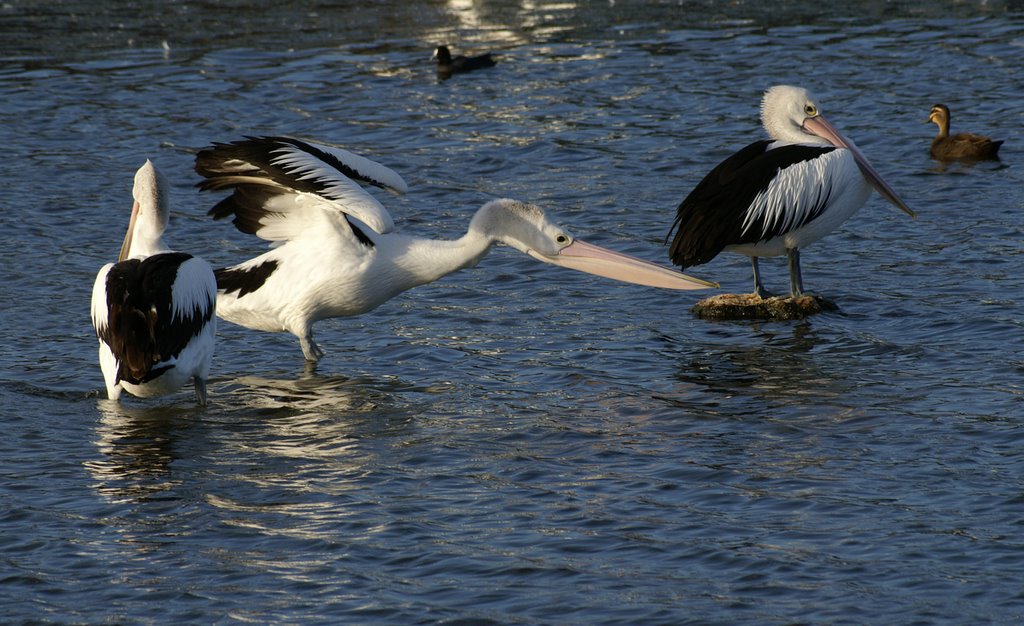
Some pelicans in the late afternoon light.

Saturday, November 25, 2006

Brisbane 28th October

In Brisbane we stayed with old friends from Asian Wetland Bureau days back in the early 90s. We had a great time of catching up after 15 years, and Roger was keen to take me around some of the birding sites in the area. Roger has some of the sharpest ears of any birder I know, which proved a mixed blessing. On the plus side it meant that we got onto many birds I might otherwise have missed. On the other hand, it was frustrating to know how many birds were around which I couldn't set eyes on!

On our first morning, we took an early trip to Moggil State Forest in search of Forest Kingfisher and Painted Buttonquail. We saw neither and the forest was actually pretty quiet. The most embarrassing moment was when we spotted a Kookaburra sitting on a gate post. It wasn't until we took a second look at it that we realised it was actually made of pottery! Better keep quiet about that one!


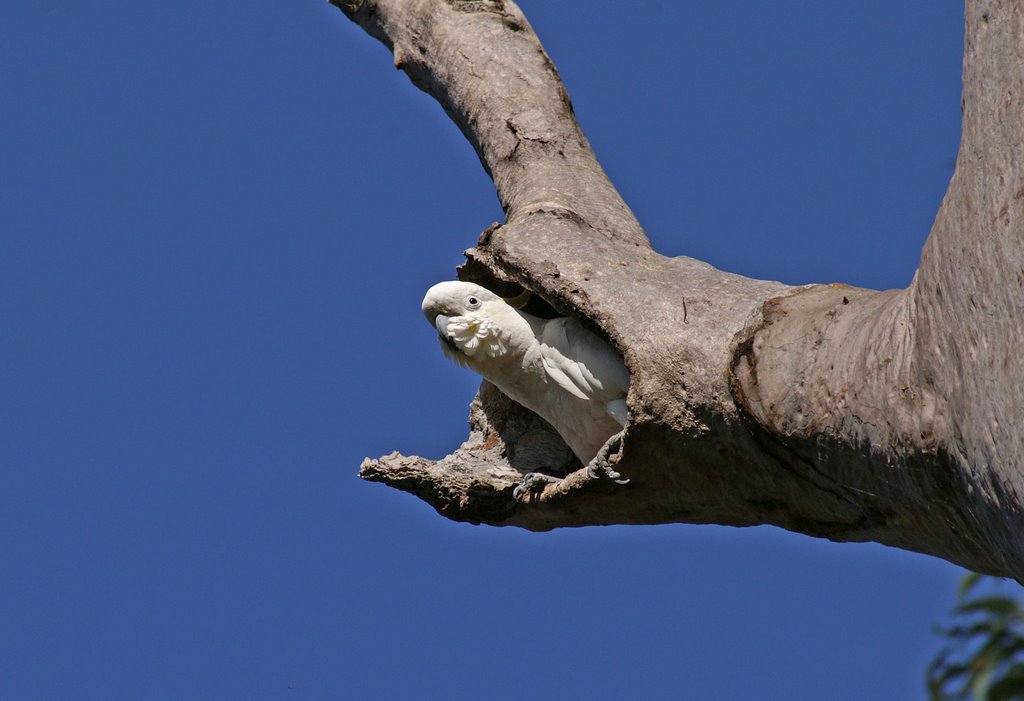
A Sulphur-crested Cockatoo in its natural habitat.

En route home we stopped by an undistinguished stretch of suburban verge to see another of my sought-after species. Here it is:


When I think of thick-knees (or stone-curlews), I think of wild, remote places. I certainly wouldn't have expected to find a pair sitting just inches away from a footpath in a busy suburban neighbourhood. This pair of Bush Thick-knees live on a narrow strip of scrub in just such an environment.


A bit like frogmouths, they rely on blending in with their environment to escape detection by day, and are nocturnal feeders. At night we heard their unearthly screams just down the road from Roger's house. Luckily he had told us about this possibility in advance, otherwise we might have thought some gruesome murder was being committed!


You can just about see me taking the picture in the bird's iris, with Roger standing in the background!

In the afternoon took a walk along the river at a bafflingly-named spot called Fig Tree Pocket.


A small colony of Rainbow Bee-eaters were nesting in a horse paddock and really caught the eye in the late afternoon sun. They are somewhat similar to the Blue-tailed Bee-eaters we get in Malaysia, but their colours, especially the greens, are even more intense. Also I noticed that the tail-streamers were slightly spatulate at the tip.


I snapped this female Australian Darter as it flew over the bee-eater colony.

Down by the river was some tangled undergrowth where Roger told me I had a good chance of seeing Red-backed Wren, another of the species I was keen to see and photograph. Male fairy-wrens are polygamous and move around with a harem of females and young birds. In response to Roger's expert squeaking, several birds emerged, but the male kept frustratingly in the background.


Part 2 in my series of pictures of dull females of colourful species: Red-backed Wren!


Part 3: Rufous Whistler. Apparently the male is a really smart bird but I wouldn't know - I only saw this female!


This Pied Butcherbird amused us by making use of the public amenities in the local park.

Sydney to Brisbane 27th October

Our second day at Moonee Beach north of Coff's Harbour. An early morning foray up onto the headland produced a Tawny Grassbird and an Australian Pipit. The weather was not so wonderful - with fine misty rain on and off.


Grassbirds are usually pretty skulking, but maybe this bird was trying to dry out after the rain!


A view of the upperparts.


Australian Pipit is a recent split from Richard's Pipit. It seems a slighter, smaller bird, and the call is more reminiscent of Meadow Pipit.


In the same bush that held the Golden-headed Cisticola yesterday, a small group of Chestnut-breasted Mannikins. Mannikins are in the same genus as the munias of South-east Asia. I was impressed by Chestnut-breasted - a new bird for me.

Sydney to Brisbane 26th October

Back to our Australia trip. Here are a few more shots from our first day at Moonee Beach and Coff's Harbour.


There are a few birds that I'd set my sights on seeing this trip. One was the Regent Bowerbird,the male of which is a simply stunning combination of black and rich yellow plumage. The good news is that I saw some; the bad news is that the only ones I saw well were females, which are pretty drab by comparison!


Galahs are a pretty common cockatoo, but I really like the unlikely combination of their pink and cloud-grey plumage.


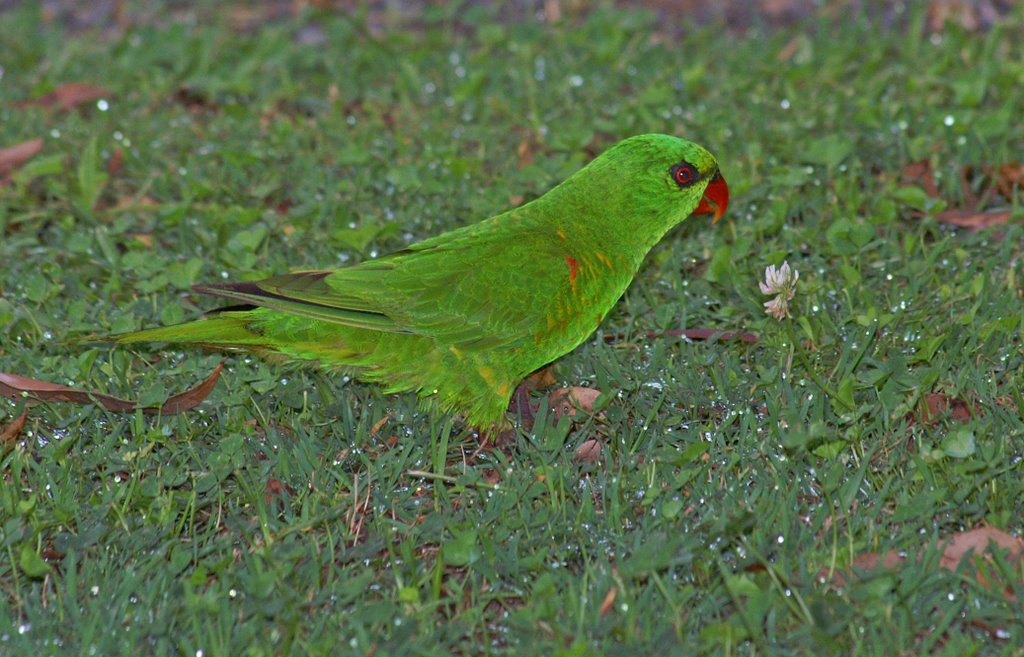
Scaly-breasted Lorikeet - a smaller and less colourful cousin of the Rainbow Lorikeet.


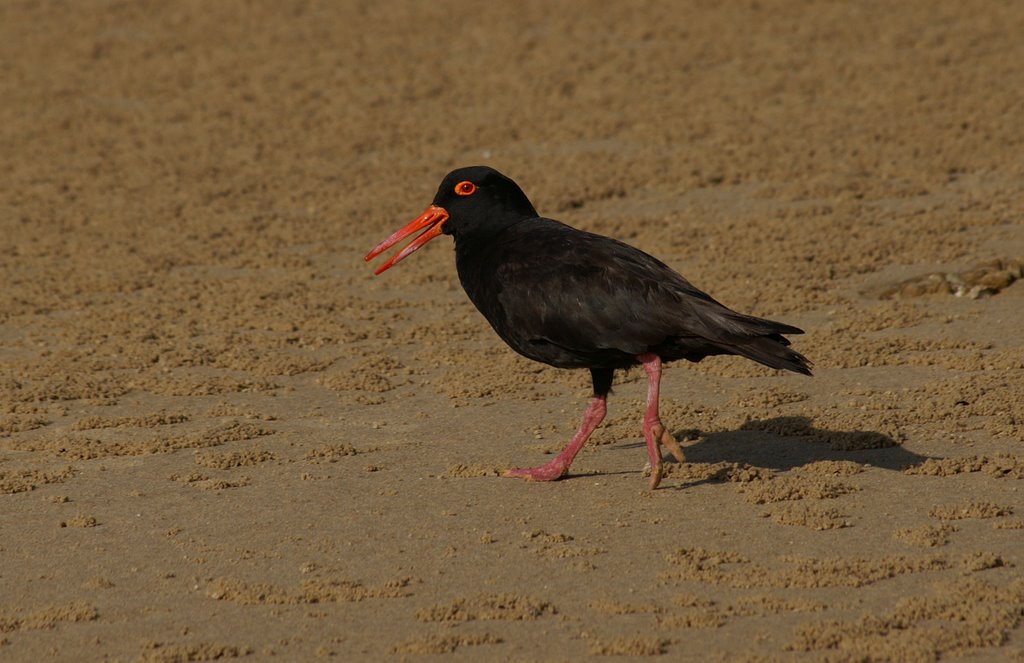
There were a couple of oystercatcher species on the sandbar - Sooty looks pretty smart with its neon-coloured bill and eye-ring.


Pied was a new bird for me. The difference between this and the species we get in Europe and Asia is most obvious in flight, when the short wingbar is revealed.


In the afternoon of the 26th we walked out onto Muttonbird Island, which is the headland that sticks out from Coff's Harbour. From the tip we were able to observe several pods of Humpback Whales moving south, not too far offshore. We got better views here than on the whale-watching tour we had paid through the nose for in Sydney, and all from the comfort of a stationary watchpoint!


A reflective Pacific Black Duck sits in the river leading to Moonee Beach.


A Sacred Kingfisher - a fairly common bird that I had contrived to miss until now - so I was glad to finally see one.