Wednesday, September 27, 2006

Thursday 21st September 2006

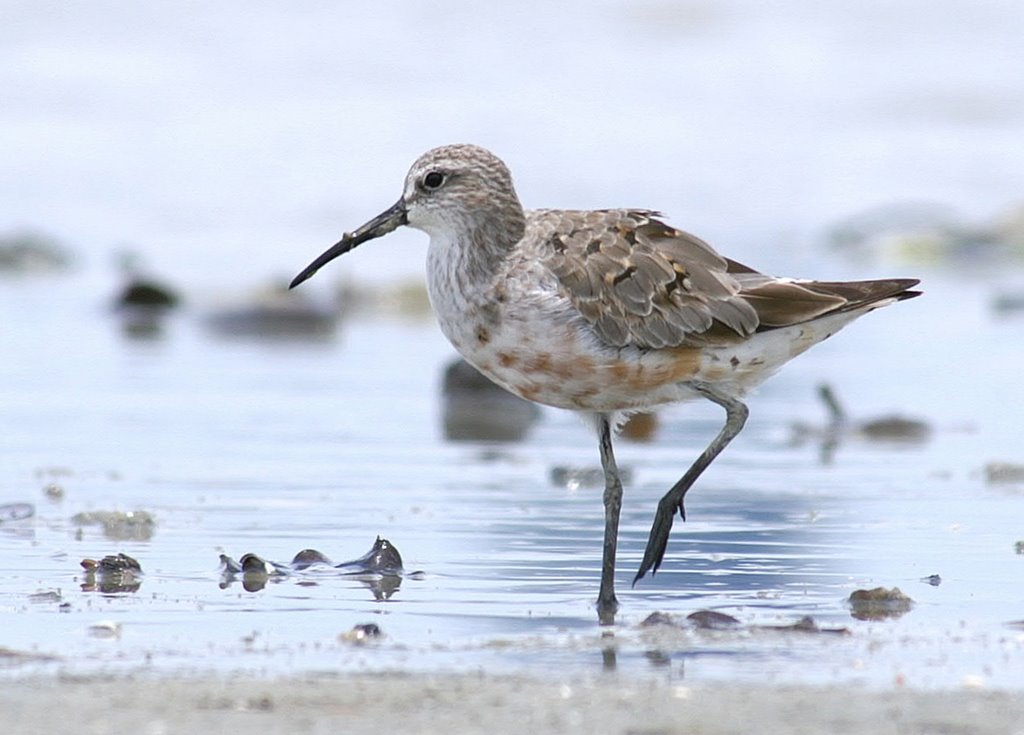
No sign of the Little Stint at high tide roost today, but there were a few new arrivals; my first Broad-billed Sandpiper and Common Tern of the autumn, 4 Red Knot (highest count so far), and some juvenile Curlew Sandpipers and Common Sandpipers and Ruddy Turnstones coming through finally. Sand Plover and Pacific Golden Plover numbers were well down on recent weeks.

I realised that I was seeing more or less the same birds in front of my hide (chiefly stints and sand plovers), so decided to move it today to see if it would produce different birds. Results were quite pleasing - fewer birds overall, but the chance to snap some different species at close quarters - Ruddy Turnstone, Common Sandpiper and, best of all, a Chinese Egret feeding on the tideline with Little Egrets, giving me some good photo opportunities!


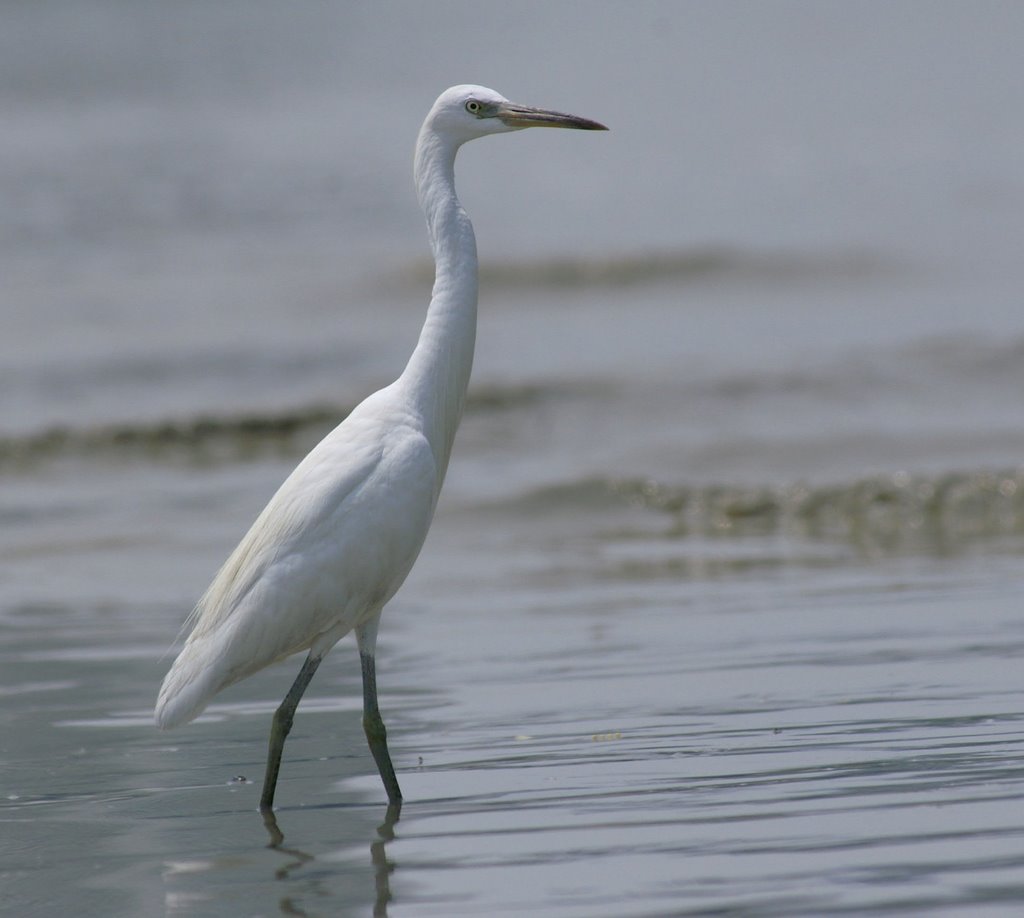
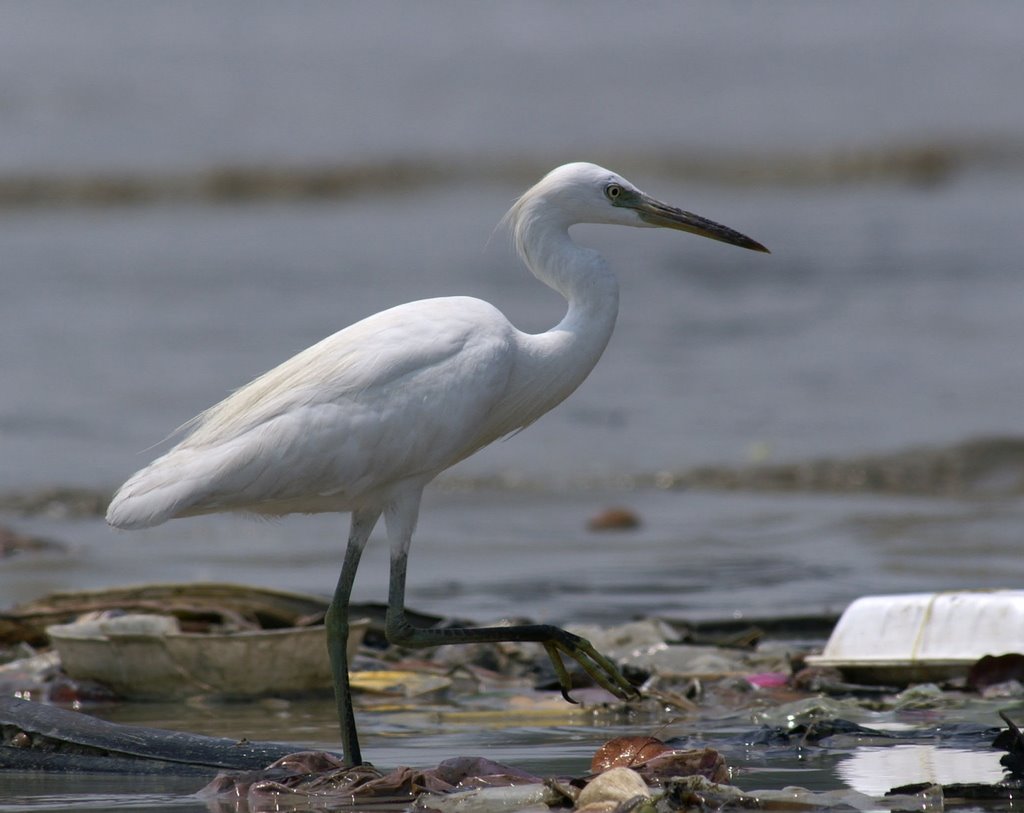
Beautiful but rare. There are estimated to be fewer than 3,000 of this species left in the world, http://www.rdb.or.id/detailbird.php?id=83, and it is threatened everywhere - on the breeding grounds and at migration and wintering sites - by habitat degradation


An illustration of habitat degradation! Fancy finding food in this muck?


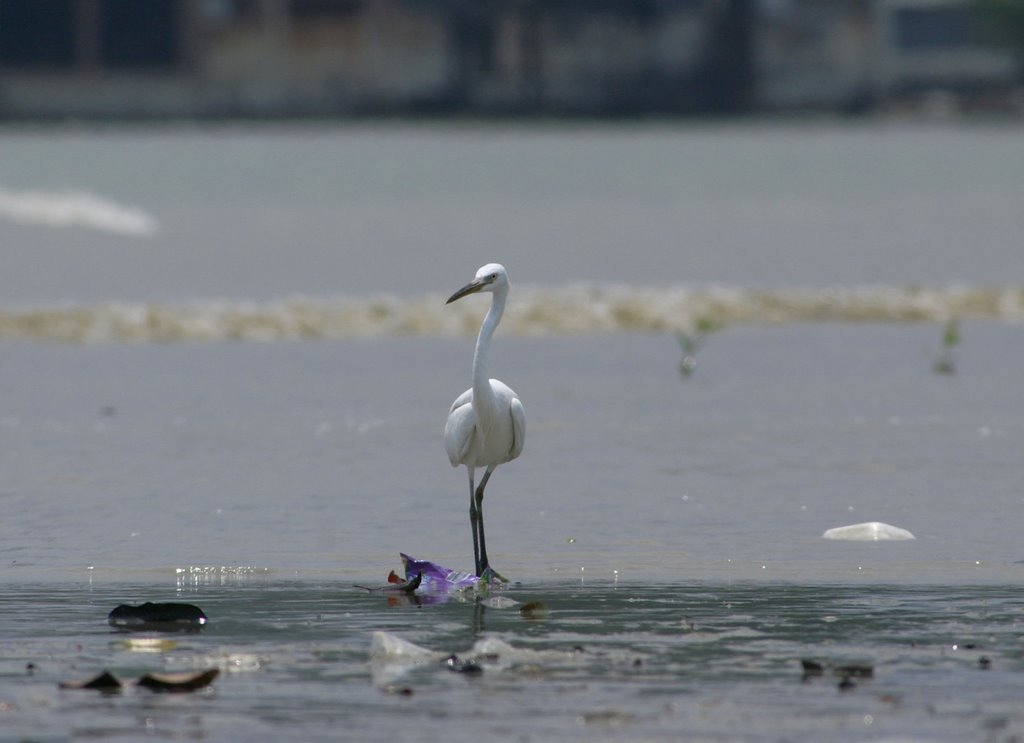
The bird was surprisingly difficult to pick out at a distance; the differences from Little Egret in bare part colour and structure being quite subtle.
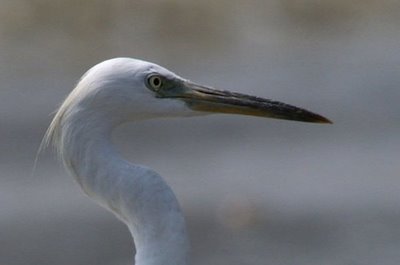


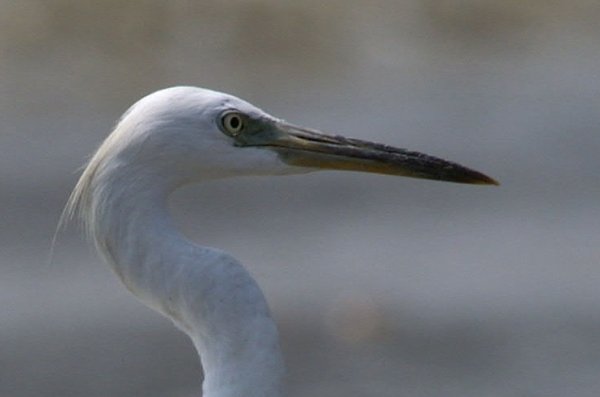
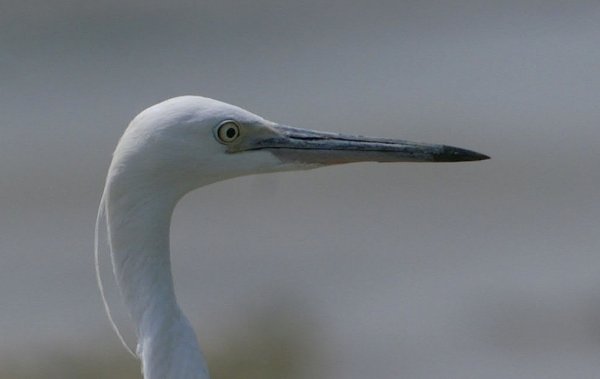
Detail of the head.There is a vestigial spray of plumes at the back of the head, typical of Chinese. Little shows only one or two single feather plumes, and Pacific Reef, none at all. The bill is quite hefty compared to Little, with a distinctly curved culmen. It is yellow at the base. The loral skin is pale blue on this bird. It will probably become yellower as the over the winter. The really distinctive thing about the loral skin though is the shape; the way the top edge dips down and up again in a kink just in front of the eye. This distinguishes Chinese from Pacific Reef and Little, in which the top edge of the lores is straight or evenly curved.
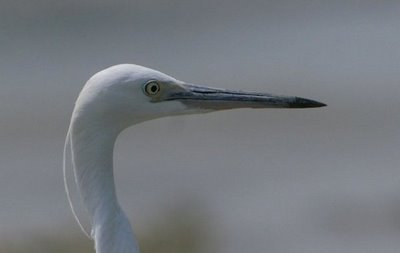


For comparison, here's a Little Egret's head. The bill is rather thin and parallel edged. It's mainly black (muddy on this bird!)with a pale flesh or even pale bluish base to the lower mandible. The top edge of the lores is more or less straight. A single plume is visible at the back of this bird's head.


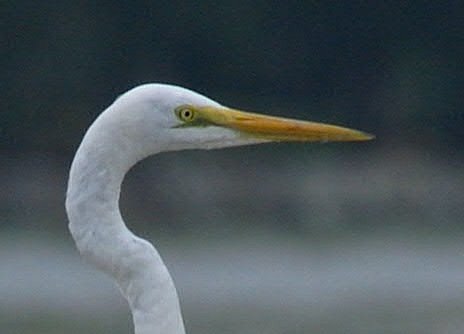
Great Egrets should pose no identification problems, partly due to their size, and partly due to the distinctive dagger-shaped triangle of skin that extends below and behind the eye.
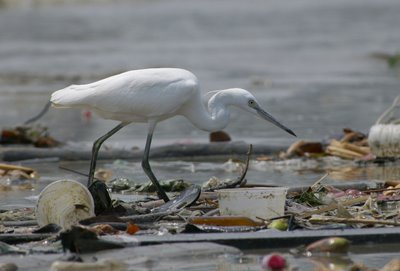


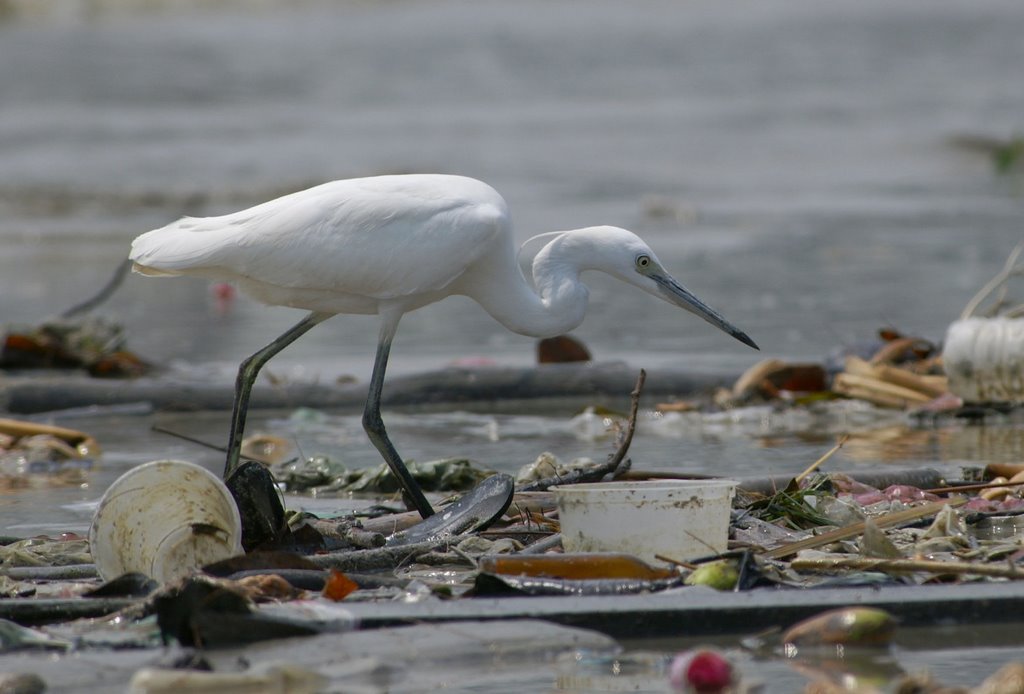
A Little Egret feeding in the tideline trash.
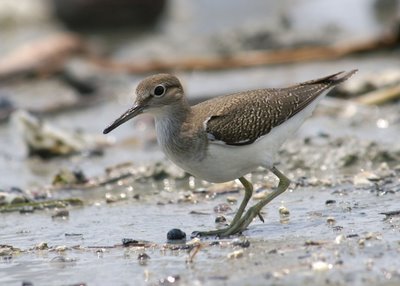


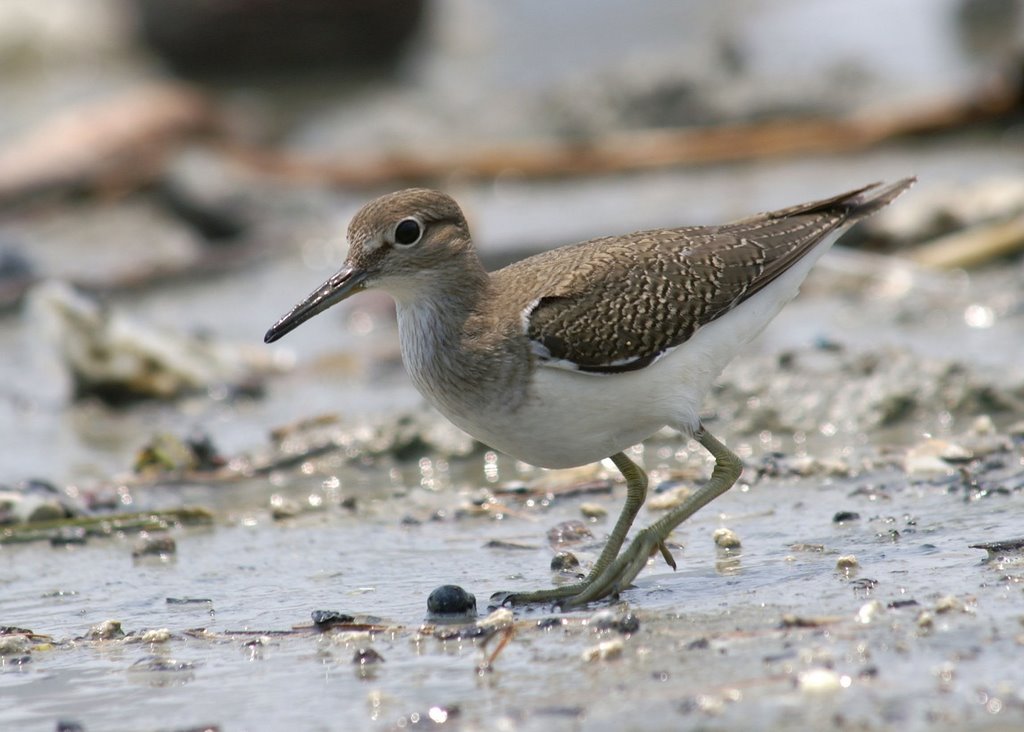
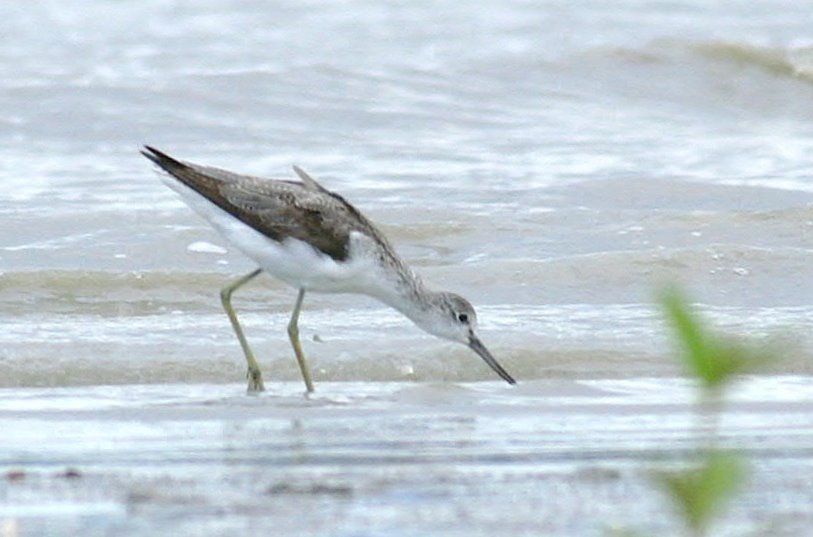
I was pleased to get this picture of my first juvenile Common Sandpiper of the autumn.


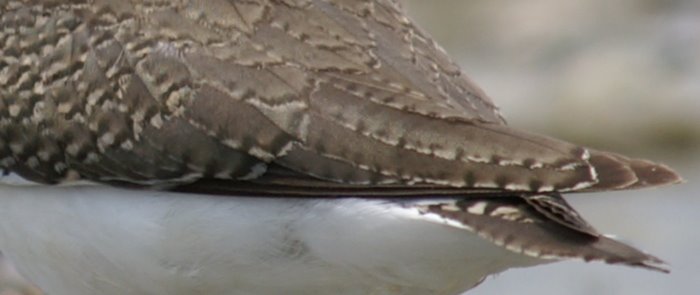
You can clearly see the paler parts of the feathers wearing away more quickly than the dark, pigmented areas. The wear is quite advanced on the tertials and greater coverts.


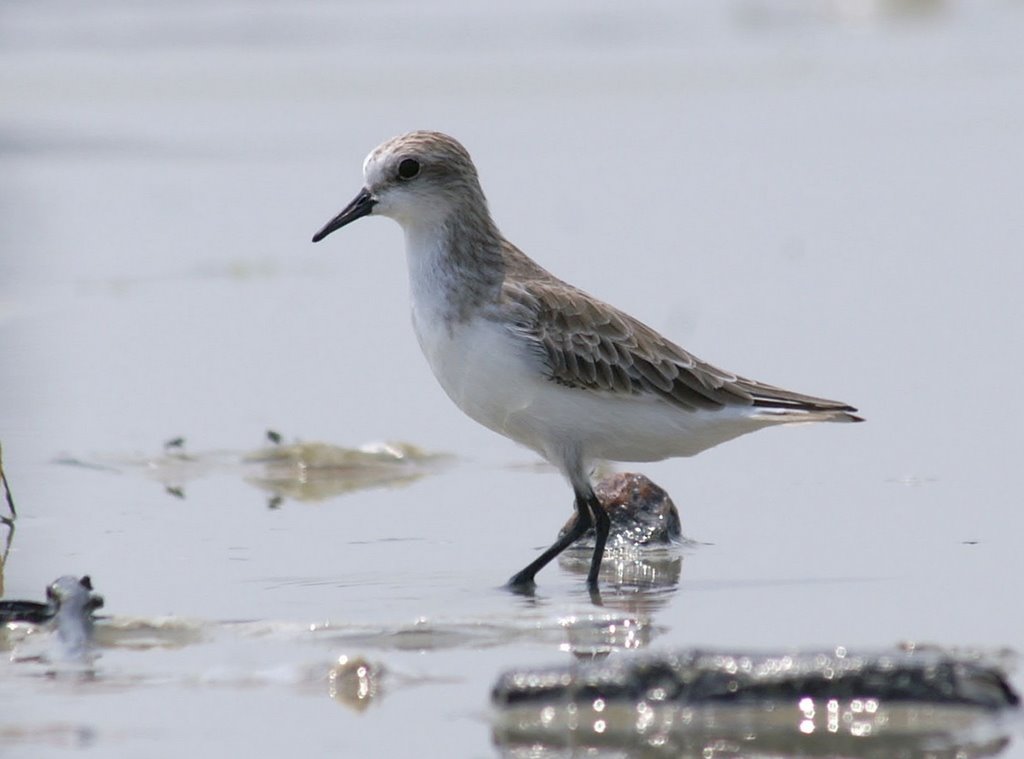
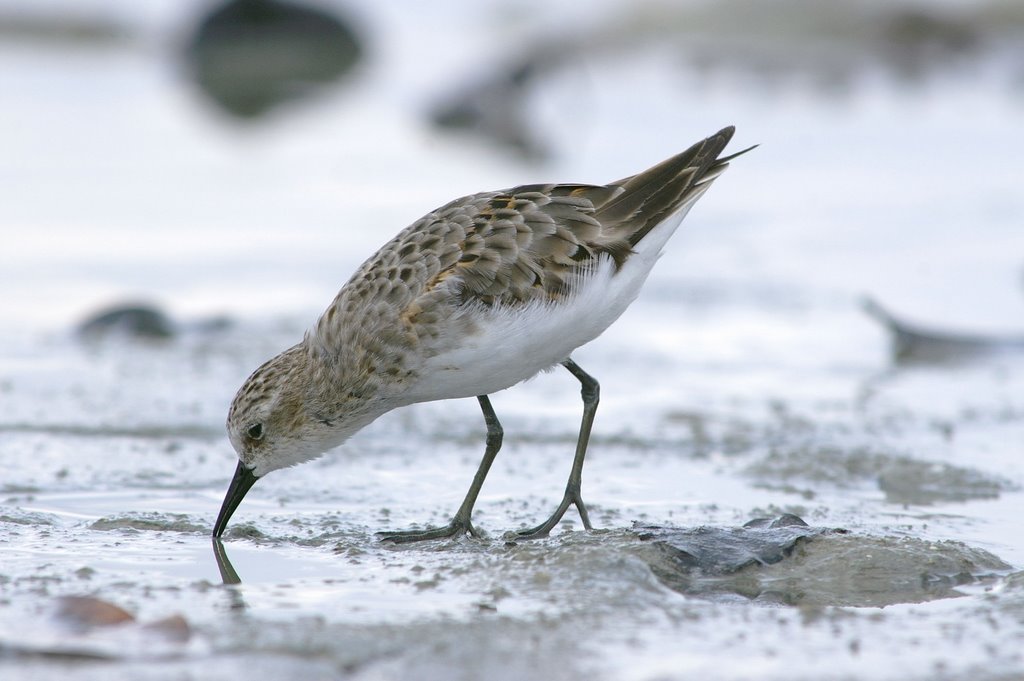
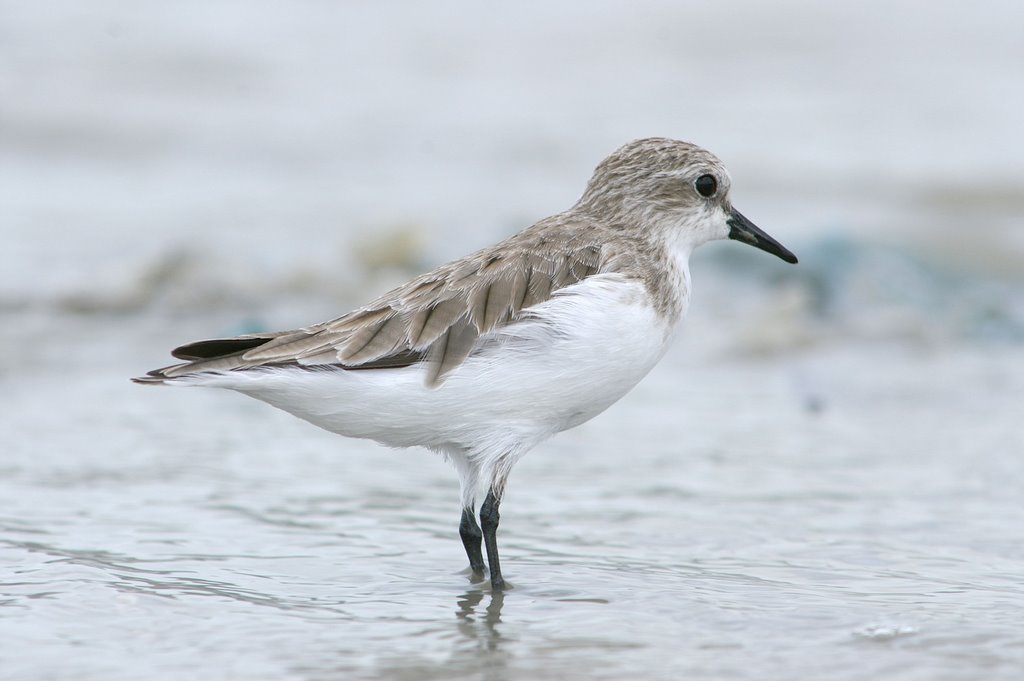
A classic adult non-breeding Red-necked Stint in alert posture.


After seeing the Little Stint, I was interested to see if I could find any Red-necked Stints with breast-bands. This one is typical of the adults that are moulting from breeding to non-breeding plumage. The breast band is on the lower breast only. The upper breast is clean white. Streaking on the rear flanks is a good pointer for Red-necked if present. The streaks disappear as moult to non-breeding plumage progresses.


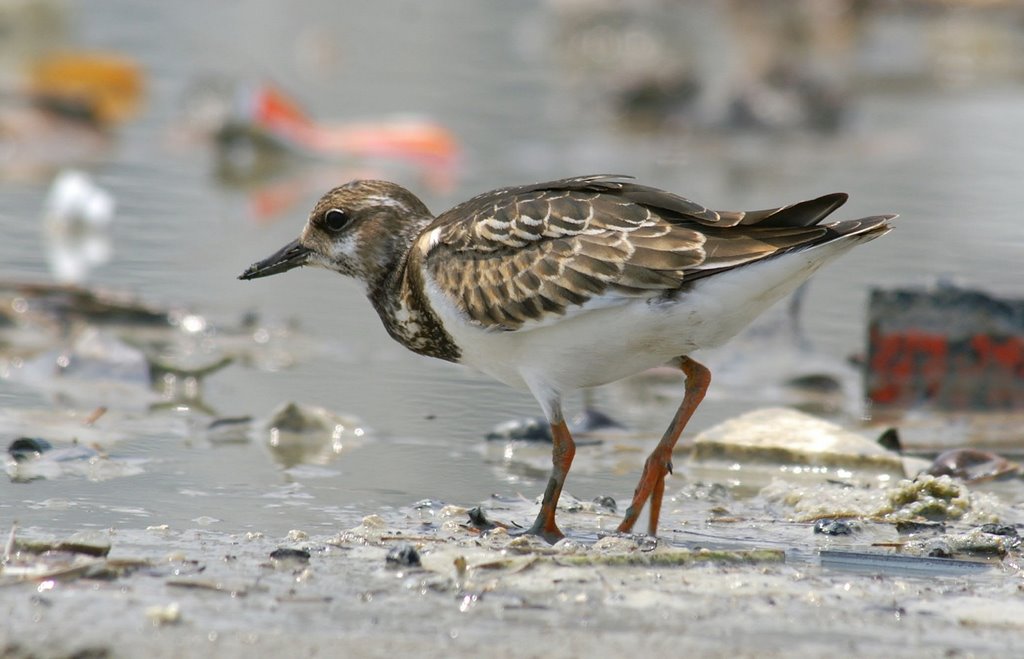
A juvenile Ruddy Turnstone at close quarters.
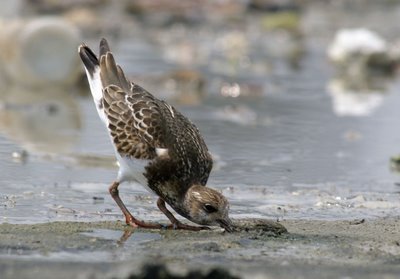


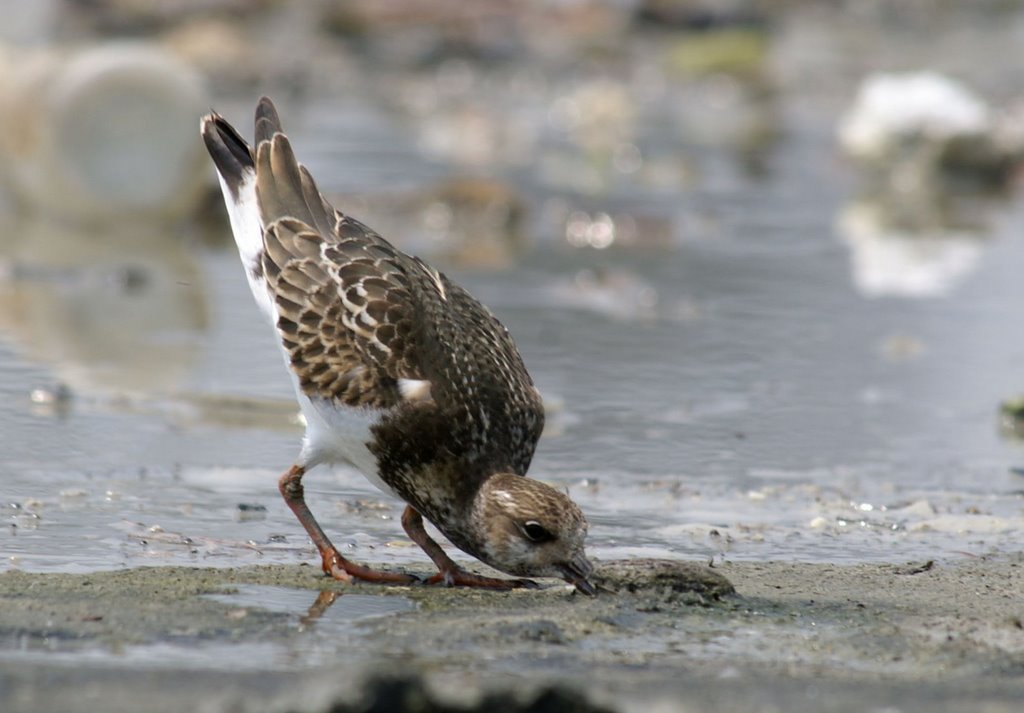
Here's the feeding behaviour that gives this bird its name!

Monday, September 25, 2006

Tuesday 19th September

I did a whistle-stop tour of Kuala Juru/Kampung Sembilang Juru, Bagan Tambang/Teluk Air Tawar/Kampung Molek and Tanjung Tokong this morning to try to get an idea of wader numbers at all the sites. I visited Kuala Juru and Kampung Sembilang Juru first, and there were only a few Common Redshank - maybe 1-200. The tide was still well out, so this was probably not an accurate reflection of the numbers present there.

By the time I got to Bagan Belat/Teluk Air Tawar/Kampung Molek the tide was already covering much of the mud. I counted 2 Eurasian Curlew, 30-40 Whimbrel, 6 Red-necked Stint at Bagan Belat and Teluk Air Tawar, and at Kampung Molek there were small numbers of Common Redshank - 30-40. The area at Teluk Air Tawar that was favoured by waders in the northward migration is being rapidly colonised by mangroves, and I saw no birds there at all.

I would guess that the birds that traditionally feed at Teluk Air Tawar are now favouring the Tanjung Tokong site, as it is directly across the strait and easily visible from there (haze allowing!).


Map showing known wader roosts in the area. Pink - Kampung Juru/Kampung Sembilang Juru; green Bagan Belat/Teluk Air Tawar/Teluk Molek; red - Tanjung Tokong.

At Tanjung Tokong, numbers were well down on the usual - only 4-600 birds at the high tide roost. Numbers of Bar-tailed Godwits (20) and Marsh Sandpipers (10) were up but most other species were down. Highlights were Red Knot (1), Great Knot (20), Ruddy Turnstone (7) and, best of all, a Little Stint.

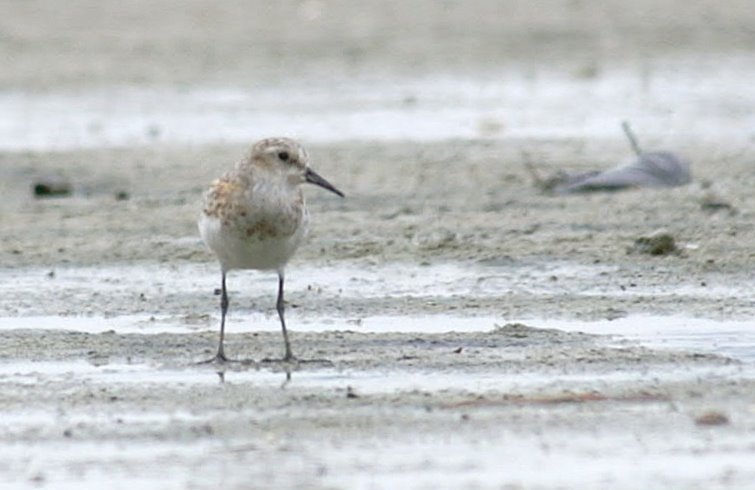
Once I got into the hide, one of the first birds that caught my attention was a stint that seemed rather long-legged and long-billed. At first I wondered whether it might be a Long-toed Stint, but it didn't seem to have pale legs. I should explain that I don't usually take my binoculars or telescope into the hide with me, so I was limited to views through the camera viewfinder. I managed to get a few shots, as it stood resting some distance away from some Red-necked Stints that were feeding busily nearby. The bird was harassed from time to time by these stints, and eventually they chased it off completely and I didn't see it again.

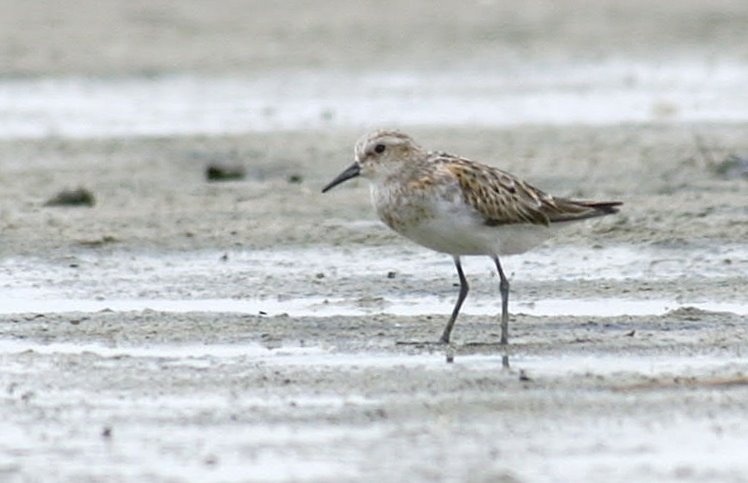
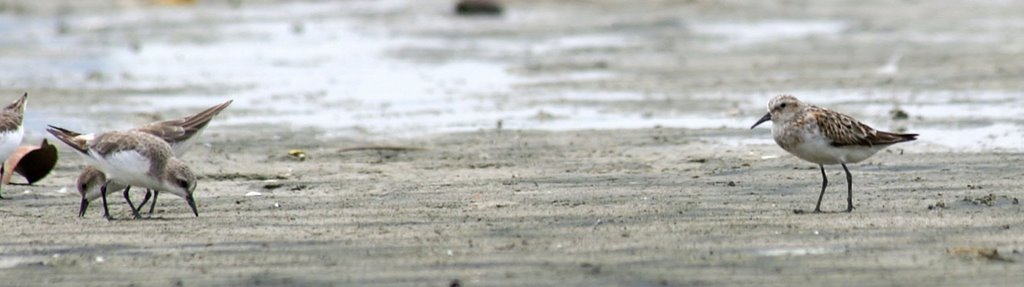
Subsequent examination of the photos convinced me that the bird was an adult Little Stint. The legs, especially the tibia, were markedly longer than on Red-necked Stint, and the bill was also longer, finer-tipped and slightly down-curved along the lower edge. These features are good structural pointers to Little Stint. It was also obvious that the bird was a different shape to the Red-neckeds, with a rounder, less slender body and a bigger-looking head. The plumage can't be seen in detail from my photos unfortunately. However, the upper breast is clearly streaked (it would be either white or brick-pink on Red-necked, never streaked). The non-breeding scapulars have a noticeable dark central wedge, whereas most Red-neckeds have only a dark shaft streak.

Little Stints in Asia generally winter further west than Red-necked. They are the commonest small stint in the non-breeding period in Bangladesh and India, and small numbers are seen in Hong Kong annually. Despite there being only two published records to date in Malaysia, they almost certainly occur more regularly among the thousands of Red-necked we get here each year.


A head-on view, showing the bill and leg structure and length. The upper breast is faintly streaked and rather sullied, and the head is large.


A side-on profile. Some non-breeding scapulars can be seen, with prominent dark central wedges. The supercilium is broad, especially over the eye, and turns upward behind the eye.


This view shows clearly the structural differences compared with the Red-necked Stints on the left.


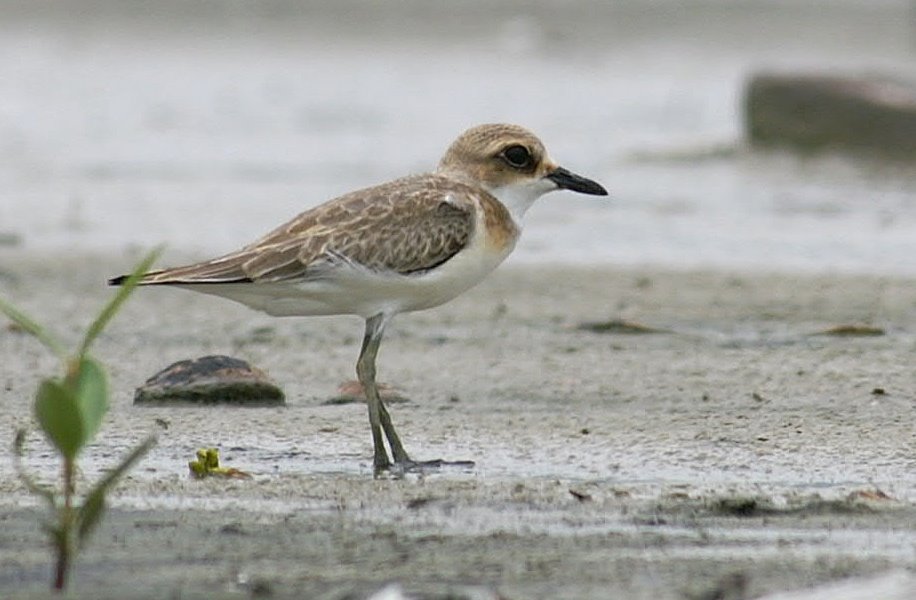
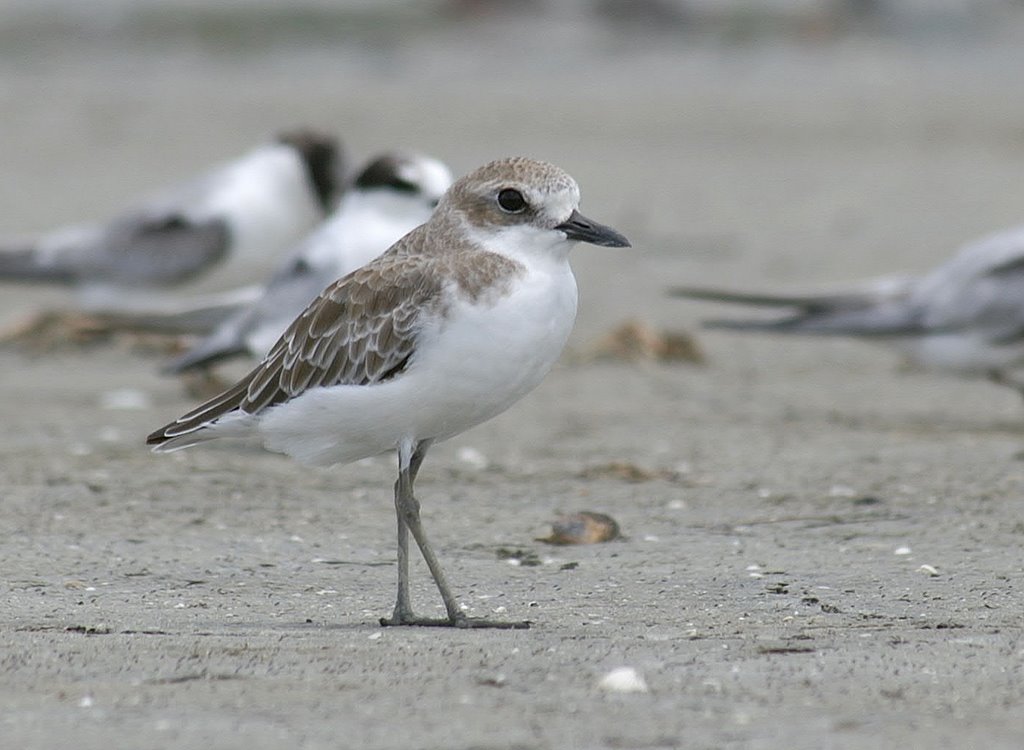
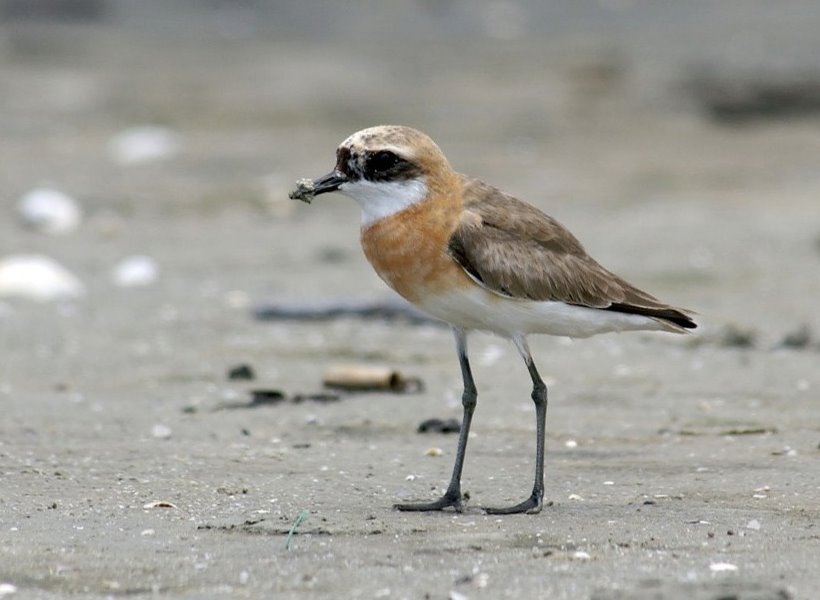
Still haven't managed to get really close to a Greater Sand Plover yet, but this shows the features of a juvenile bird reasonably well.


The juvenile Little Heron was again curious about me today, coming for an even closer inspection!

Sunday, September 24, 2006

Friday 8th September

Most birds had already left the mud and were roosting up 'on top' by the time I arrived. I find that most of the Pacific Goldies and Whimbrel tend to roost in the drier areas where there's a bit of grass, while the smaller waders like to roost on the bare earth where there are pools. A lot of the time is spent washing and preening in the fresh water.

Eventually, by moving the car a few feet at a time and then stopping for a while, I managed to get fairly close to the flock and take some pictures. The Little Terns hogged all the best spots at the pool, and busily splashed, preened, and every now and again would take off in a needless panic, only to wheel around and land again sheepishly.


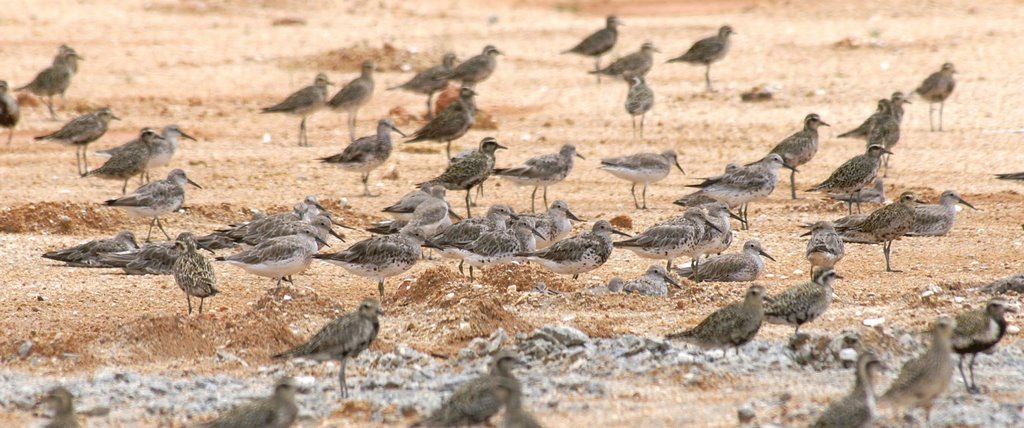
The stints, Curlew Sandpipers and sand plovers stood around or rested on their bellies on the sand. They mix freely with one another and don't seem to show any preference for their own kind. The knots are much more exclusive however, sitting close together and apart from the other species. The two Red Knot hung about with their larger cousins.


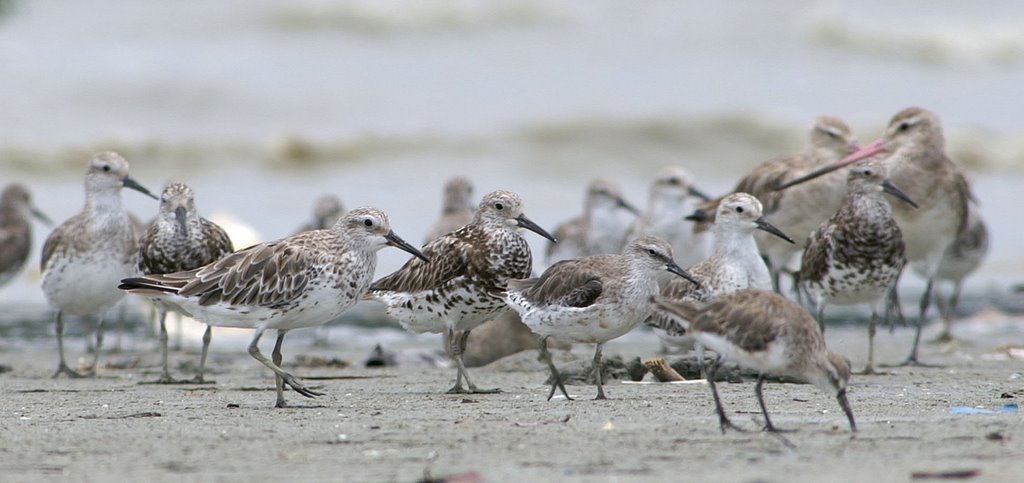
The exclusive Knot Club! There's a lone Red Knot toward the right of the group, back toward us, looking over its shoulder. Red Knot are smaller, shorter-legged and billed than Great Knot.

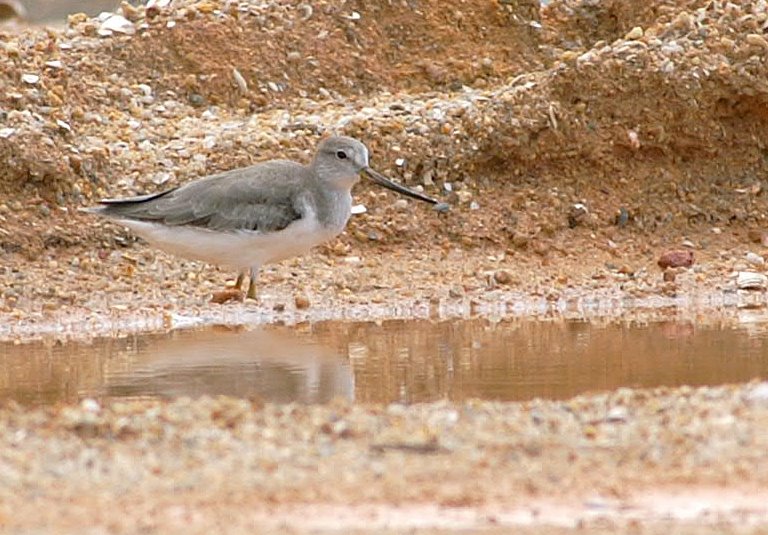
A few Terek Sandpipers wandered through the resting flocks, dipping their bills in the water, preening and, occasionally resting.


The rest of the roost was made up by Pacific Golden Plovers, a few Bar-tailed Godwits and Whimbrels, and Ruddy Turnstones. Most exclusive of all, however, are the Greenshanks. They always seem to roost by themselves, well away from all the other waders.

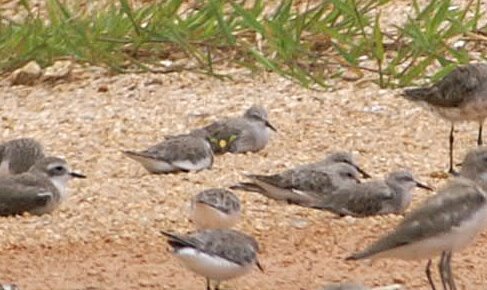
At the back of the flock I spotted a Red-necked Stint with what appeared to be a yellow spot attached to its wing. Wing-tagging is one way of marking birds for research purposes, enabling them to be recorded on migration by birdwatchers, so that a picture can be drawn of migration routes, favoured staging sites, etc. This information becomes important baseline data for conservation efforts. I've sent off details of this bird to researchers in Australia, who in turn have forwarded it to colleagues in Russia, but so far, no one has been able to tell me where the bird got its tag from.


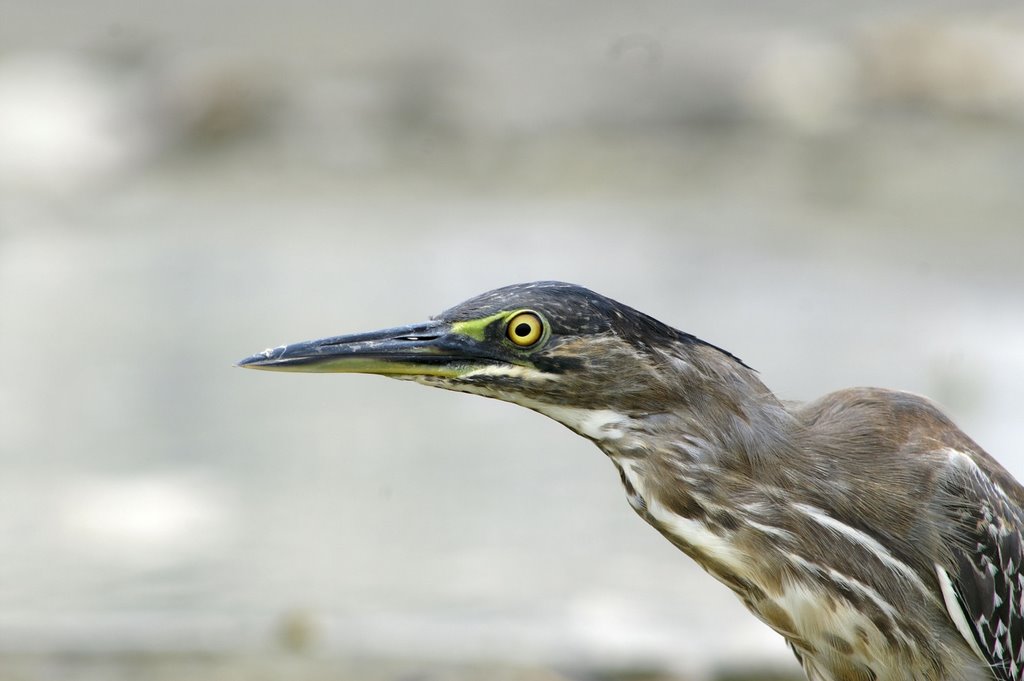
Once the tide started to fall, I got myself into position on the mud. A juvenile Little Heron landed very close by and was clearly suspicious. It would continually make disapproving clucking noises while bobbing its head and peering in my direction. Eventually it must have decided I was just a harmless lunatic, and began to hunt for prey in the nearby pools. I could see some vestigial down attached to its head and breast, so it was probably a very young bird.


A small group of Greenshanks landed on the tide-line and began chasing around after fish fry. They would put their open bills into the water and then run along sweeping them from side to side, as I have seen Avocets do in my native UK. Marsh Sandpipers sometimes also feed in this way here.


An adult Greenshank. The many small spots along the edges of the scapulars and tertials are a good distinguishing feature from the much rarer Nordmann's Greenshank.

In most wader species, adult birds are the first to set off on the journey south from the breeding grounds, leaving the juveniles to find their own way south later (which is pretty amazing when you think about it!). So far, most of the waders I've seen here have been adults. The only exception has been the sand plovers, first the juvenile Lessers, and now the first Greaters.

Even among the juveniles, there's quite a lot of plumage variation, as juveniles undergo a partial moult (body and head, but not wings) during their first autumn. So some - perhaps earlier hatched birds - already have adult-like body feathers, while others are still in more or less complete juvenile plumage.


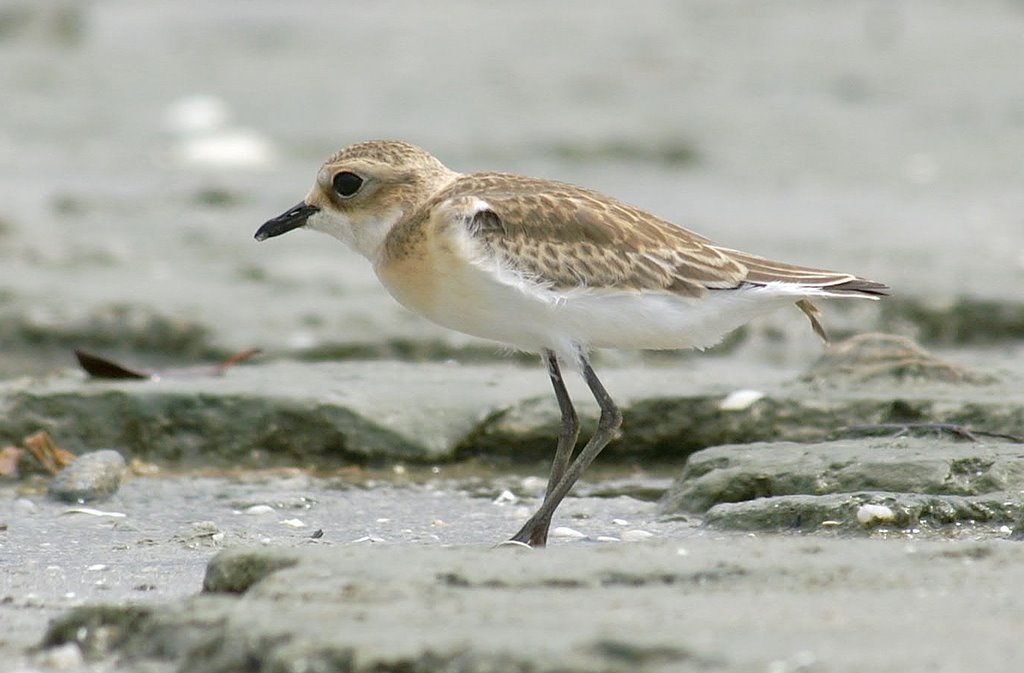
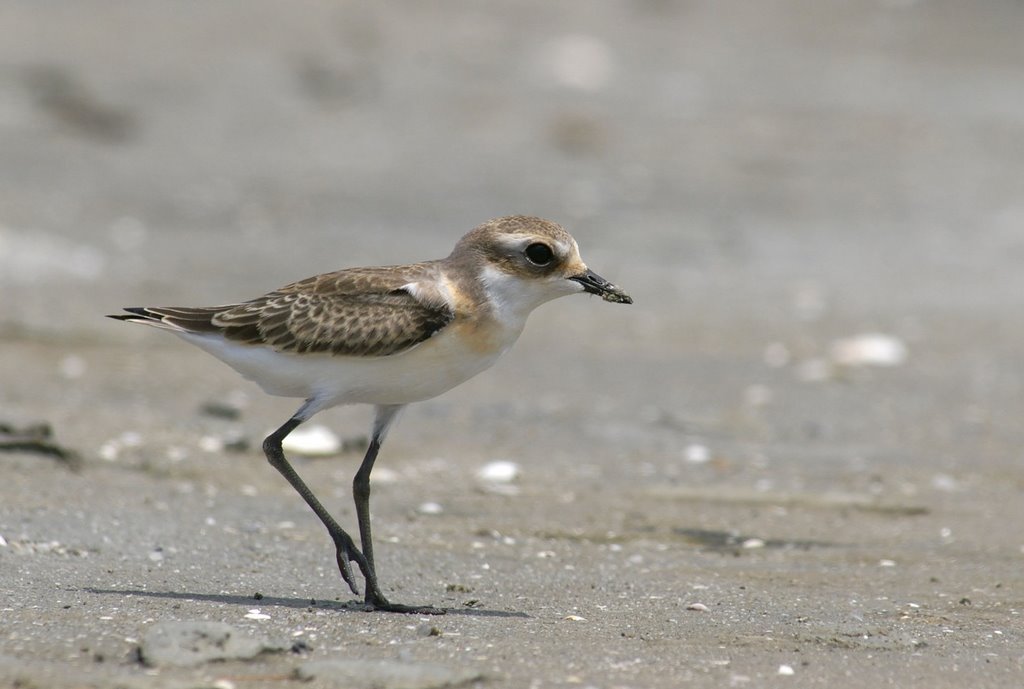
This Lesser Sandplover is still largely in juvenile plumage. The crown feathers, as well as the mantle and scapulars, have mud-brown centres with quite broad creamy fringes. The lovely peach-toned feathers on the lores, ear coverts, supercilium and sides of the breast are also juvenile feathers. If you look carefully at the scapulars, you can see about 5 or 6 feathers on the lower row which are plain mud-brown, without the paler fringes. These are fresh '1st autumn' feathers. (Click on the photo to see an enlarged version.)


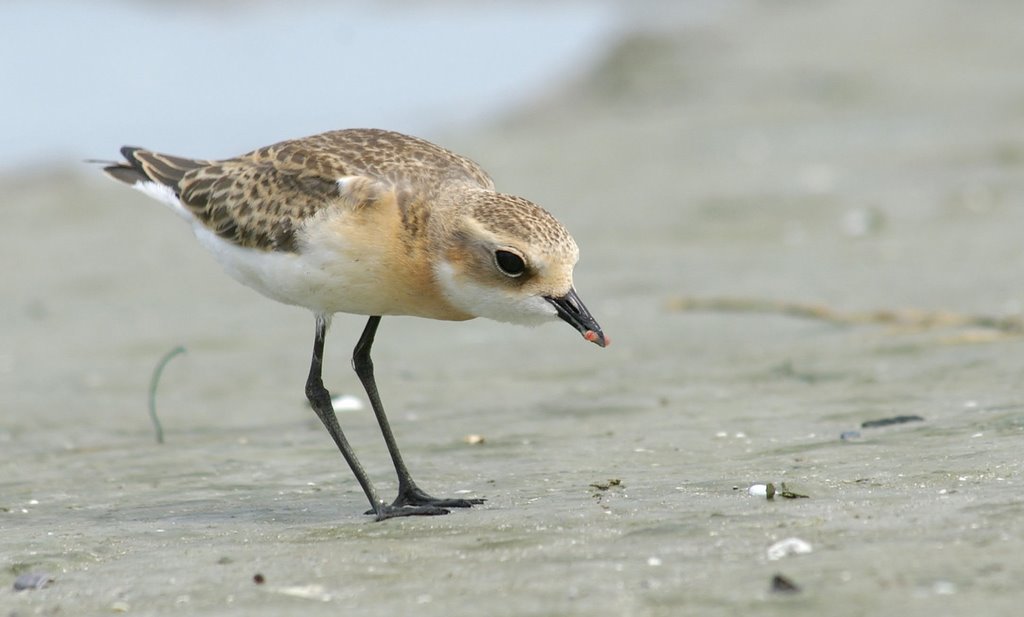
This bird is also a Lesser Sand Plover, and also one of this year's hatch. However, it has pretty much completed a body and head moult, replacing the brighter juvenile feathers with duller adult-like ones. The wing coverts have not been replaced, but don't look as bright as on the preceding bird because, being older, the pale fringes are more worn away.


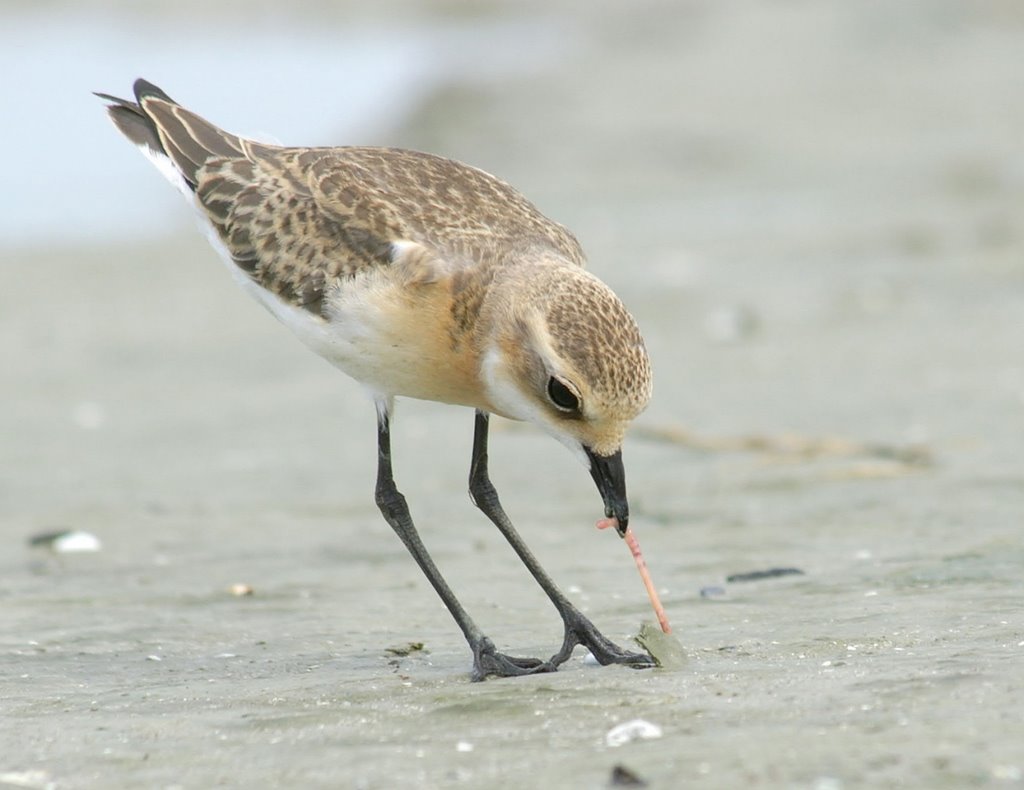
I was very entertained by this juv Lesser Sand Plover's efforts to extract a worm from its hole. The Plover stretched up to its fullest height and leant back with all its might, but the worm managed to hang on. I believe they have stiff hairs along their body angled upwards, so it must be rather like trying to pull an arrow out of a tree. You can clearly see that the feet of this species have tiny webs between the bases of the toes. This feature is called 'semi-palmation', and is a key identification for some species.


In the end, this was all the plover got for its efforts, and the worm presumably lived to fight another day. Maybe an older, more experienced plover would have grasped the worm lower down its body? I'll have to watch out to see.

Thursday 31st August

I tried to get close to the waders roosting up on the construction site today, but they were not very approachable, and I didn't want to disturb them unnecessarily. After taking some distant shots of Pacific Golden Plovers, I went down to my mud hide and waited for birds to return to the mud as the tide fell.


They eventually did this, and I was able to take some more shots of stints. However, the birds were disturbed quite frequently by a subadult White-bellied See Eagle. I never saw it make a serious attempt to catch any of the waders, but it seemed to delight in causing mayhem every time it appeared over the horizon. Perhaps it was experimenting with different ways to catch prey. I also saw it pick up a sizeable dead fish, but it dropped it after a minute or two and flew off.


Other disturbances are fortunately few. There are two or three stray dogs that scavenge along the shoreline on the falling tide, but they never come while I am on the mud. I guess they can smell me and are too timid to approach. So I feel that me being there is actually giving the waders chance to feed undisturbed by the dogs.

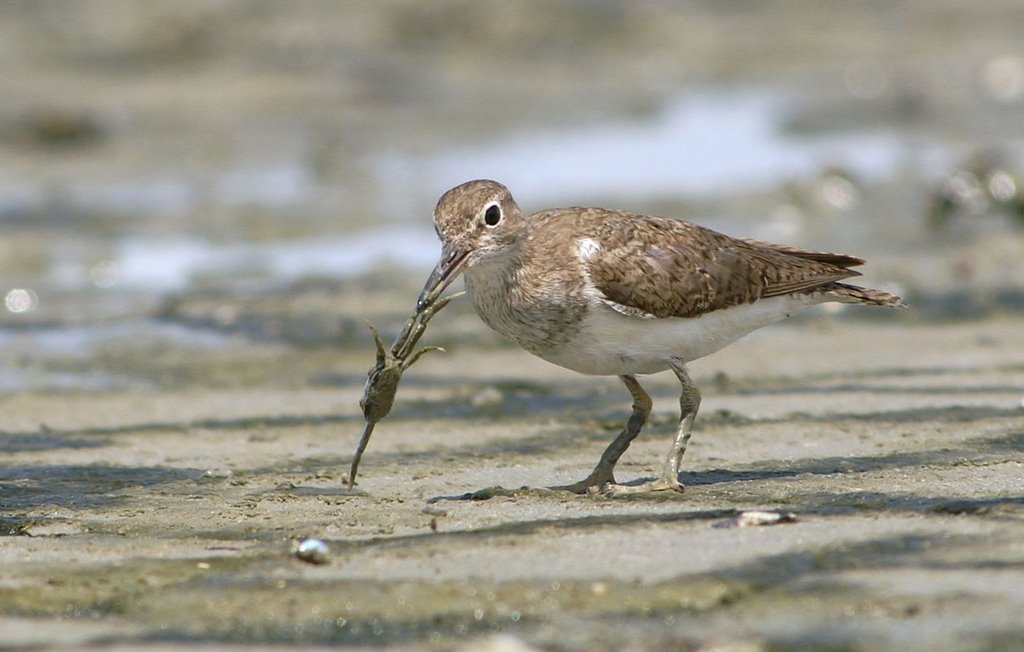
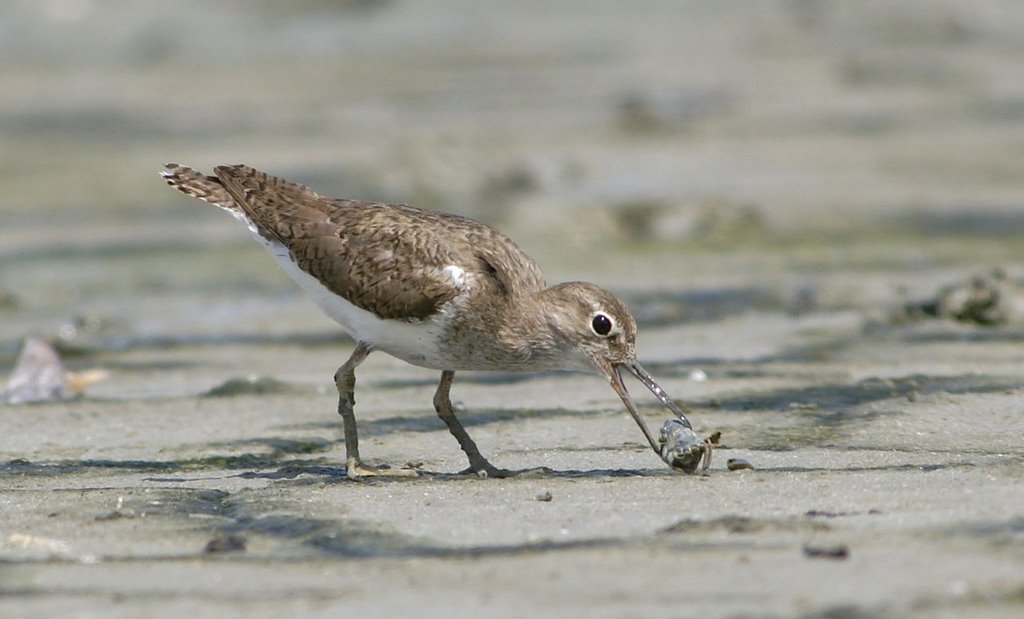
I photographed an adult Common Sandpiper catch a small crab not far from me. It held the crab by one leg and shook it till the leg broke off, which it then swallowed. The bird did this with each leg in turn, until the crab was completely limbless. Finally, it tossed the crab, caught it in mid-air, and swallowed it in one swift movement.


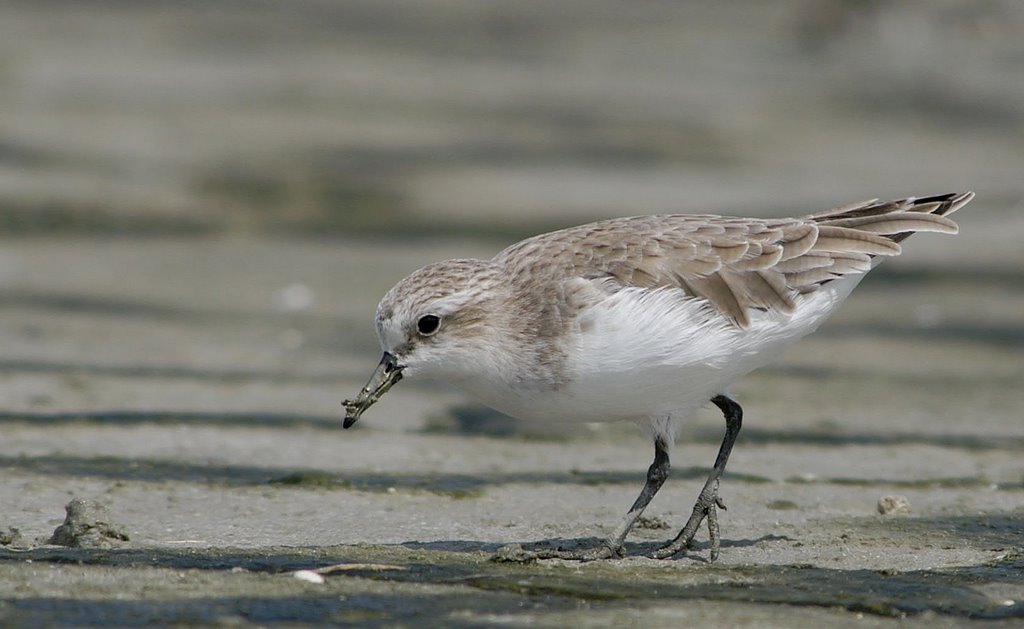
Another interesting thing caught my eye today. For some reason, the mud was particularly sticky on the falling tide. I saw it sticking to the bills of a number of waders, the stints in particular. Later on, when the stints were flying around, it would have been easy to mistake these muddy-billed individuals for Spoon-billed Sandpipers.


This adult non-breeding plumaged Red-necked Stint has mud stuck to its bill and legs. On the ground it's still obviously a Red-necked Stint ...


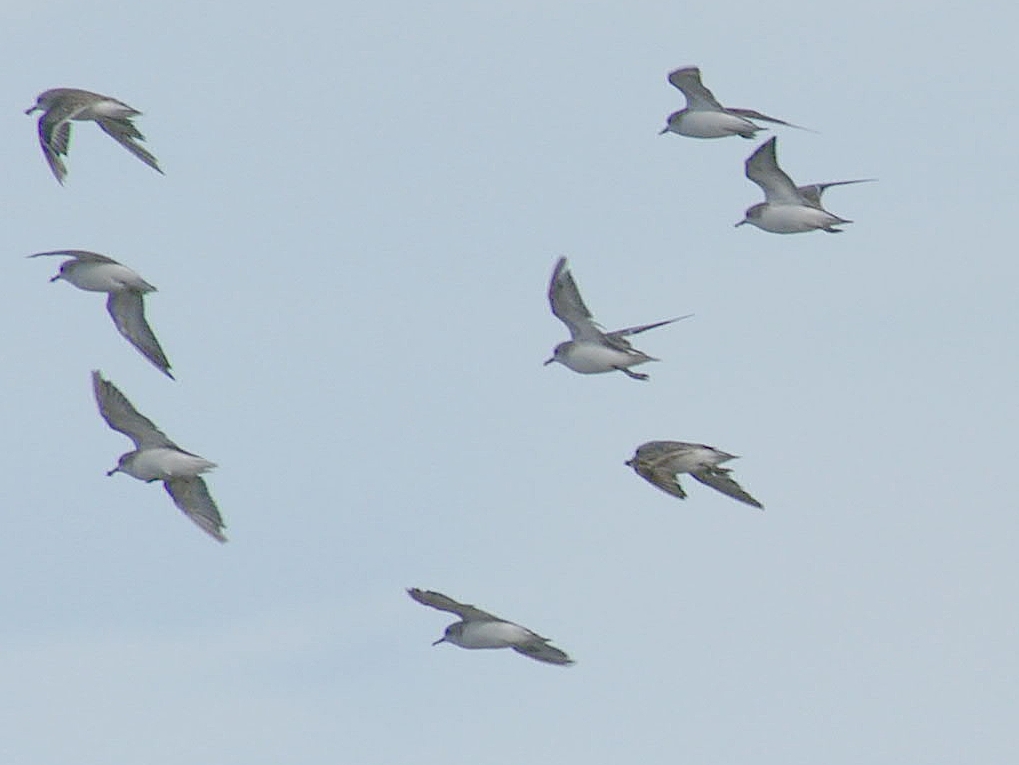
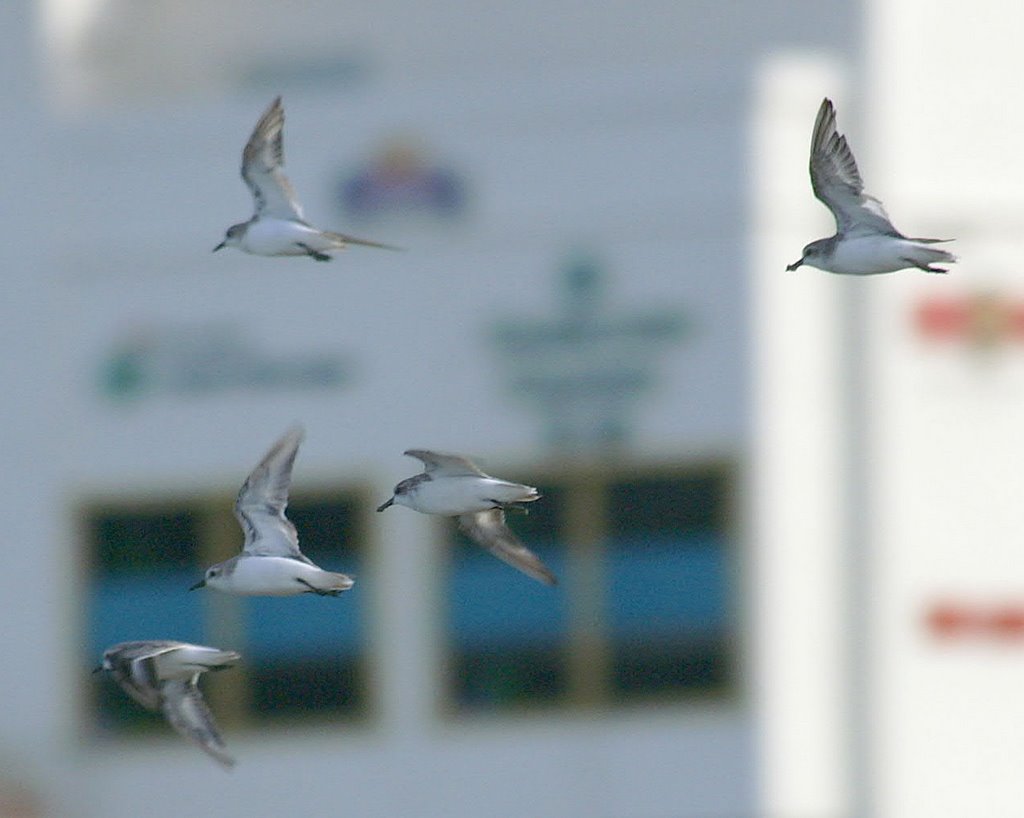
...but in flight, these muddy-billed birds can look at a glance like the extremely rare Spoon-billed Sandpiper (see birds top left, lower left and lower right)


Another shot of an apparently 'spoon-billed' Red-necked Stint (right hand bird)

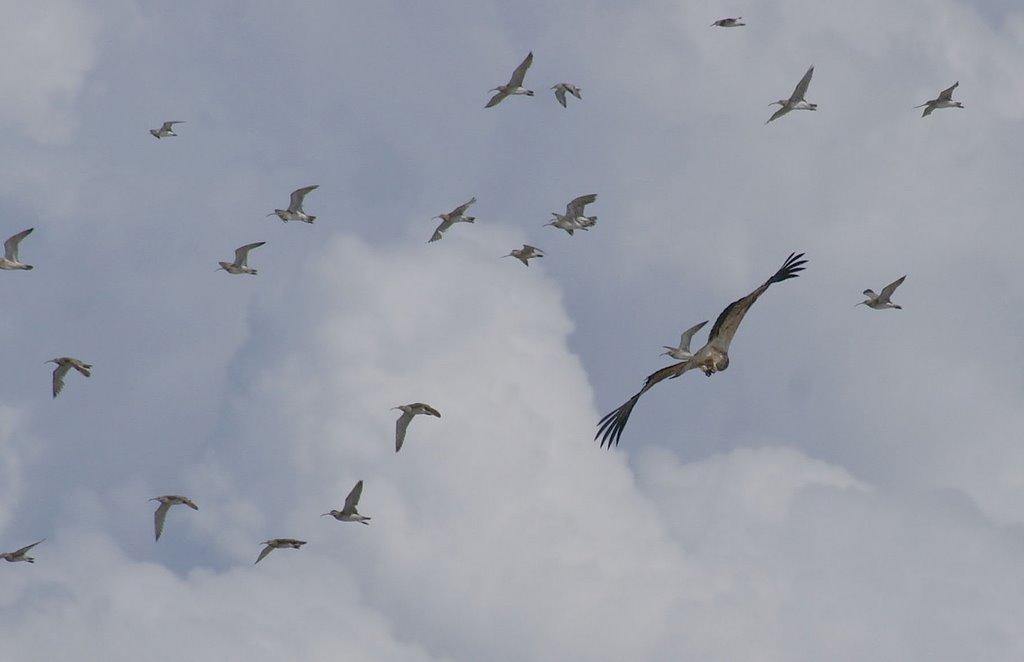
With the eagle around, and as birds repositioned themselves at optimum feeding sites as fresh mud was newly exposed, there were plenty of opportunities for flight shots. My camera doesn't cope too well with birds in flight, but I got a few 'educational' shots!


There are five species in this shot; Whimbrel, Bar-tailed Godwit, Great Knot, Red-necked Stint and a Sand Plover (not sure which species). It's always worth checking out waders in flight, as some are easier to identify when you can see their wings and rump. For instance, there are rarer subspecies of Whimbrel and Bar-tailed Godwit that have a brown rump and tail base


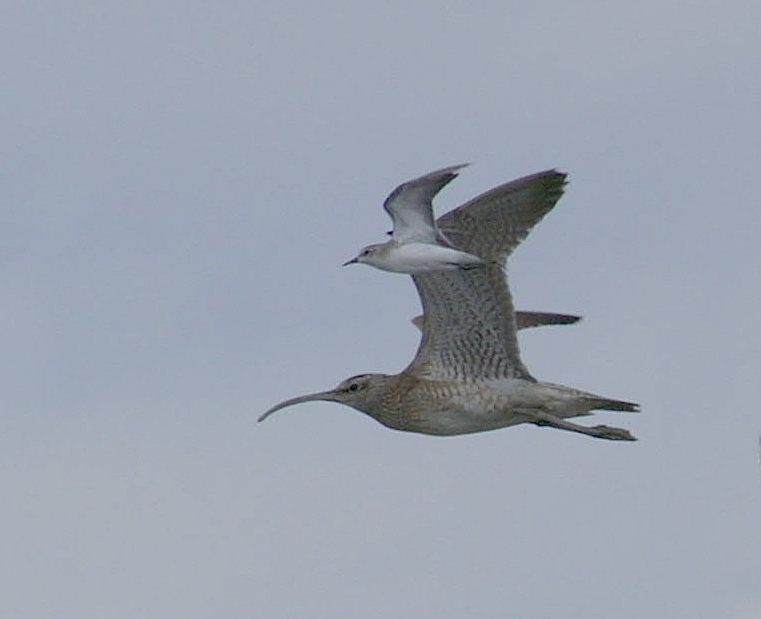
I like this shot just because it highlights the huge variety of shorebird shapes and sizes. This Red-necked Stint looks like a tiny WW2 fighter plane flying alongside a lumbering bomber (actually a Whimbrel; the contrast if this were a Eurasian Curlew would be even greater!)


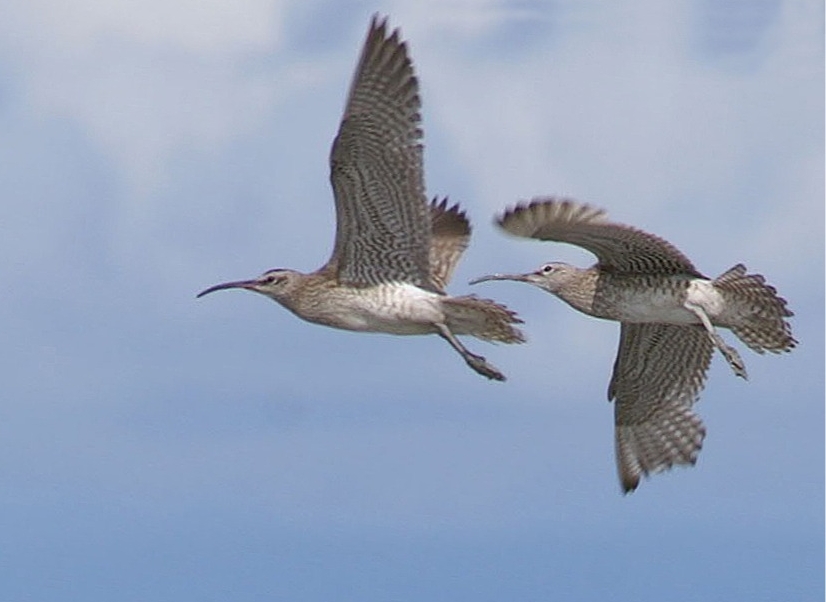
A couple of Whimbrel to end with.

Saturday, September 23, 2006

Saturday 26th August

I managed to do a rough count today, which came to:

Bar-tailed Godwit 10
Whimbrel 100
Greenshank 5
Common Redshank 20
Terek Sandpiper 8
Curlew Sandpiper 25
Common Sandpiper 3
Pacific Golden Plover 45
Greater Sand Plover 5
Lesser Sand Plover 150
Little Ringed Plover 2
Red-necked Stint 40
Great Knot 55
Red Knot 2
Ruddy Turnstone 11 (my record count)
Little Tern 60

This was after spending 3 or so hours in my makeshift 'hide'. I modified the design of Thursday's effort by adding a wooden box I found on the tideline, punching out a couple of slats and making it into a kind of miniature blind just big enough for me to stick my head and camera in. This gave me more freedom to move my head and hands without the movement being detected by the birds. I found that I frequently need to wipe the sweat from my face, and move my arms to stop pins and needles from getting too painful. I stuck a plastic crate in the box, into which I put my camera bag, which acted as a platform to rest the camera on.


My hide, Mark II

It's an amazing feeling, being on the same plane as the birds, and in some cases actually looking up to meet their eye level. I realize that for most of the world, the act of lying motionless on the mud in the midday tropical sun is a good definition of insanity, but all I can say is, for me it's an awesome privilege!
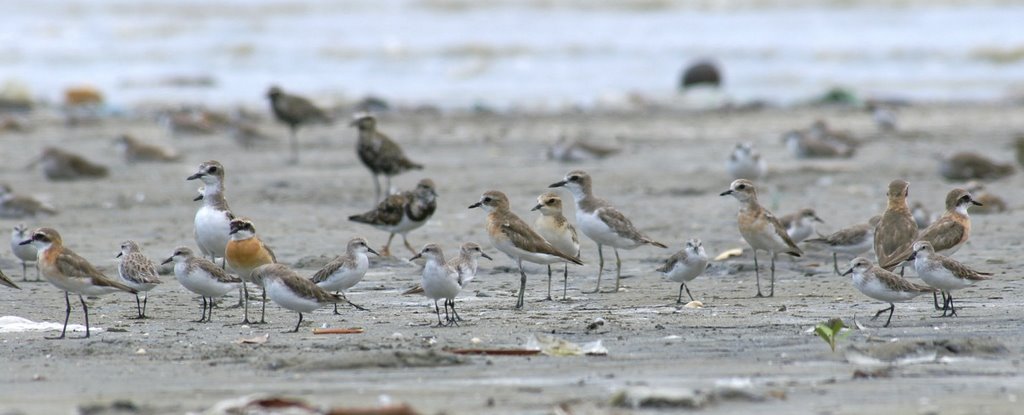
I took a load of pictures today. I caught the tide just right, and it came to within a few feet of me at its highest, which meant at one point I had Red-necked Stints so close I could almost hear them breathing!
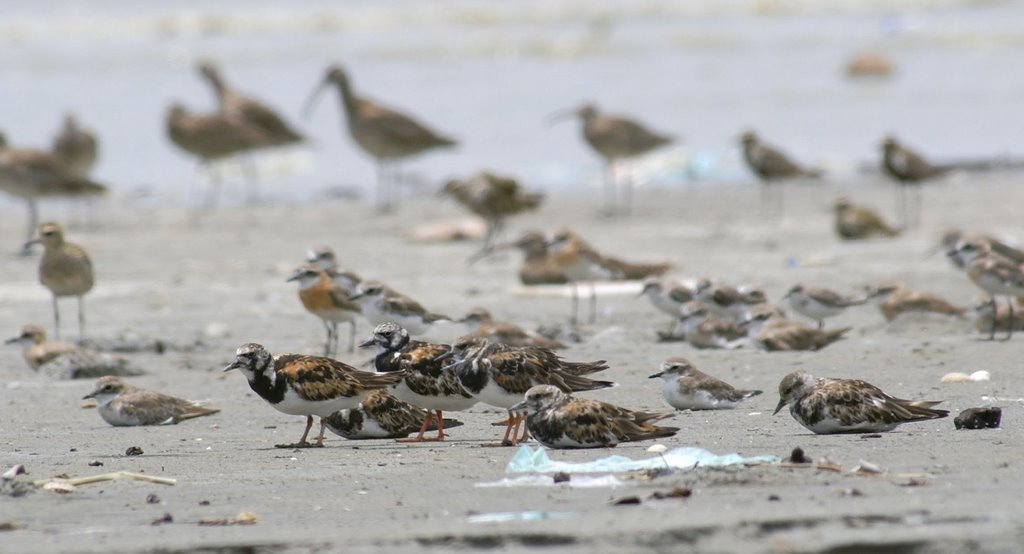


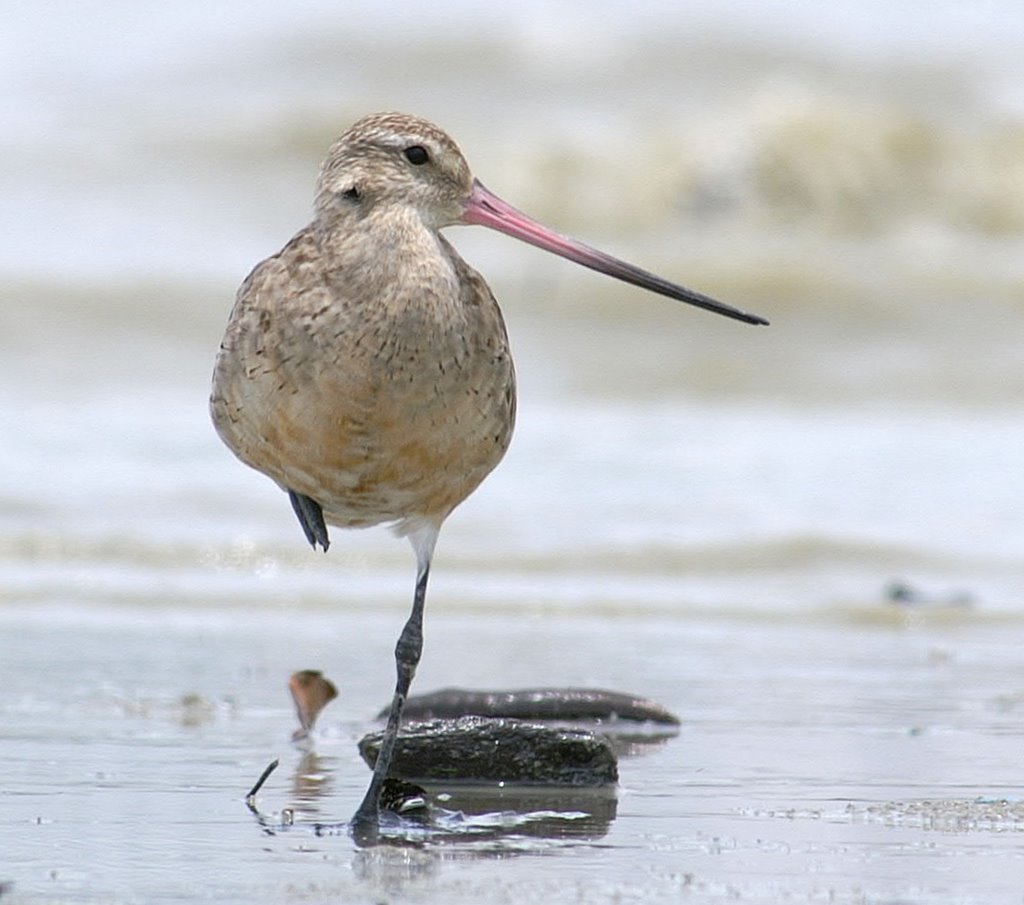
Here's an adult Bar-tailed Godwit, still with traces of the chestnut breeding plumage on the belly. The bill seems really long, so this may be a female.


To be honest, I didn't spot the Red Knot in this picture (just right of centre)till I looked at the picture on the computer. Red Knots migrate through my native UK in the thousands, while Great Knot is an extreme rarity. Here though, it's the Red Knot that is more unusual, though not stunningly rare. The other birds in this picture are: Bar-tailed Godwit (a couple extreme right), Curlew Sandpiper (the out of focus bird in the foreground)and Great Knots. The three birds with black breastbands are still in breeding plumage, the others are also adults but have moulted into non-breeding dress.


This is an adult Greater Sand Plover. I've become quite fascinated by the subtle differences that separate this species from the sometimes very similar Lesser. For me one of the key differences is the bill shape - rather sharp-tipped, with a bulbous distal half. The legs are longer and generally yellower, but there is some variation. For example, this bird has rather grey legs (like most Lesser) and some Lesser have olive-green legs (like most Greater!). Overall though, Greater looks rather an ungainly beast, with a big head, while Lesser seems better proportioned.


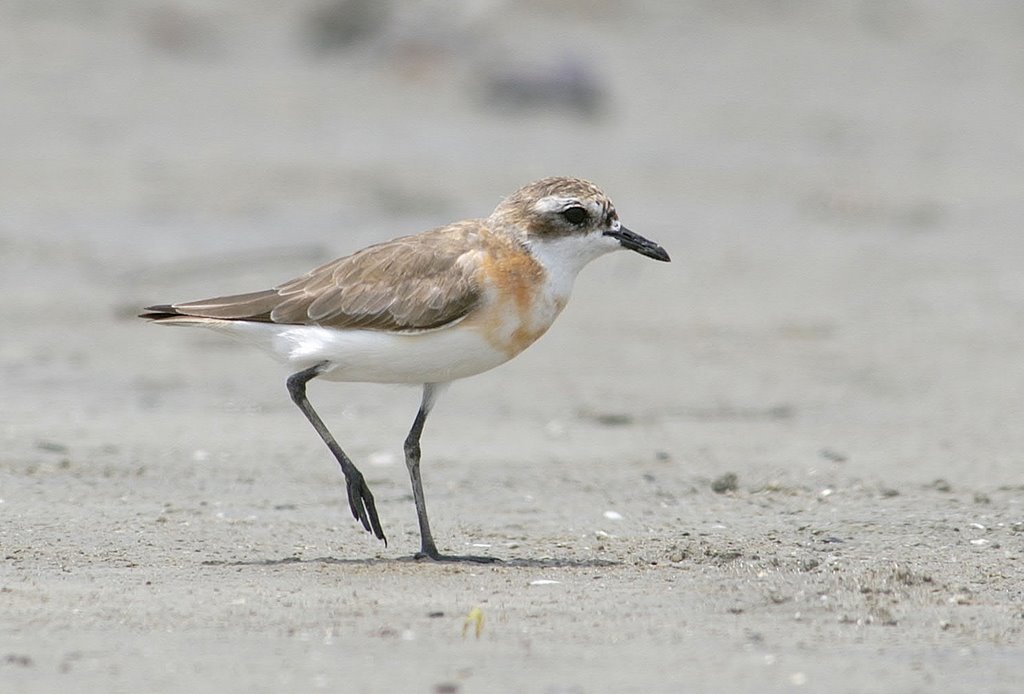
By contrast, here's a really long-billed Lesser Sand Plover (probably a female, still in breeding dress). However, the bill is blunt-tipped, is bulbous only for the distal third, and is much slimmer, especially at the base, than Greater. The legs are shorter than Greater, and are grey, typically for a Lesser.


From plovers to sandpipers. Plovers tend to feed by sight and pick prey from the surface of the mud, while sandpipers locate prey using the soft, sensitive tip of the bill when probing in the mud. Plovers tend to have big eyes and short thick bills. They feed using a stop-start action; stopping to look and listen, then walking or running forward to catch prey. Sandpipers, on the other hand, have relatively smaller eyes and longer, thinner bills. They generally feed by probing more or less constantly into the mud. This is an adult Curlew Sandpiper, with a few chestnut belly and checkered upperpart breeding feathers. The rest of the pluamge consists of fresh much drabber coloured non-breeding feathers.


This photo is uncropped, taken using a 400mm lens, so it gives an idea of how close this tiny bird was. It's a Red-necked Stint - another member of the sandpiper family, and an adult. The dark-centred feathers on the 'back' and crown are old breeding feathers. So are the very abraded tertials (the long pointy dark brown feathers that cover the wingtips). Feather edges wear away with age, especially paler areas which lack pigmentation. The more uniform grey feathers are fresh non-breeding feathers. Some have a thin fringe of white at the tips, which will quickly wear away.


Here's the same species, but looking very different in complete non-breeding plumage from the previous individual. Maybe this is one reason why some people find waders difficult and confusing. Learning about the moult cycle and using good quality field guides that show different plumages accurately is a great help. So are good quality optics, taking notes and having loads of patience!


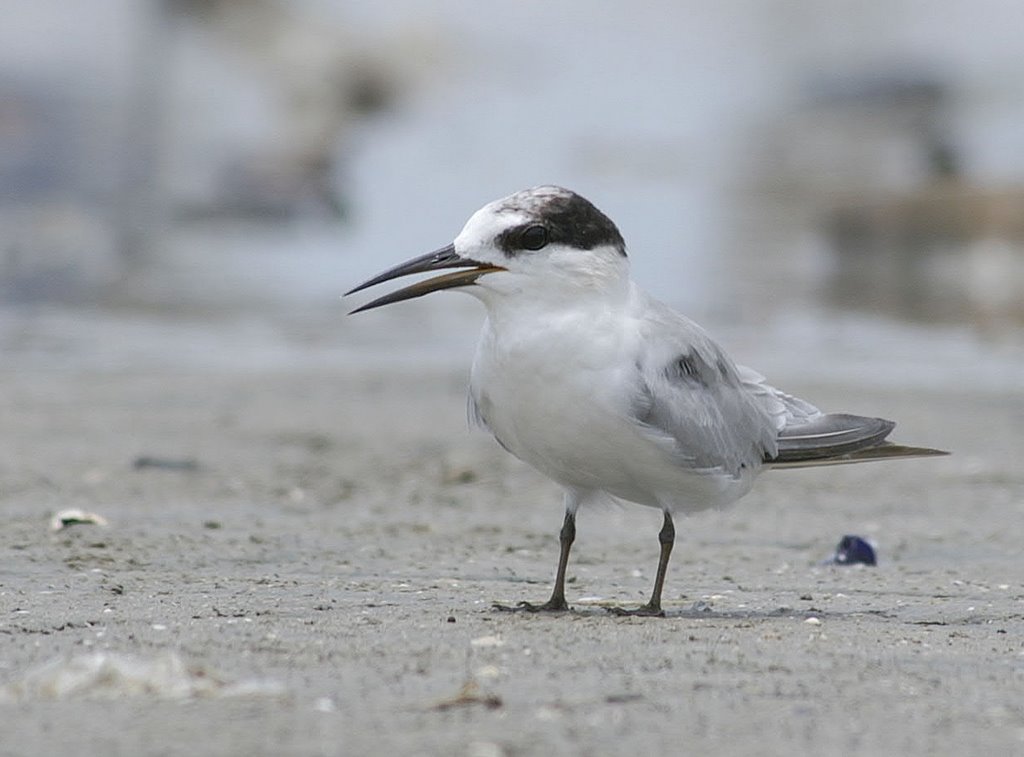
A Little Tern, looking very different from breeding birds that have bright yellow, black-tipped bills.


A Whimbrel, with a Bar-tailed Godwit in the background. The wing coverts and tertials of this birds are extremely worn - right down to the quill in some cases. All the white parts of the feathers have worn away completely, leaving the bird looking a dull brown overall.

Thursday 24th August

I went to the site en route to a lunch appointment without checking the tide, and found that I had arrived at about the perfect time, as the tide was on the rise. I phoned my friends and received their gracious permission to postpone the appointment and come later, which meant several hours later!!

I found that the mud at this site is quite firm, enabling me to walk out some way. So I found a couple of wooden pallets from the tideline debris, dragged them out onto the mud, lay down on my front and covered myself with a piece of gunny sacking that I carry in the car for just such an occasion.

Lying under the midday sun on the mud in this humidity was somewhat similar to sitting in a sauna with all my clothes on, but this was more than made up for by the fact that the birds quickly accepted this new piece of litter in their territory, and soon I was being treated to amazingly close views by some of the feeding plovers and stints.

Some distance away, the main flock consisted of many birds still in the remains of their breeding plumage - gorgeous orange-bibbed Lesser Sand Plovers, smart black, white and chestnut Ruddy Turnstones, and one or two Pacific Golden Plovers still with their black underparts.


The two Greater Sand Plovers (in non-breeding plumage) stand head and shoulders above the Lessers in this flock.


The duller Ruddy Turnstones on the right are probably females.


The all-black forehead of the breeding plumage Lesser Sand Plovers is diagnostic of the race 'schaeferi', which is the longest-billed of all the races of Lesser. It apparently breeds from Southern Tibet to Mongolia and is probably the commonest race that occurs here in the northern winter.


One of the most confiding birds was a juvenile Lesser Sand Plover, which set up a feeding territory just in front of me, enabling me to get wonderful views.

The Waders are Coming!

Waders, or shorebirds, have always been my favourite group of birds.I never tire of watching them. There's always so much to see and so much to learn.

So as soon as migration gets underway I tend to abandon the forest birds and head for the mudflats.

This year I've decided to try to watch one site on the island regularly, to get an idea of what passes through and when.

A friend and I came across this site early this year during the northward-bound migration season, and found that it held a good number and variety of waders, as well as herons, egrets and terns.

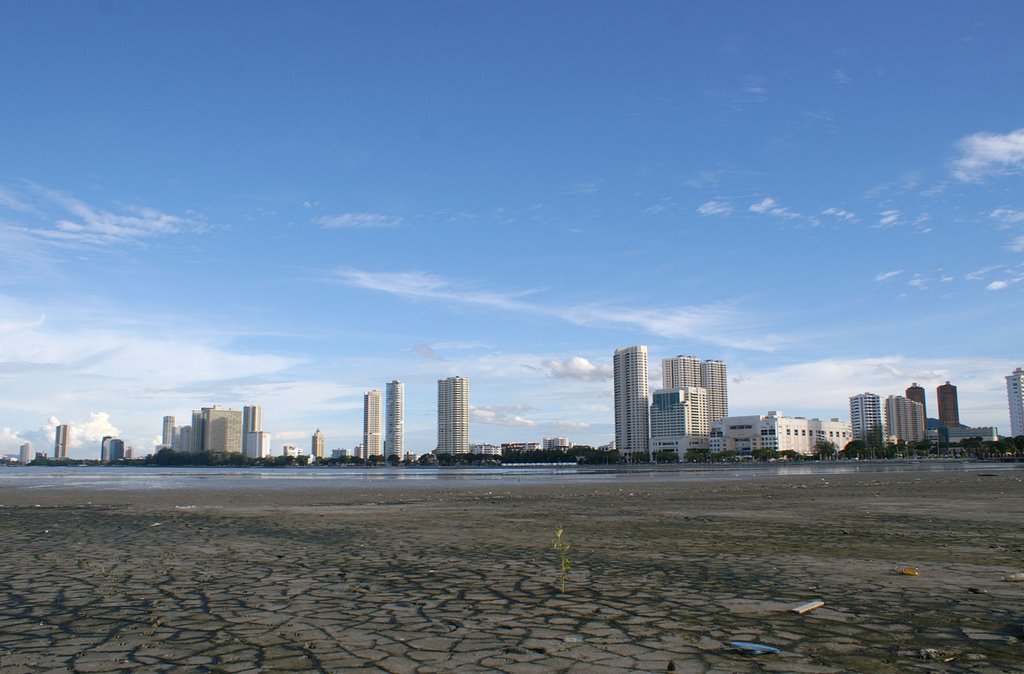
It's nothing much to look at from a human viewpoint; some quite badly polluted mudflats just off the north-east coast of the island, just a stone's throw from the city, McDonald's, Starbucks and high-rise blocks of condominiums. Formerly the area held a good stand of mangroves and a Black-crowned Night Heron colony, but now all that's been cleared to make way for a new housing project. For the time being, the construction site, a flat area of red earth and seasonal pools, forms an undisturbed oasis where waders can roost at high tide. By the next northward migration season, all of this area may be gone, but the next month or two at least, it's a place for the birds.