Two days after we arrived back from holidays in the UK, a small window of opportunity became available, and there was only one place to go; Batu Kawan, to see whether Mun's superstar visitors had waited for me, as he had promised they would! Getting up early wasn't a problem, courtesy of jetlag, so I was on site as first light dawned.
 Sure enough, a quick scan soon located a solitary Oriental Darter roosting in a dead tree, and not long afterwards, the second bird flew in, having apparently been fishing in the floodwater beneath the tree.


As the light improved, I was joined by Mun himself, so was able to congratulate him personally on a memorable find (his finder's account is
here).
Having had a good look at the darters, I decided to make my way to Pulau Burung. Mun was a bit shocked when I announced that I was moving on so soon, and in retrospect, I probably should have hung around longer, as
his superb shots testify, but it was my first time out in over a month, I only had a few hours, and was anxious to get better views of the Garganeys, and whatever else may be lurking at Pulau Burung.
My first port of call was the temporary pools where the Little Stints had been last time. Since then, there've been White Wagtail and Pectoral Sandpiper, so I gave it a good grilling. There were now fewer birds, and all were were much more distant. Just one Little Stint was in evidence, and no rare wagtails or waders!
 As I drove along the track I disturbed a pair of foraging Barred Buttonquails. This is quite a familiar scenario. The birds run along the track directly in front of the car. They are wondering how they can escape into the foliage either side, while I am wondering how to avoid the windscreen, get my eye to the viewfinder out of the side window (pointing forwards!) while keeping my foot gently on the gas and the car from meandering off the road! As usual, I largely failed, but the male did dither long enough for me to get one or two acceptable shots.
 Next up it was time to focus my attention on the Garganeys. Oddly, they didn't associate with each other the whole time I was there. This rather bright bird turned out to be a female (you can check out the forewing colour in Mun's blog here.)
 The male (told by the bright blue-grey forewing) kept much more distant, and hung out with the Lesser Whistling-ducks most of the time.
The other birds present were the 'usual suspects', but, even though I have filled my memory cards many times over with their images, it's hard to resist them when they pose so beautifully!
 Blue-tailed Bee-eater.
 A subadult (and subtly colourful) Common Moorhen.
 Common Sandpiper (and friend!).

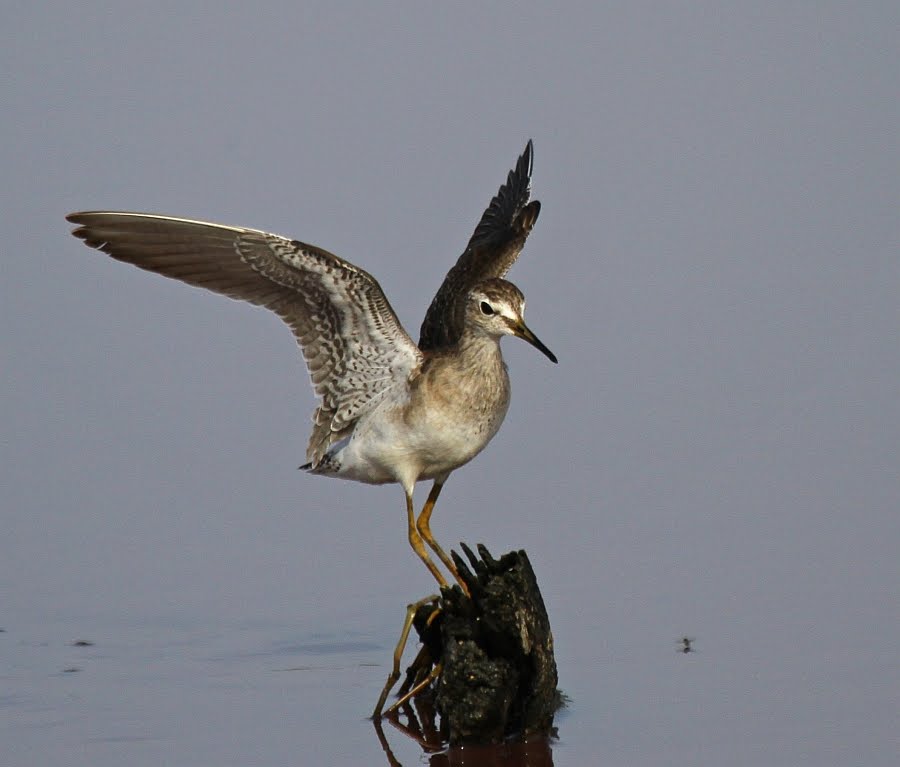
 Wood Sandpipers.
So, thanks to Mun and those Oriental Darters, I managed to pick up my 560th species in Peninsular Malaysia on my last birding outing of the year! What surprises will 2012 turn up? Bring it on!
Every best wish for 2012.